


Quality of life of patients with dementia in acute hospitals in Germany: a non-randomised, case-control study comparing a regular ward with a special care ward with dementia care concept
- PMID: 31494617
- PMCID: PMC6731932
- DOI: 10.1136/bmjopen-2019-030743
Quality of life of patients with dementia in acute hospitals in Germany: a non-randomised, case-control study comparing a regular ward with a special care ward with dementia care concept
Abstract
Objectives: To identify factors that predict the quality of life (QoL) of patients with dementia in acute hospitals and to analyse if a special care concept can increase patients' QoL.
Design: A non-randomised, case-control study including two internal medicine wards from hospitals in Hamburg, Germany.
Setting and participants: In all, 526 patients with dementia from two hospitals were included in the study (intervention: n=333; control: n=193). The inclusion criterion was an at least mild cognitive impairment or dementia. The intervention group was a hospital with a special care ward for internal medicine focusing on patients with dementia. The control group was from a hospital with a regular care ward without special dementia care concept.
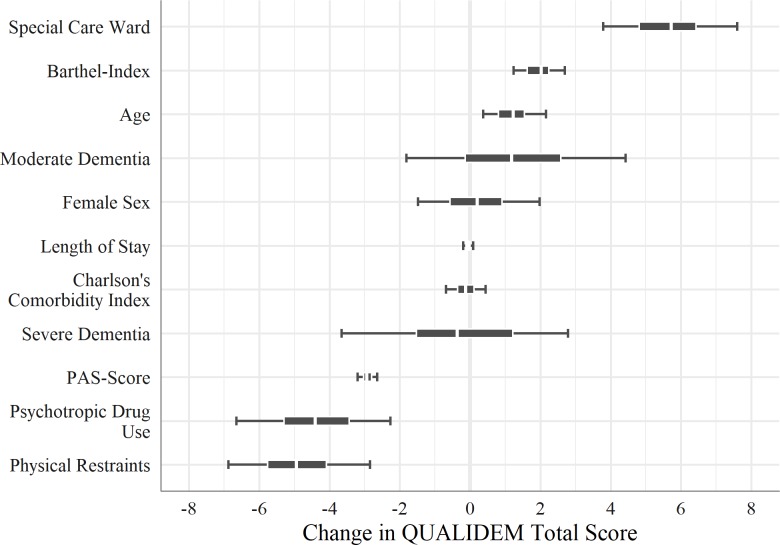
Outcome measures: Our main outcome was the QoL (range 0-100) from patients with dementia in two different hospitals. A Bayesian multilevel analysis was conducted to identify predictors such as age, dementia, agitation, physical and chemical restraints, or functional limitations that affect QoL.
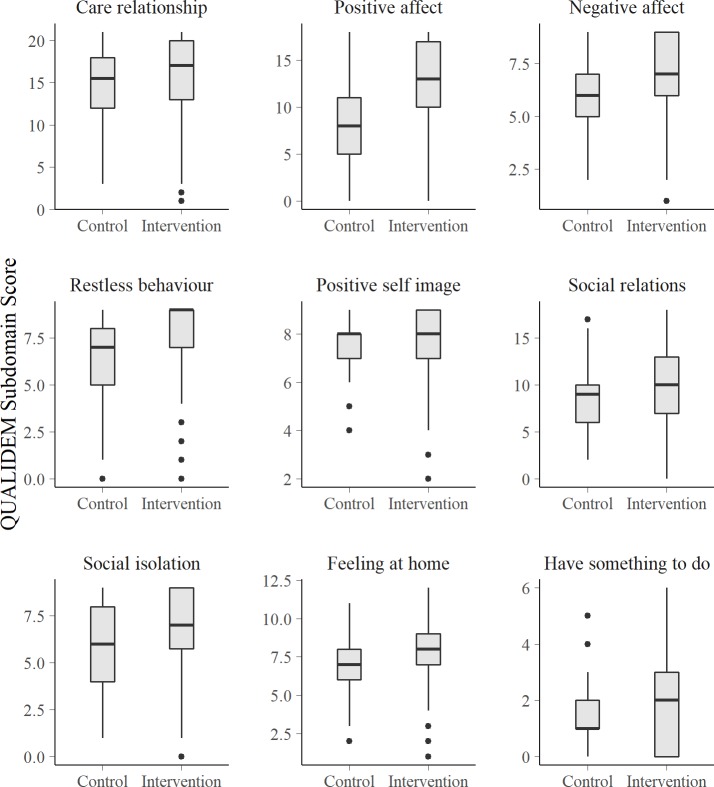
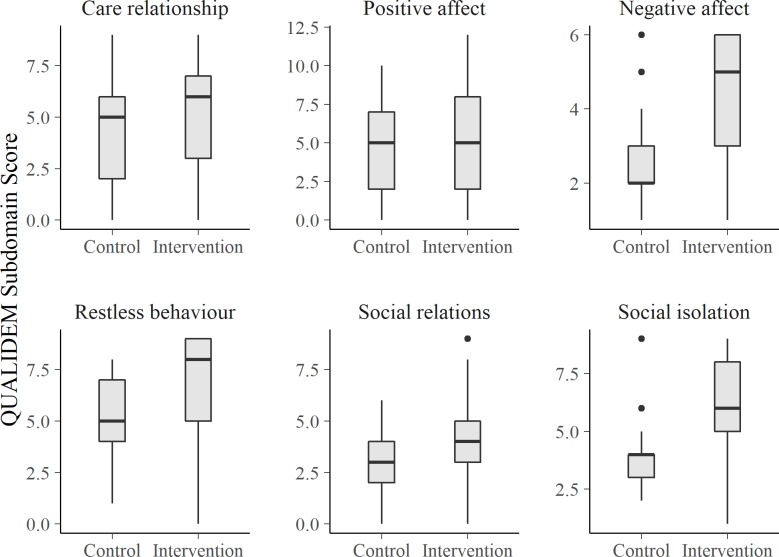
Results: QoL differs significantly between the control (40.7) and the intervention (51.2) group (p<0.001). Regression analysis suggests that physical restraint (estimated effect: -4.9), psychotropic drug use (-4.4) and agitation (-2.9) are negatively associated with QoL. After controlling for confounders, the positive effect of the special care concept remained (5.7).
Conclusions: A special care ward will improve the quality of care and has a positive impact on the QoL of patients with dementia. Health policies should consider the benefits of special care concepts and develop incentives for hospitals to improve the QoL and quality of care for these patients.
Keywords: acute hospital; dementia; internal medicine; quality of care; quality of life.
© Author(s) (or their employer(s)) 2019. Re-use permitted under CC BY-NC. No commercial re-use. See rights and permissions. Published by BMJ.
Conflict of interest statement
Competing interests: None declared.
Figures
References
-
- Recine U, Scotti E, Bruzzese V, et al. The change of hospital internal medicine: a study on patients admitted in internal medicine wards of 8 hospitals of the Lazio area, Italy. Ital J Med 2015;9 10.4081/itjm.2015.523 - DOI
-
- Sonnenblick M, Raveh D, Gratch L, et al. Clinical and demographic characteristics of elderly patients hospitalised in an internal medicine department in Israel: characteristics of elderly patients in medical wards. Int J Clin Pract 2007;61:247–54. - PubMed
Publication types
MeSH terms
Substances
LinkOut - more resources
Full Text Sources
Medical
