The nature of the animacy organization in human ventral temporal cortex
- PMID: 31496518
- PMCID: PMC6733573
- DOI: 10.7554/eLife.47142
The nature of the animacy organization in human ventral temporal cortex
Abstract
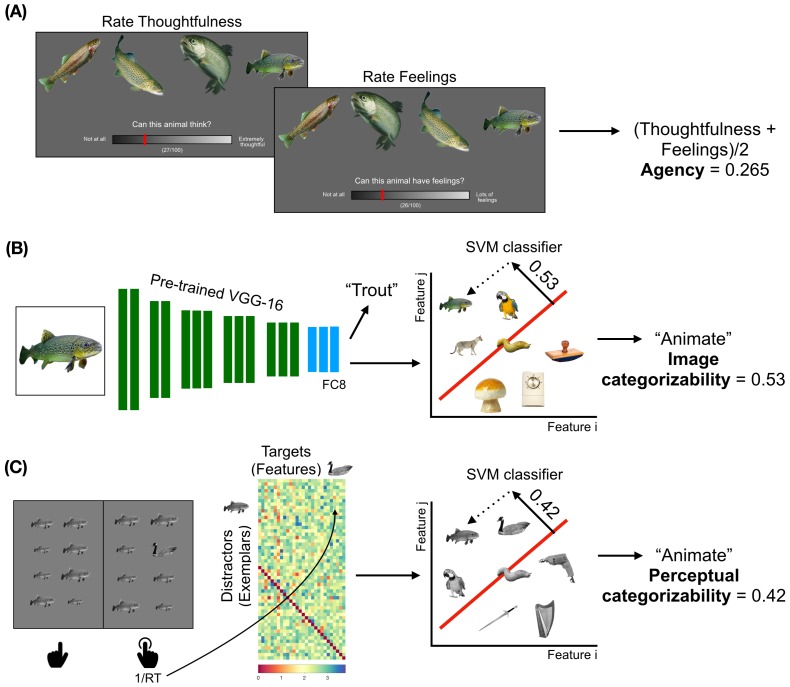
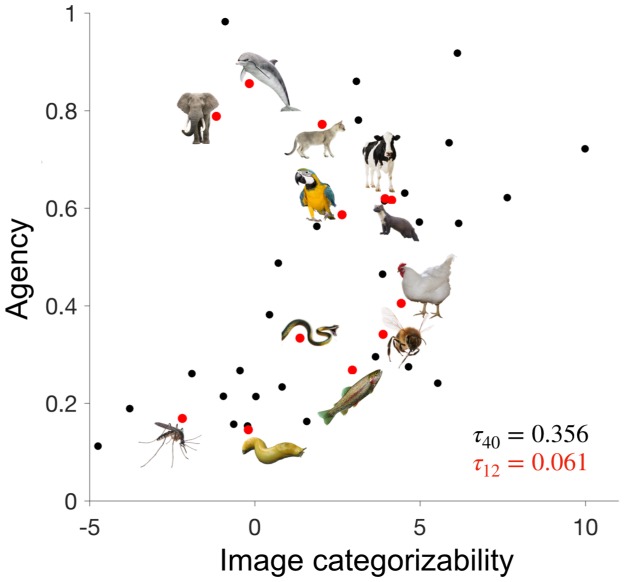
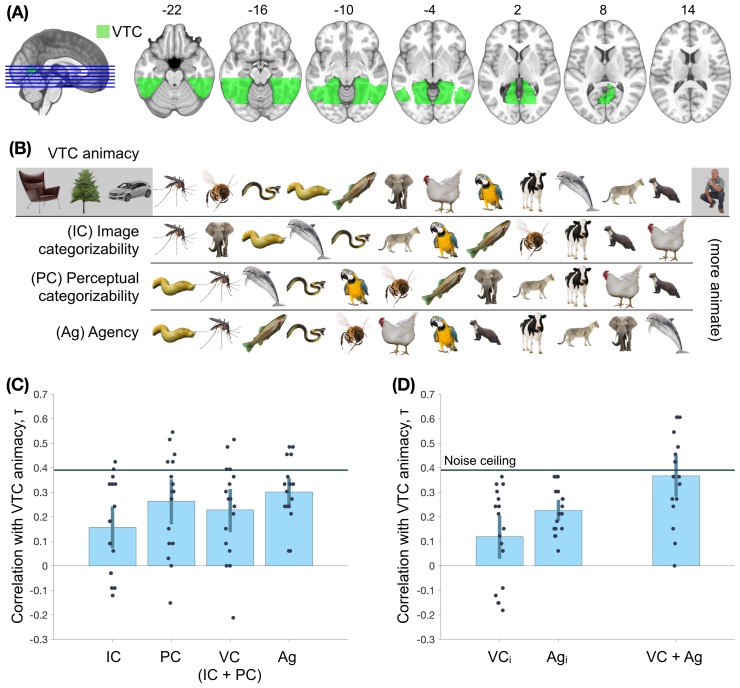
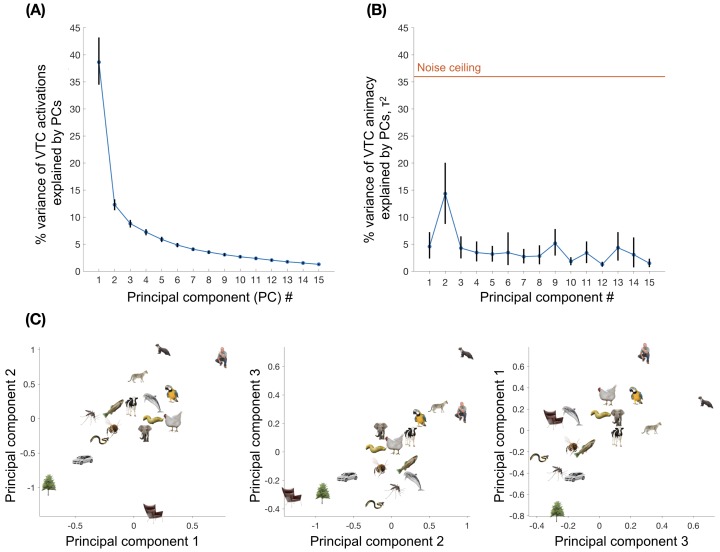
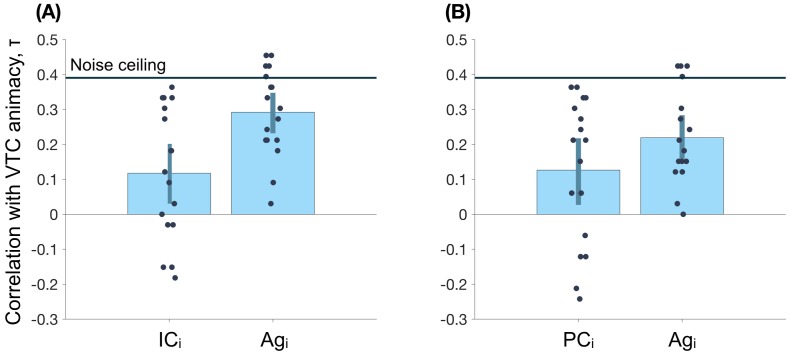
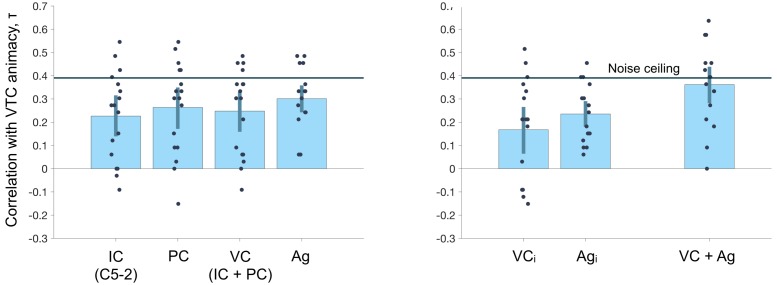
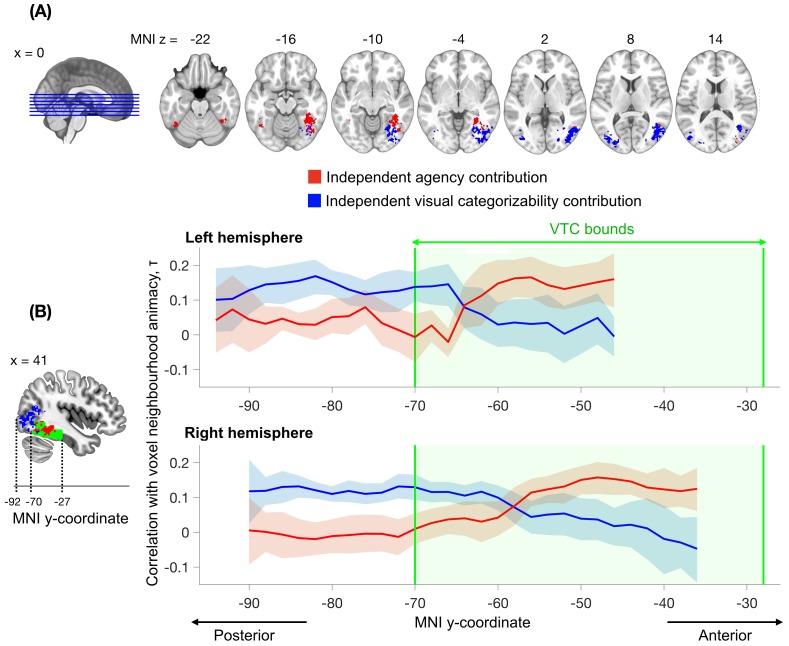
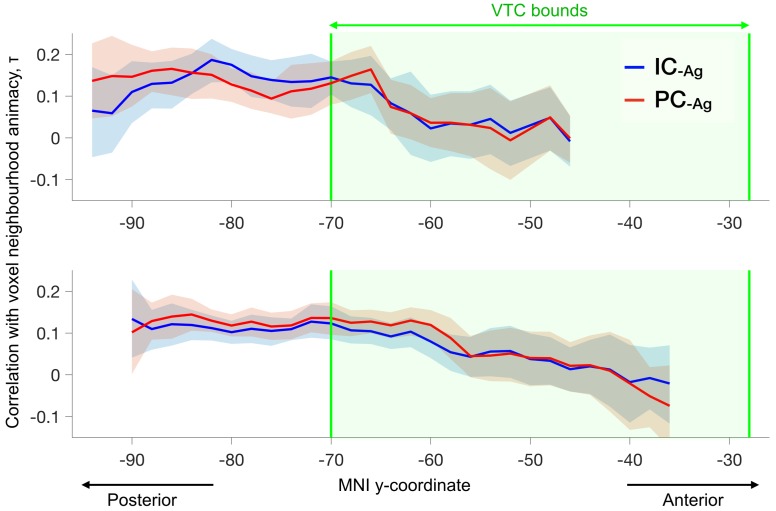
The principles underlying the animacy organization of the ventral temporal cortex (VTC) remain hotly debated, with recent evidence pointing to an animacy continuum rather than a dichotomy. What drives this continuum? According to the visual categorization hypothesis, the continuum reflects the degree to which animals contain animal-diagnostic features. By contrast, the agency hypothesis posits that the continuum reflects the degree to which animals are perceived as (social) agents. Here, we tested both hypotheses with a stimulus set in which visual categorizability and agency were dissociated based on representations in convolutional neural networks and behavioral experiments. Using fMRI, we found that visual categorizability and agency explained independent components of the animacy continuum in VTC. Modeled together, they fully explained the animacy continuum. Finally, clusters explained by visual categorizability were localized posterior to clusters explained by agency. These results show that multiple organizing principles, including agency, underlie the animacy continuum in VTC.
Keywords: animacy organization; human; neuroimaging; neuroscience; object categorization; object representation; visual cortex.
© 2019, Thorat et al.
Conflict of interest statement
ST, DP, MP No competing interests declared
Figures
References
-
- Baldassi C, Alemi-Neissi A, Pagan M, Dicarlo JJ, Zecchina R, Zoccolan D. Shape similarity, better than semantic membership, accounts for the structure of visual object representations in a population of monkey inferotemporal neurons. PLOS Computational Biology. 2013;9:e1003167. doi: 10.1371/journal.pcbi.1003167. - DOI - PMC - PubMed
Publication types
MeSH terms
Grants and funding
LinkOut - more resources
Full Text Sources