


High-altitude pulmonary oedema: Newer treatment modalities for an age-old problem
- PMID: 31496531
- PMCID: PMC6755783
- DOI: 10.4103/ijmr.IJMR_1981_17
High-altitude pulmonary oedema: Newer treatment modalities for an age-old problem
Abstract
Background & objectives: High-altitude pulmonary oedema (HAPE) continues to challenge the healthcare providers at remote, resource-constrained settings. High-altitude terrain itself precludes convenience of resources. This study was conducted to evaluate the rise in peripheral capillary saturation of oxygen (SpO2) by the use of a partial rebreathing mask (PRM) in comparison to Hudson's mask among patients with HAPE.
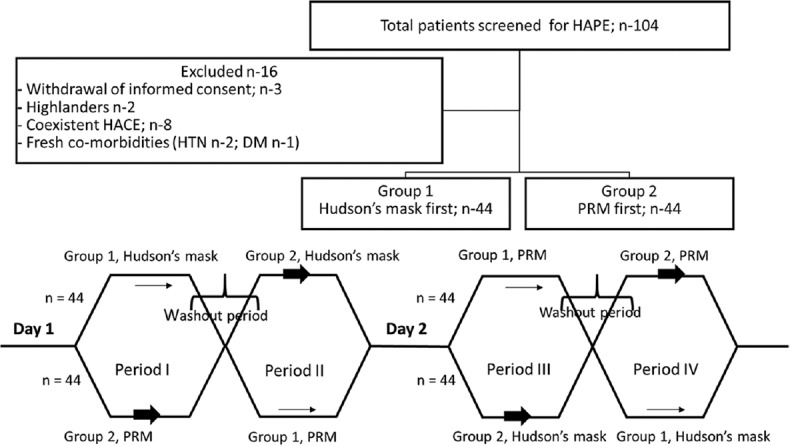
Methods: This was a single-centre, randomized crossover study to determine the efficiency of PRM in comparison to Hudson's mask. A total of 88 patients with HAPE referred to a secondary healthcare facility at an altitude of 11,500 feet from January to October 2013 were studied. A crossover after adequate wash-out on both modalities was conducted for first two days of hospital admission. All patients with HAPE were managed with bed rest and stand-alone oxygen supplementation with no adjuvant pharmacotherapy.
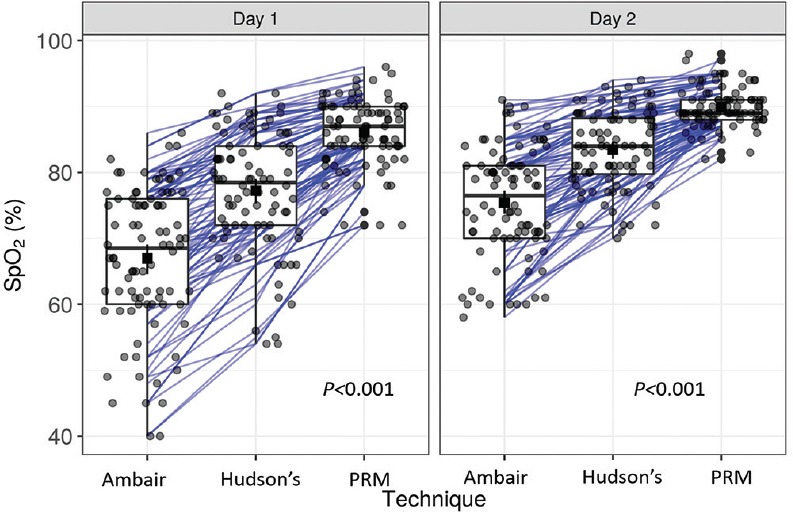
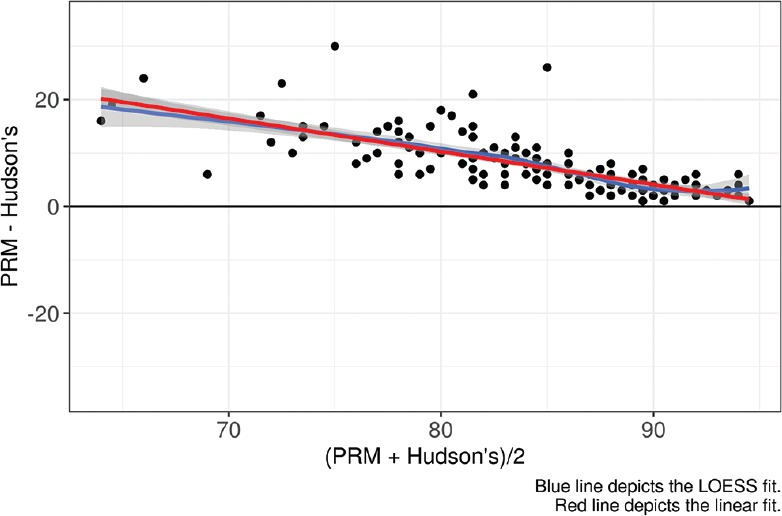
Results: The mean SpO2on ambient air on arrival was 66.92±10.8 per cent for all patients with HAPE. Higher SpO2values were achieved with PRM in comparison to Hudson's mask on day one (86.08±5.15 vs. 77.23±9.09%) and day two (89.94±2.96 vs. 83.39±5.93%). The difference was more pronounced on day one as compared to day two.
Interpretation & conclusions: Mean SpO2values were found to be significantly higher among HAPE patients using PRM compared to those on Hudson's mask. Further studies to understand the translation of this incremental response in SpO2to clinical benefits (recovery times, mortality rates and hospital stay) need to be undertaken.
Keywords: Environmental illness; high-altitude pulmonary oedema; occupational health; oxygen delivery systems; oxygen therapy.
Conflict of interest statement
None
Figures
References
-
- West JB. High-altitude medicine. Am J Respir Crit Care Med. 2012;186:1229–37. - PubMed
-
- Stream JO, Grissom CK. Update on high-altitude pulmonary edema: Pathogenesis, prevention, and treatment. Wilderness Environ Med. 2008;19:293–303. - PubMed
-
- Brotfain E, Zlotnik A, Schwartz A, Frenkel A, Koyfman L, Gruenbaum SE, et al. Comparison of the effectiveness of high flow nasal oxygen cannula vs. standard non-rebreather oxygen face mask in post-extubation intensive care unit patients. Isr Med Assoc J. 2014;16:718–22. - PubMed
-
- Fairfield JE, Goroszeniuk T, Tully AM, Adams AP. Oxygen delivery systems – A comparison of two devices. Anaesthesia. 1991;46:135–8. - PubMed
MeSH terms
Substances
Supplementary concepts
LinkOut - more resources
Full Text Sources
Medical