


Nanotechnology in Dentin Disinfection: Can We Preserve the Bond?
- PMID: 31496571
- PMCID: PMC6710942
- DOI: 10.5005/jp-journals-10005-1590
Nanotechnology in Dentin Disinfection: Can We Preserve the Bond?
Abstract
Aims: The aim of this study is to evaluate the effect of cavity disinfection with 2% chlorhexidine (CHX) and Ag-Au nanoparticles on microleakage and resin tag penetrability of composite restoration under in vitro conditions.
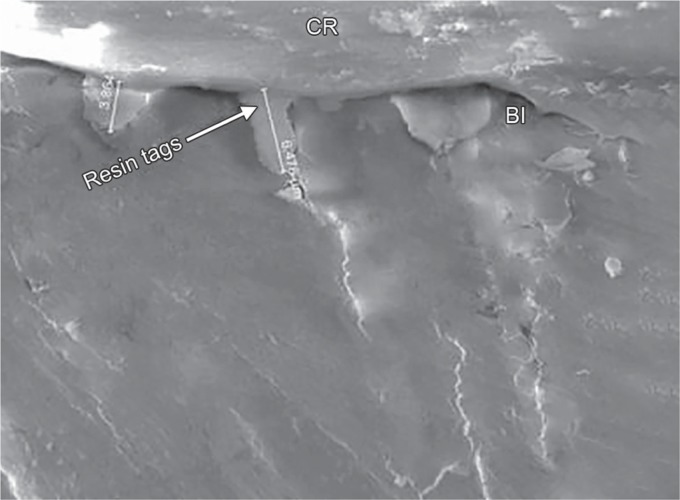
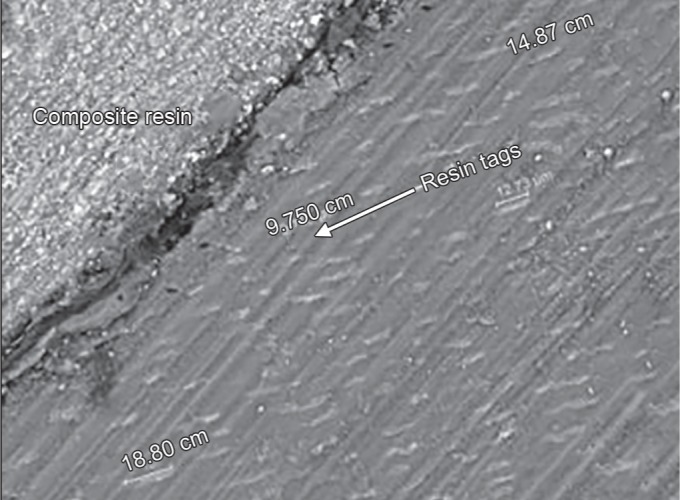
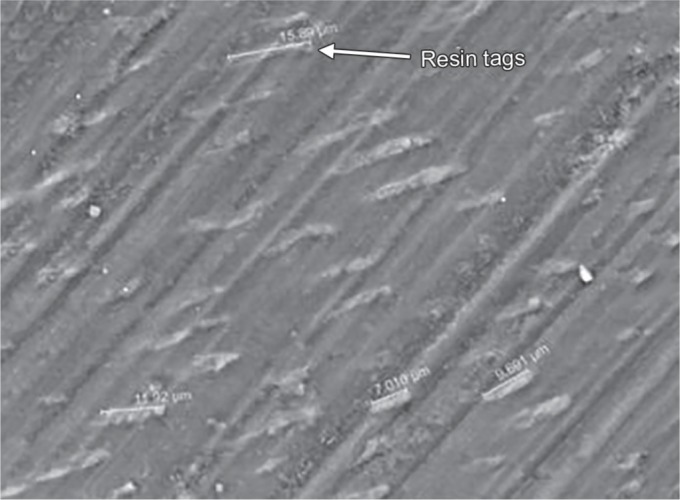
Materials and methods: Twenty-five human permanent molars extracted for therapeutic reasons were used in the study. Class V cavity of standard dimension was prepared on the buccal and lingual surfaces of the teeth. The teeth were randomly allocated into two groups based on the cavity disinfectant used: group I being 2% CHX gluconate (chlorhexidina Friedrich and Bianca Mittelstadt (FGM)) and group II being cavity disinfectant containing Ag-Au nanoparticles (nanocare gold). In both the groups, the dentin was etched with 37% phosphoric acid and cavity disinfectants were applied following which dentine bonding agent and composite resin were applied and cured. The specimens were then viewed under a stereomicroscope and a scanning electron microscope for microleakage and resin tag formation, respectively.
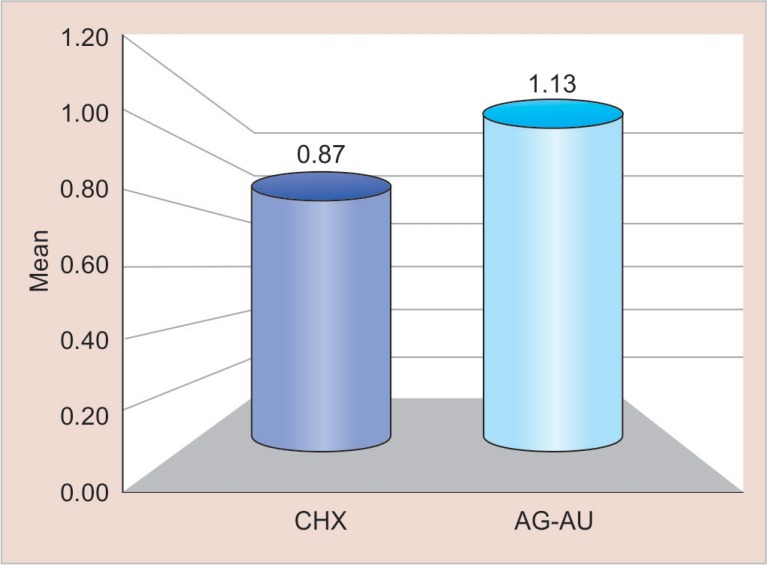
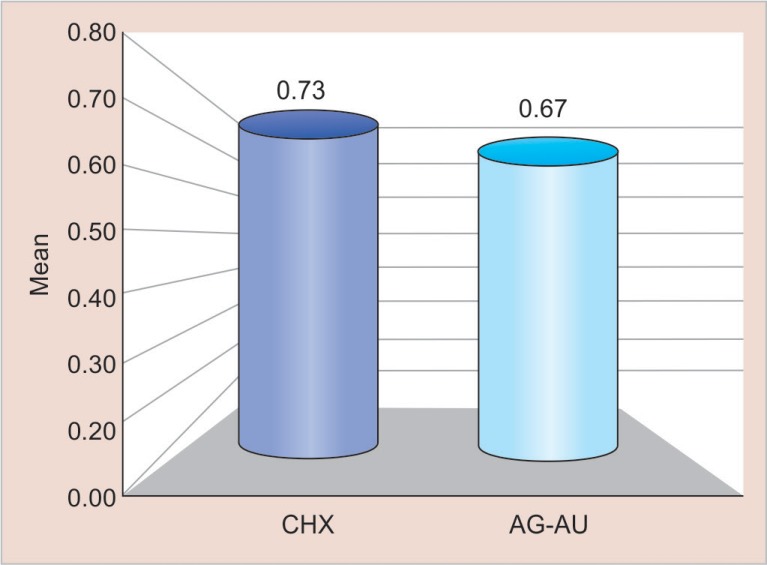
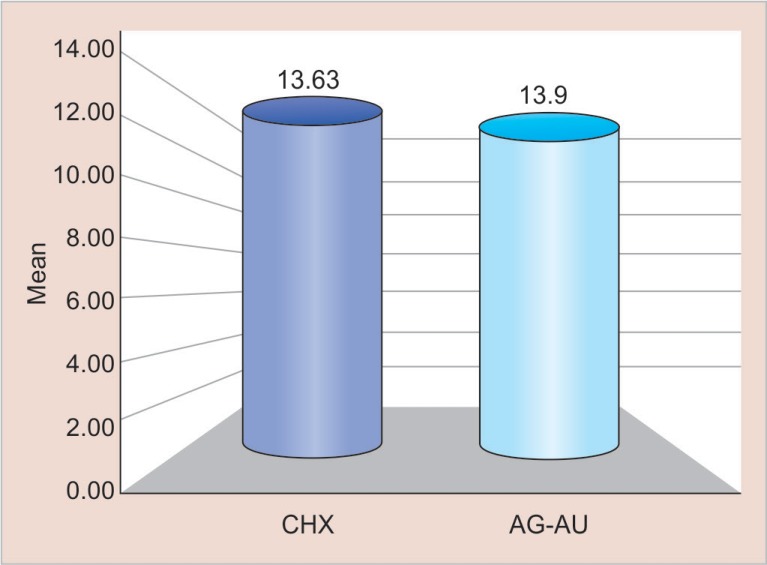
Results: The results were statistically analyzed using an independent "t" test. No significant difference was seen between the two groups with respect to both microleakage and resin tag penetration values (p > 0.05).
Conclusion: The cavity disinfectant containing Ag-Au nanoparticles did not affect the sealing ability and resin tag penetrability of composite resin in permanent molars when compared with 2% CHX.
How to cite this article: Attiguppe P, Tripathi AP, et al. Nanotechnology in Dentin Disinfection: Can We Preserve the Bond? Int J Clin Pediatr Dent 2019;12(1):42-46.
Keywords: Ag–Au (silver–gold) nanoparticles; Chlorhexidine; Microleakage; Resin tag.
Conflict of interest statement
Source of support: Nil Conflict of interest: None
Figures
References
-
- Bocongel JS,, Kraul AO,, et al. Influence of disinfectant solutions on the tensile bond strength of a fourth generation dentin bonding agent. Pesq Odont Bras. 2000;;14((2):):107––111.. doi: 10.1590/S1517-74912000000200003. DOI: - DOI
-
- Meiers JC,, Kresin JC. Cavity disinfectants and dentin bonding. Oper Dent. 1996 Jul-Aug;21((4):):153––159.. - PubMed
LinkOut - more resources
Full Text Sources