


Effect of ultramicronized-palmitoylethanolamide and co-micronized palmitoylethanolamide/polydatin on chronic pelvic pain and quality of life in endometriosis patients: An open-label pilot study
- PMID: 31496832
- PMCID: PMC6697671
- DOI: 10.2147/IJWH.S204275
Effect of ultramicronized-palmitoylethanolamide and co-micronized palmitoylethanolamide/polydatin on chronic pelvic pain and quality of life in endometriosis patients: An open-label pilot study
Abstract
Purpose: The aim of the present study was to evaluate the effectiveness of the ultramicronized-palmitoylethanolamide (um-PEA) and co-micronised palmitoylethanolamide/polydatin m(PEA/PLD) in the management of chronic pelvic pain related to endometriosis in patients desiring pregnancy.
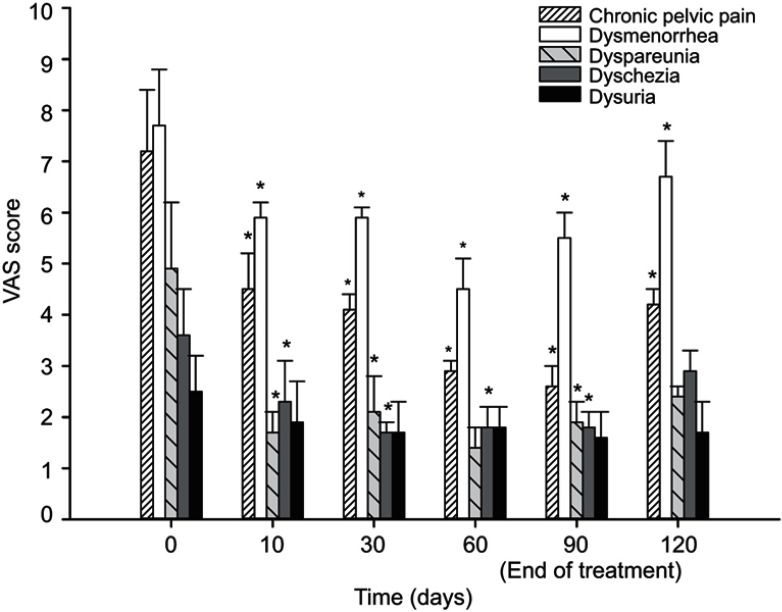
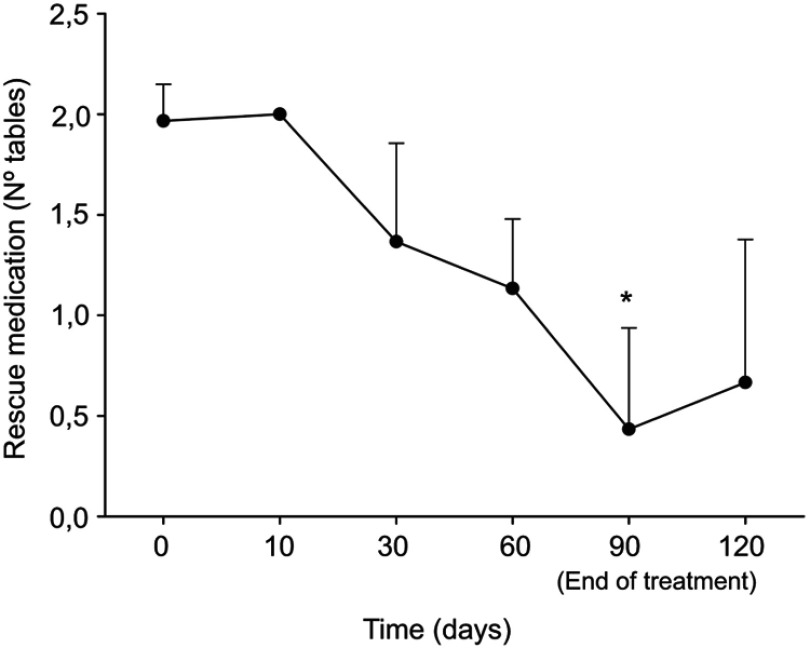
Patients and methods: Thirty symptomatic women with laparoscopic diagnosis of endometriosis and pregnancy desire were enrolled. Patients were treated with um-PEA twice daily for 10 days followed by m(PEA/PLD) twice daily for 80 days. Intensity of chronic pelvic pain, dyspareunia, dysmenorrhea, dyschezia, and dysuria were evaluated at baseline, after 10, 30, 60, 90 days and after 30 days from the end of treatment, by VAS. Quality of life and women's psychological well-being were evaluated at baseline and at the end of the treatment after 90 days with 36-Item Short Form Health Survey questionnaire and Symptom Check list-90 questionnaire, respectively. All collected data were analyzed with the non-parametric Wilcoxon test.
Results: At the end of the treatment, all patients showed a significant improvement in chronic pelvic pain, deep dyspareunia, dysmenorrhea, dyschezia, as well as in quality of life and psychological well-being.
Conclusion: In spite of the study's limited sample size and the open-label design, this research suggests the efficacy of um-PEA and m(PEA/PLD) in reducing painful symptomatology and improving quality of life as well as psychological well-being in patients suffering from endometriosis. Additionally, this treatment did not show any serious side effect, proving particularly suitable for women with pregnancy desire and without other infertility factors.
Keywords: chronic pelvic pain; co-micronized palmitoylethanolamide and polydatin; endometriosis; psychological well-being; quality of life; ultramicronized-palmitoylethanolamide.
Conflict of interest statement
The authors report no conflicts of interest in this work.
Figures
References
-
- Angioni S. New insights on endometriosis. Minerva Ginecol. 2017;69(5):438–439. - PubMed
-
- Pontis A, Arena I, Angioni S. Umbilical endometriosis primary site without pelvic endometriosis and previous surgery: a case report. G Ital Ostet E Ginecol. 2014;36(2):336–338.
LinkOut - more resources
Full Text Sources
Other Literature Sources
