


Comparison of Intraperitoneal Normal Saline Infusion with Pulmonary Recruitment Maneuver in Reducing Shoulder and Upper Abdomen Pain Following Gynecologic Laparoscopic Procedures: A Randomized, Controlled, Triple-Blind Trial
- PMID: 31497525
- PMCID: PMC6712360
- DOI: 10.5812/aapm.92444
Comparison of Intraperitoneal Normal Saline Infusion with Pulmonary Recruitment Maneuver in Reducing Shoulder and Upper Abdomen Pain Following Gynecologic Laparoscopic Procedures: A Randomized, Controlled, Triple-Blind Trial
Abstract
Objectives: The current study aimed at evaluating the effect of intraperitoneal infusion of normal saline (NS) and pulmonary recruitment maneuver (PRM) on the reduction of pain in shoulder, upper abdomen, and incision site after elective laparoscopic gynecologic surgery.
Methods: Totally, 280 patients (mean age: 30.5 years) that underwent laparoscopic gynecologic surgery from October 2013 to August 2015 were randomly and equally allocated into four groups. Group A received intraperitoneal infusion of NS 1.5 - 2 mL/kg of body weight; group B received PRM with five manual pulmonary inflations at a maximum pressure of 60 cm H2O; group C simultaneously received two former interventions; and finally the control group D received routine method of gentle abdominal pressure. All patients were assessed in the first 24 hours after surgery.
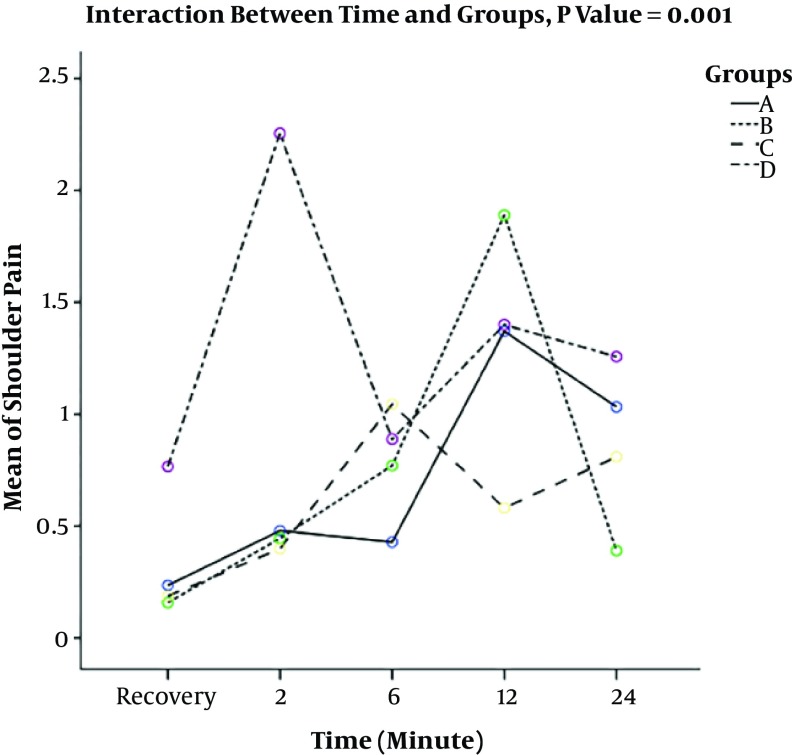
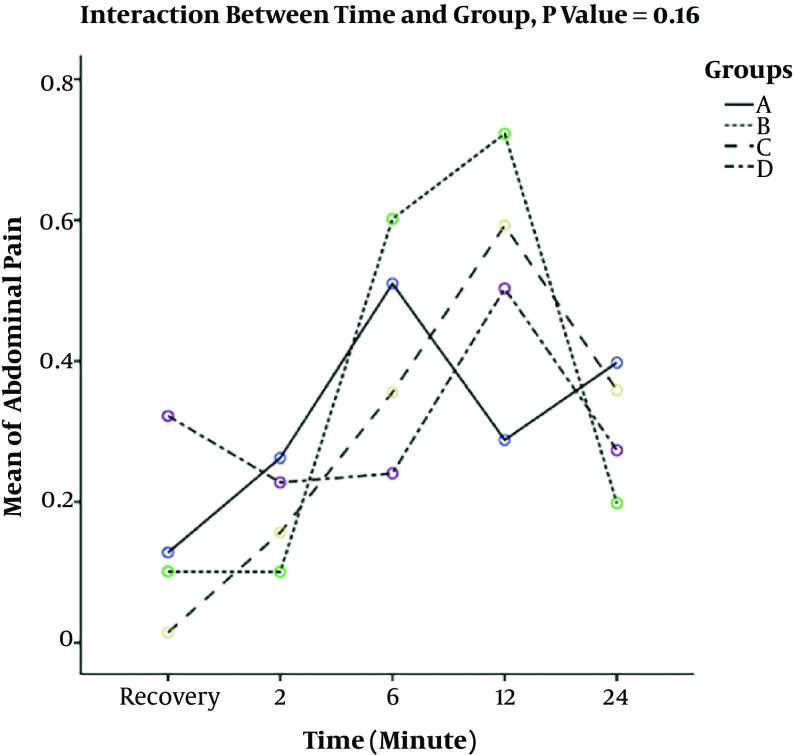
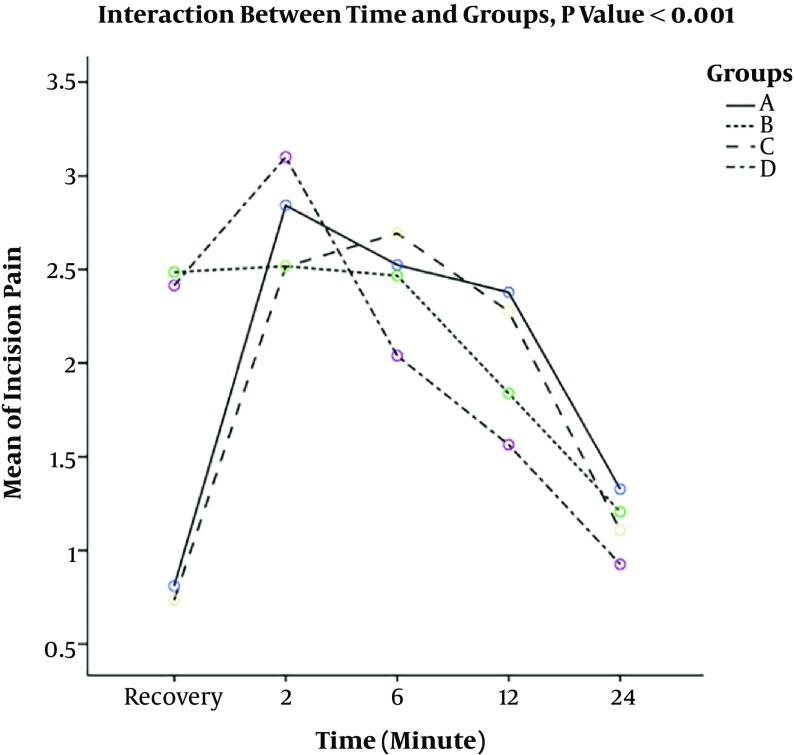
Results: There was an unsteady pattern for pain in shoulder, upper abdomen, and incision site at different time points across the studied groups over the trial. Patients in group B showed significantly lower shoulder pain 24 hours after laparoscopic gynecologic surgery (P = 0.01), while patients in group D had significantly lower incision site pain (P < 0.001).
Conclusions: PRM was superior to intraperitoneal infusion of NS for reducing pain in the first 24 hours after laparoscopic gynecologic surgery.
Keywords: Carbon Dioxide; Intraperitoneal Infusion; Laparoscopy; Pain; Pulmonary Recruitment.
Figures
References
-
- Moslemi TF, Rasouli S. [Postoperative complications after ambulatory gyncologic laparaskopy: Comparison between three different techniques.]. Med J Tabriz Univ Med Sci. 2010;31(12):69–75.
-
- Haghgoo A, Chaichian S, Ghahremani M, Nooriardebili S, Akbaian A, Moazzami B. The use of peritoneal suction drainage to reduce shoulder pain caused by gynecological laparoscopy. Arch Iran Med. 2016;19(3):173–8. - PubMed
LinkOut - more resources
Full Text Sources
Medical
Miscellaneous