


Occurrence of Mycotoxins in Extruded Commercial Cat Food
- PMID: 31497718
- PMCID: PMC6714290
- DOI: 10.1021/acsomega.9b01702
Occurrence of Mycotoxins in Extruded Commercial Cat Food
Abstract
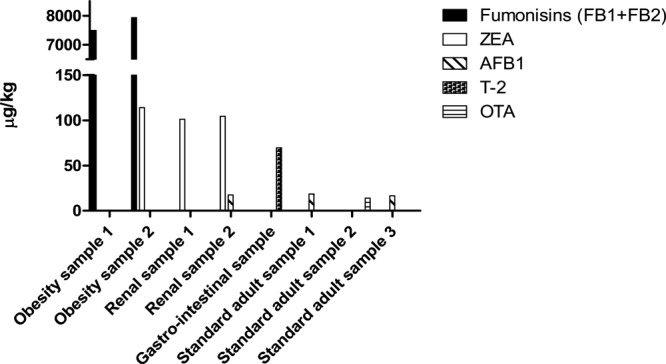
The occurrence of the most important mycotoxins (deoxynivalenol, fumonisin B1 and B2, aflatoxins B1, B2, G1, and G2, ochratoxin A, zearalenone, T-2, and HT-2 toxins) was determined in 64 extruded cat foods purchased in Italy through ultra-performance liquid chromatography coupled with tandem mass spectrometry. Deoxynivalenol and fumonisins were the most common contaminants (quantified in 80 and 95% of the samples, respectively). Conversely, aflatoxins B2, G1, and G2 were not identified in any sample. Some cat foods exceeded the regulatory limit for aflatoxin B1 (n = 3) or the guidance values for zearalenone (n = 3), fumonisins (n = 2), ochratoxin A (n = 1), and T-2 (n = 1) recently established for pets in the European Union. A widespread co-occurrence of mycotoxins was observed (28, 42, and 8% of the samples contained quantifiable amounts of two, three, and four mycotoxins, respectively). This study describes criticisms regarding the mycotoxin issue in pet food and suggests an improvement of the monitoring of the pet food chain.
Conflict of interest statement
The authors declare no competing financial interest.
Figures
References
LinkOut - more resources
Full Text Sources
Miscellaneous