


Examining sex as a predictor and moderator of treatment outcomes for binge-eating disorder: Analysis of aggregated randomized controlled trials
- PMID: 31497876
- PMCID: PMC6983351
- DOI: 10.1002/eat.23167
Examining sex as a predictor and moderator of treatment outcomes for binge-eating disorder: Analysis of aggregated randomized controlled trials
Abstract
Objective: This study examined whether sex predicted and/or moderated treatment outcomes among men and women who participated in binge-eating disorder (BED) randomized controlled trials (RCTs).
Method: Data were aggregated from RCTs performed at one medical center. RCTs tested cognitive-behavioral therapy, behavioral weight loss, multimodal treatment, and/or control conditions. Participants were 660 adults, both men (n = 170) and women (n = 490), with Diagnostic and Statistical Manual-fourth edition (DSM-IV)-defined BED. Doctoral-level research-clinicians assessed participants using structured interviews and established self-report measures of eating-disorder psychopathology and depression, and measured height and weight. Assessments occurred at baseline, throughout treatment, and at post-treatment.
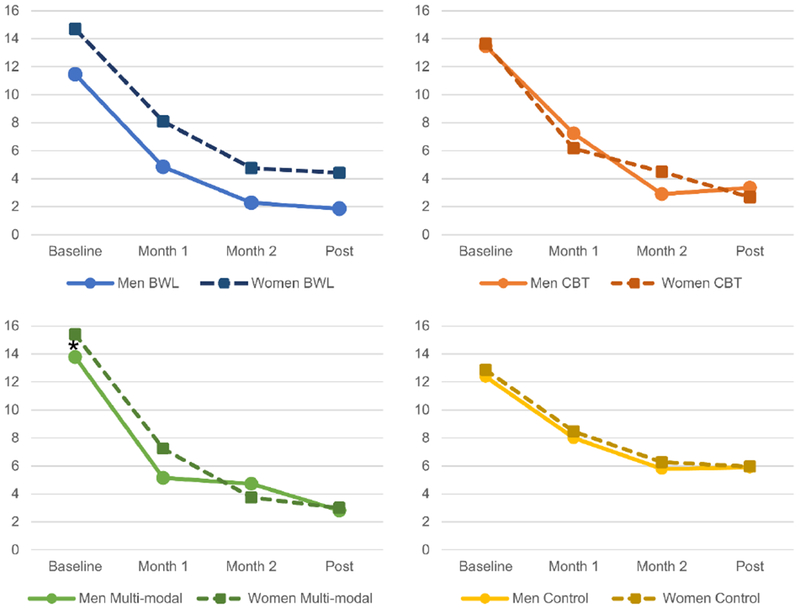
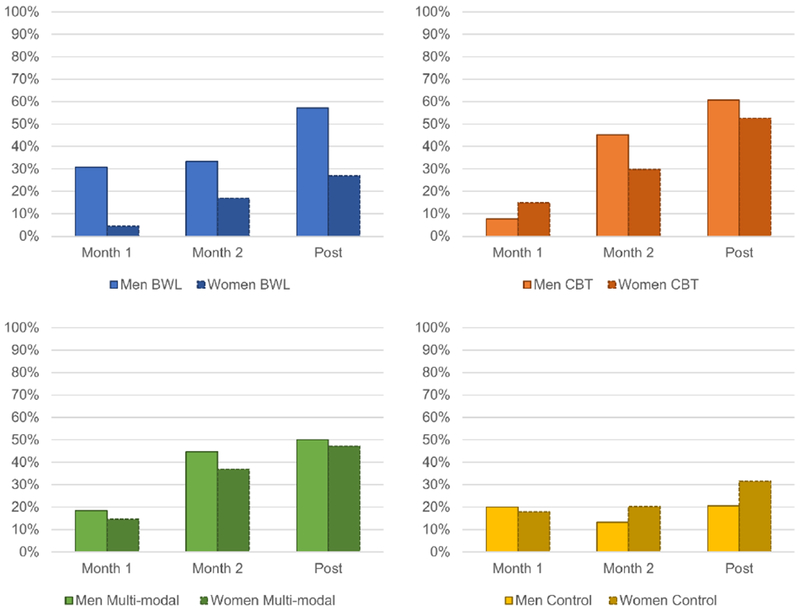
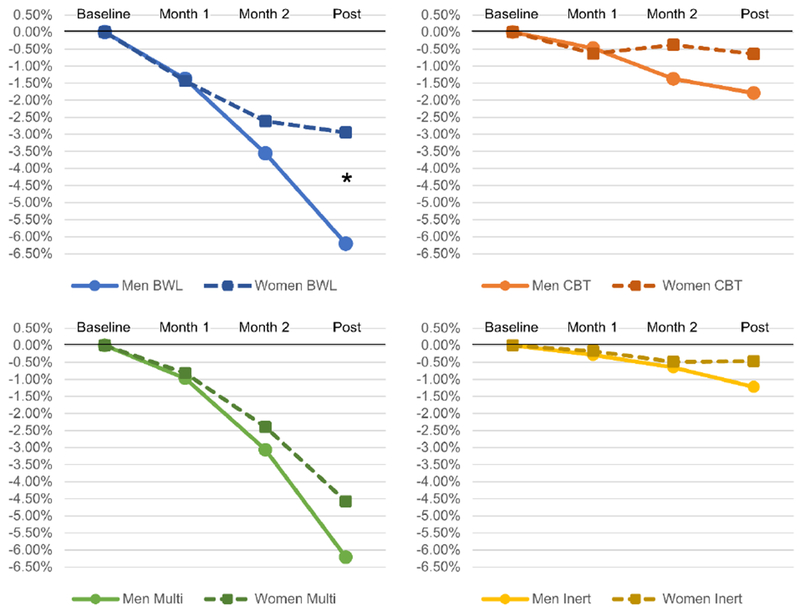
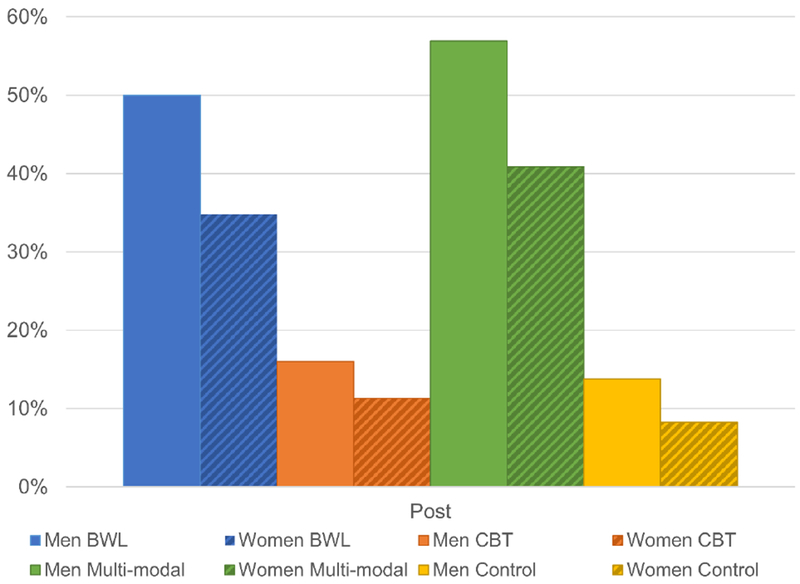
Results: Sex was not a significant moderator of any treatment outcomes. Mixed models revealed sex had a main effect: men had lower eating-disorder psychopathology and lost more weight than women over the course of treatment.
Discussion: Both epidemiological and RCT studies report disparities in treatment-seeking between men and women with BED. Despite this, men have comparable or better treatment outcomes compared with women, including significantly greater weight loss. Thus, disseminating evidence-based BED treatments is promising for both men and women. Additional research is necessary, however, to understand treatment effects-including other predictors and moderators of outcomes-across diverse providers, treatment settings, and patient groups.
Keywords: behavioral weight loss; binge-eating disorder; cognitive-behavioral therapy; gender; psychotherapy; sex; treatment.
© 2019 Wiley Periodicals, Inc.
Conflict of interest statement
Dr. Grilo’s broader interests include: Consultant to Sunovion and Weight Watchers; Honoraria for lectures, CME activities, and presentations at scientific conferences; and Royalties from Guilford Press and Taylor & Francis Publishers for academic books. Dr. Gueorguieva discloses consulting for Palo Alto Health Sciences, Mathematica Policy Research and Knopp Biosciences, a provisional patent submission by Yale University: Chekroud, AM., Gueorguieva, R., & Krystal, JH. “Treatment Selection for Major Depressive Disorder” [filing date 3rd June 2016, USPTO docket number Y0087.70116US00], and Royalties from Taylor & Francis for an academic book.
Figures
References
-
- American Psychiatric Association. (2004). Diagnostic and Statistical Manual of Mental Disorders (Fourth, Text Revision ed.). Washington, DC: Author.
-
- American Psychiatric Association. (2013). Diagnostic and Statistical Manual of Mental Disorders (5th ed). Arlington, VA: American Psychiatric Publishing.
-
- Appolinario JC, Bacaltchuk J, Sichieri R, Claudino AM, Godoy-Matos A, Morgan C, … Coutinho W. (2003). A randomized, double-blind, placebo-controlled study of sibutramine in the treatment of binge-eating disorder. Archives of General Psychiatry, 60, 1109–1116. doi: 10.1001/archpsyc.60.11.1109 - DOI - PubMed
-
- Beck AT, & Steer R (1987). Manual for revised Beck Depression Inventory. New York: Psychological Corporation.
-
- Beck AT, Steer RA, & Carbin MG (1988). Psychometric properties of the Beck Depression Inventory: Twenty-five years of evaluation. Clinical Psychology Review, 8, 77–100.
Publication types
MeSH terms
Grants and funding
LinkOut - more resources
Full Text Sources
