


Chemical Composition of Two Different Lavender Essential Oils and Their Effect on Facial Skin Microbiota
- PMID: 31500359
- PMCID: PMC6767019
- DOI: 10.3390/molecules24183270
Chemical Composition of Two Different Lavender Essential Oils and Their Effect on Facial Skin Microbiota
Abstract
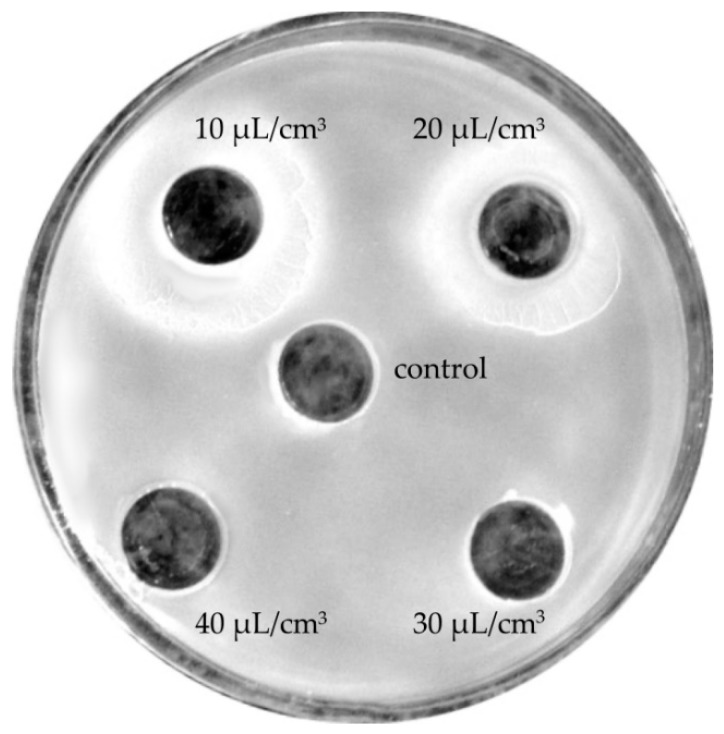
Lavender oil is one of the most valuable aromatherapy oils, its anti-bacterial and anti-fungal activities can be explained by main components such as linalool, linalyl acetate, lavandulol, geraniol, or eucalyptol. The aim of the study was to assess the anti-microbial effects of two different lavender oils on a mixed microbiota from facial skin. The commercial lavender oil and essential lavender oil from the Crimean Peninsula, whose chemical composition and activity are yet to be published, were used. Both oils were analysed by gas chromatography coupled to mass spectrometry. The composition and properties of studied oils were significantly different. The commercial ETJA lavender oil contained 10% more linalool and linalyl acetate than the Crimean lavender oil. Both oils also had different effects on the mixed facial skin microbiota. The Gram-positive bacilli were more sensitive to ETJA lavender oil, and Gram-negative bacilli were more sensitive to Crimean lavender oil. However, neither of the tested oils inhibited the growth of Gram-positive cocci. The tested lavender oils decreased the cell number of the mixed microbiota from facial skin, but ETJA oil showed higher efficiency, probably because it contains higher concentrations of monoterpenoids and monoterpenes than Crimean lavender oil does.
Keywords: facial skin microbiota; gas chromatography with mass spectrometry; lavender essential oil.
Conflict of interest statement
The authors declare no conflicts of interest.
Figures
References
-
- Jabłońska-Trypuć A., Farbiszewski R. Sensory and Basics of Perfumery. MedPharm; Wroclaw, Poland: 2008. pp. 114–115, 121–129.
-
- Lazzara M.V. Aromatherapy. Healing Baths. Bauer-Weltbild Media Sp. z.o.o.; Warszawa, Poland: 2003. pp. 19–29.
-
- Góra J., Lis A. The Most Valuable Essential Oils. UMK Publishing; Torun, Poland: 2005. pp. 165–175.
-
- Góra J., Lis A. The most valuable oils–Lavender oil. Aromaterapia PTA. 1995;2:5–11.
-
- Glinka R., Glinka M. Cosmetic Recipe with Elements of Cosmetology. MA Publishing; Lodz, Poland: 2008. pp. 70–73.
Publication types
MeSH terms
Substances
LinkOut - more resources
Full Text Sources
Other Literature Sources
Medical
