Hepatitis C Virus Structure: Defined by What It Is Not
- PMID: 31501263
- PMCID: PMC6938659
- DOI: 10.1101/cshperspect.a036822
Hepatitis C Virus Structure: Defined by What It Is Not
Abstract
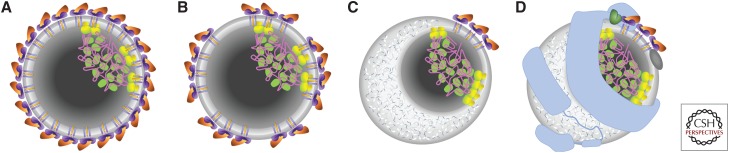
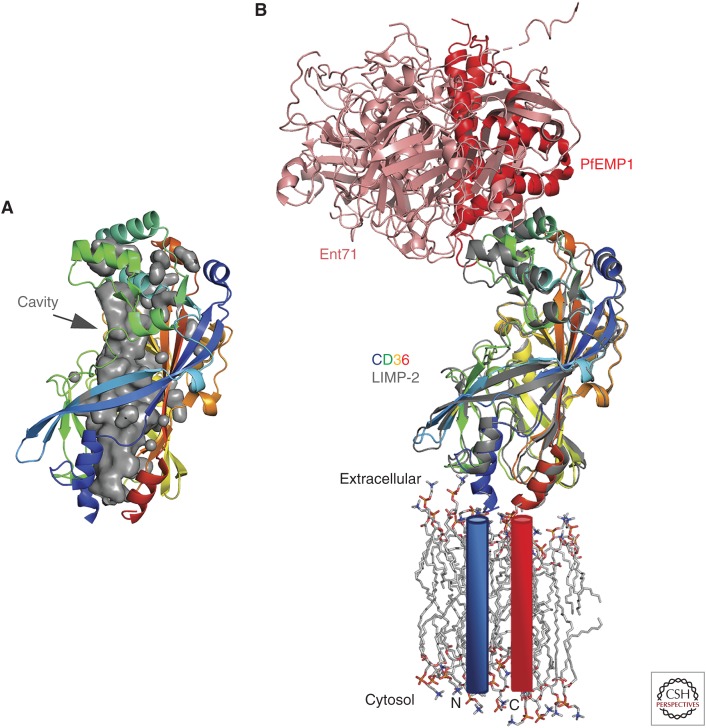
Hepatitis C virus (HCV) represents an important and growing public health problem, chronically infecting an estimated 70 million people worldwide. This blood-borne pathogen is generating a new wave of infections in the United States, associated with increasing intravenous drug use over the last decade. In most cases, HCV establishes a chronic infection, sometimes causing cirrhosis, end-stage liver disease, and hepatocellular carcinoma. Although a curative therapy exists, it is extremely expensive and provides no barrier to reinfection; therefore, a vaccine is urgently needed. The virion is asymmetric and heterogeneous with the buoyancy and protein content similar to low-density lipoparticles. Core protein is unstructured, and of the two envelope glycoproteins, E1 and E2, the function of E1 remains enigmatic. E2 is responsible for specifically binding host receptors CD81 and scavenger receptor class B type I (SR-BI). This review will focus on structural progress on HCV virion, core protein, envelope glycoproteins, and specific host receptors.
Copyright © 2020 Cold Spring Harbor Laboratory Press; all rights reserved.
Figures


References
-
- Banda DH, Perin PM, Brown RJP, Todt D, Solodenko W, Hoffmeyer P, Kumar Sahu K, Houghton M, Meuleman P, Muller R, et al. 2019. A central hydrophobic E1 region controls the pH range of hepatitis C virus membrane fusion and susceptibility to fusion inhibitors. J Hepatol 70: 1082–1092. 10.1016/j.jhep.2019.01.033 - DOI - PubMed
-
- Bankwitz D, Steinmann E, Bitzegeio J, Ciesek S, Friesland M, Herrmann E, Zeisel MB, Baumert TF, Keck ZY, Foung SK, et al. 2010. Hepatitis C virus hypervariable region 1 modulates receptor interactions, conceals the CD81 binding site, and protects conserved neutralizing epitopes. J Virol 84: 5751–5763. 10.1128/JVI.02200-09 - DOI - PMC - PubMed
-
- Bartosch B, Vitelli A, Granier C, Goujon C, Dubuisson J, Pascale S, Scarselli E, Cortese R, Nicosia A, Cosset FL. 2003. Cell entry of hepatitis C virus requires a set of co-receptors that include the CD81 tetraspanin and the SR-B1 scavenger receptor. J Biol Chem 278: 41624–41630. 10.1074/jbc.M305289200 - DOI - PubMed
Publication types
MeSH terms
Substances
LinkOut - more resources
Full Text Sources
Research Materials