


Hindered dialkyl ether synthesis with electrogenerated carbocations
- PMID: 31501569
- PMCID: PMC6996793
- DOI: 10.1038/s41586-019-1539-y
Hindered dialkyl ether synthesis with electrogenerated carbocations
Abstract
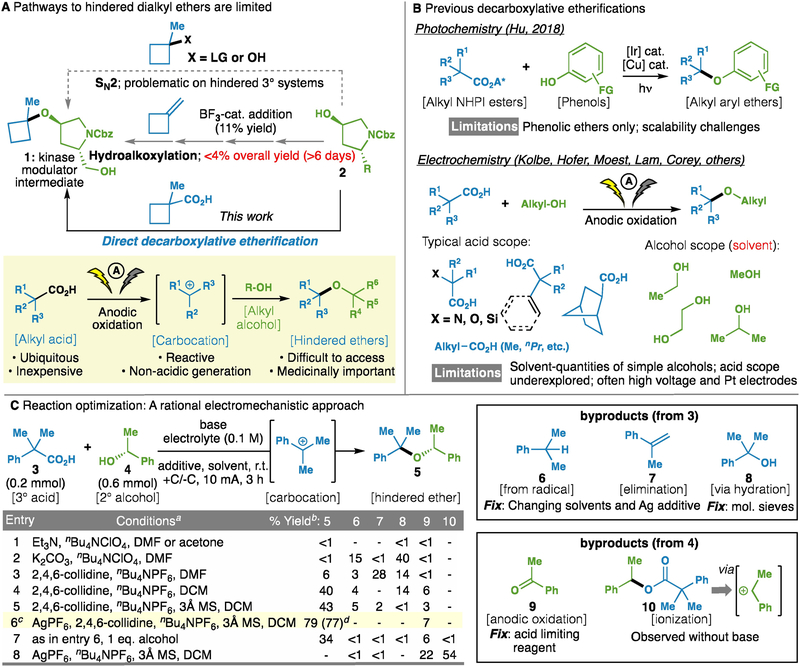
Hindered ethers are of high value for various applications; however, they remain an underexplored area of chemical space because they are difficult to synthesize via conventional reactions1,2. Such motifs are highly coveted in medicinal chemistry, because extensive substitution about the ether bond prevents unwanted metabolic processes that can lead to rapid degradation in vivo. Here we report a simple route towards the synthesis of hindered ethers, in which electrochemical oxidation is used to liberate high-energy carbocations from simple carboxylic acids. These reactive carbocation intermediates, which are generated with low electrochemical potentials, capture an alcohol donor under non-acidic conditions; this enables the formation of a range of ethers (more than 80 have been prepared here) that would otherwise be difficult to access. The carbocations can also be intercepted by simple nucleophiles, leading to the formation of hindered alcohols and even alkyl fluorides. This method was evaluated for its ability to circumvent the synthetic bottlenecks encountered in the preparation of 12 chemical scaffolds, leading to higher yields of the required products, in addition to substantial reductions in the number of steps and the amount of labour required to prepare them. The use of molecular probes and the results of kinetic studies support the proposed mechanism and the role of additives under the conditions examined. The reaction manifold that we report here demonstrates the power of electrochemistry to access highly reactive intermediates under mild conditions and, in turn, the substantial improvements in efficiency that can be achieved with these otherwise-inaccessible intermediates.
Conflict of interest statement
Figures
References
-
- Roughley SD & Jordan AM The medicinal chemist’s toolbox: An analysis of reactions ssed in the pursuit of drug candidates. J. Med. Chem 54, 3451–3479 (2011). - PubMed
-
- Fischer J & Ganellin CR Analogue-based drug discovery, pp 206–217 (Wiley, 2006).
-
- Williamson W Ueber die theorie der aetherbildung. Justus Liebigs Ann. Chem 77, 37–49 (1851)
-
- Kürti L & Czakó B Strategic applications of named reactions in organic synthesis, pp 484–485. (Elsevier, 2005).
-
- Swamy KCK, Kumar NNB, Balaraman E & Kumar KVPP Mitsunobu and related reactions: Advances and applications. Chem. Rev 109, 2551–2651 (2009). - PubMed
Publication types
MeSH terms
Substances
Grants and funding
LinkOut - more resources
Full Text Sources
