


A Postpartum Remote Hypertension Monitoring Protocol Implemented at the Hospital Level
- PMID: 31503166
- PMCID: PMC7289450
- DOI: 10.1097/AOG.0000000000003479
A Postpartum Remote Hypertension Monitoring Protocol Implemented at the Hospital Level
Abstract
Objective: To evaluate the feasibility, acceptability, and compliance of a remote blood pressure monitoring protocol implemented as a quality improvement measure at the hospital level for management of hypertension in postpartum women after hospital discharge.
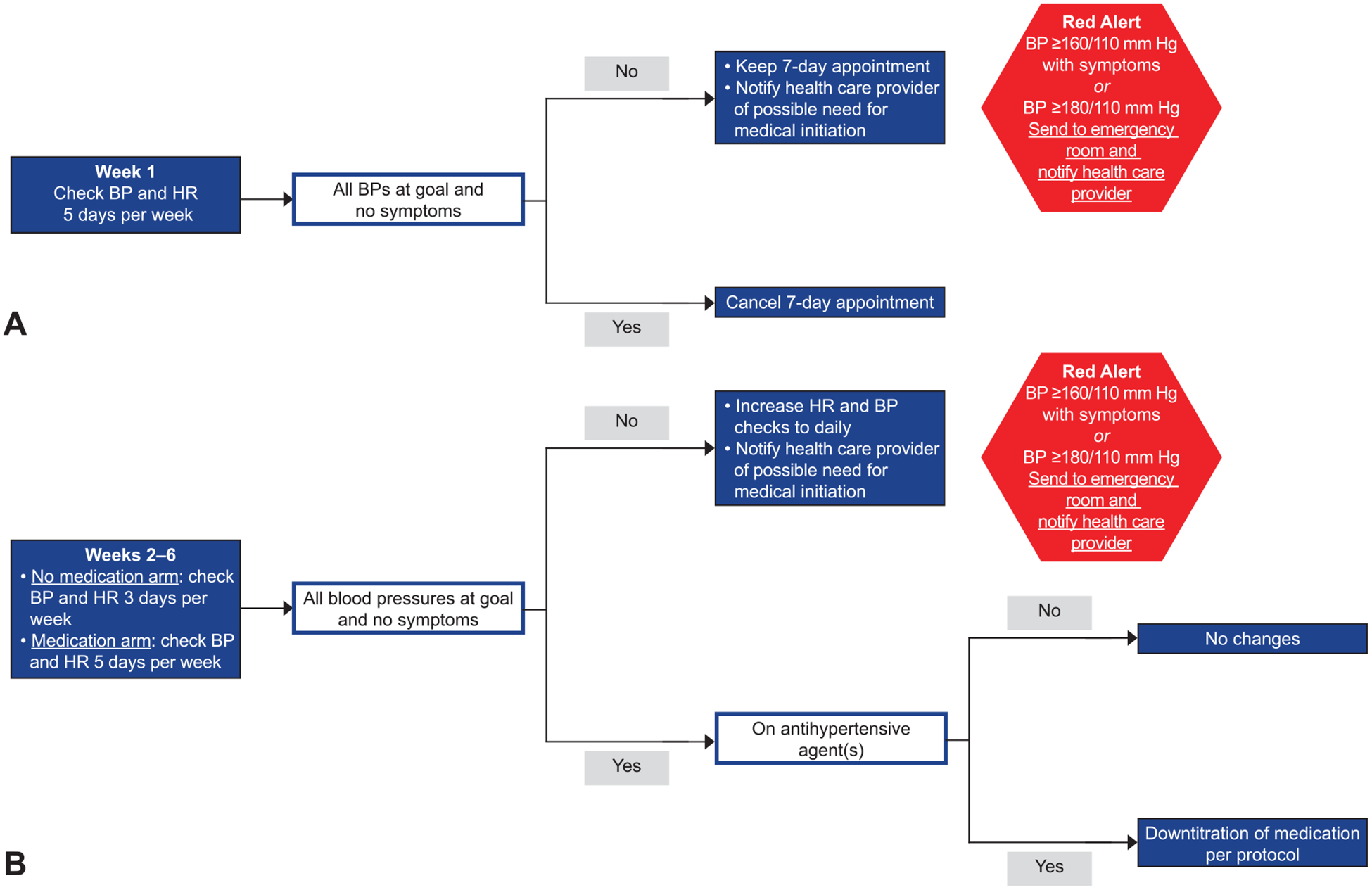
Methods: This is an ongoing quality improvement project that included women admitted to the postpartum unit of a single tertiary care hospital. We designed nursing call center-driven blood pressure management and treatment algorithms, which were initiated after hospital discharge until 6 weeks postpartum. Women are eligible to participate if they have a diagnosis of chronic hypertension, superimposed preeclampsia, gestational hypertension, preeclampsia, or postpartum hypertension and have access to a text messaging-enabled smartphone device. After identification by an obstetric care provider, women are enrolled into the program, which is automatically indicated in the electronic medical record. Maternal, obstetric, and sociodemographic data were obtained from the electronic medical record.
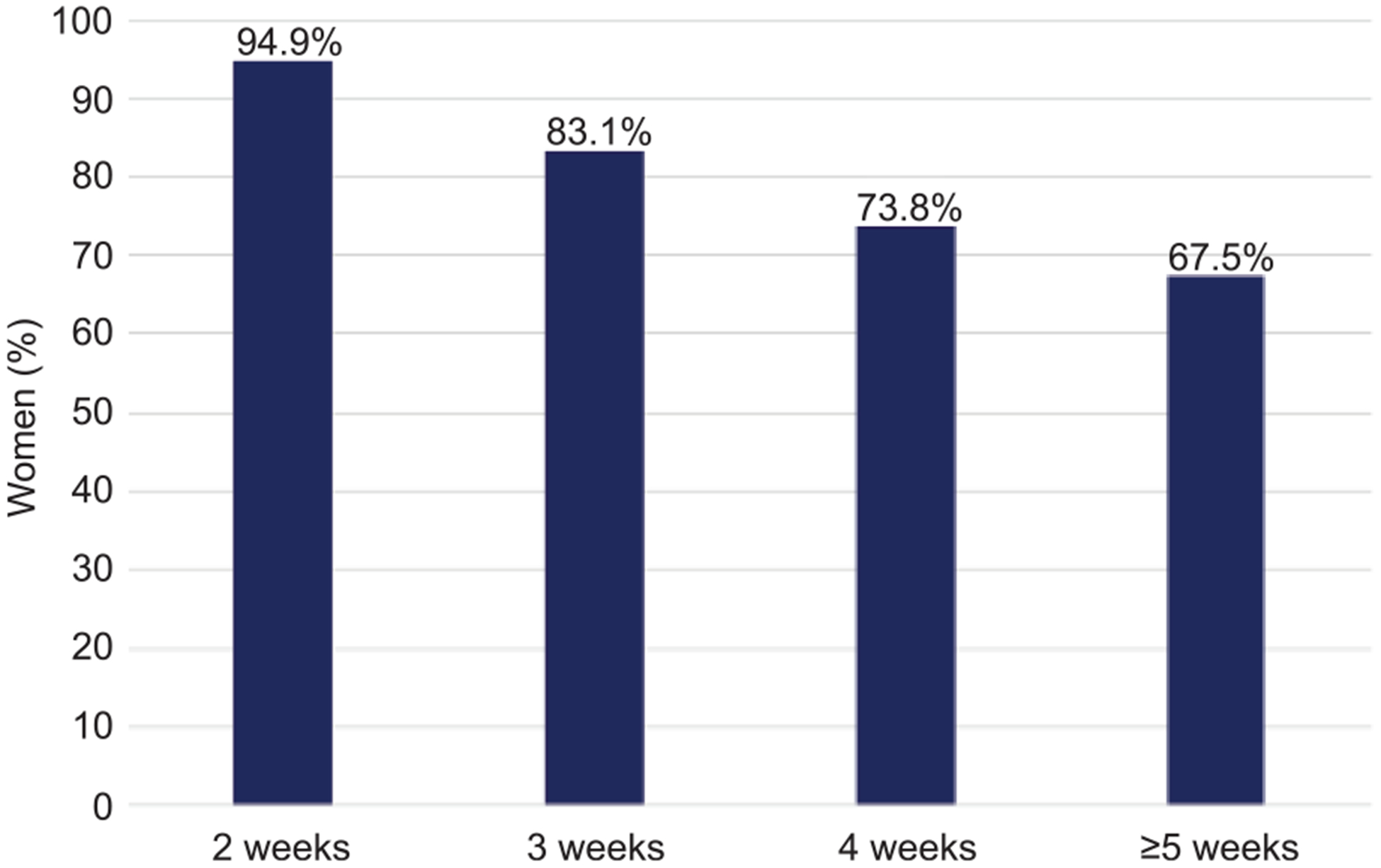
Results: Between February 2018 and January 2019, we enrolled 499 patients. Here we report on the first 409 enrolled patients. Participants include 168 (41%) with gestational hypertension, 179 (44%) with preeclampsia with no history of chronic hypertension, 49 (12%) with chronic hypertension with superimposed preeclampsia, and 13 (3%) with postpartum preeclampsia. One hundred seventy-one (42%) participants had antihypertensives initiated or titrated through the program. Three hundred forty women (83%) continued the program beyond 3 weeks postpartum, and 360 (88%) attended an in-person 6-week postpartum visit. Two hundred thirty-five out of 250 women who completed a postprogram survey (94%) reported satisfaction with the program.
Conclusion: In this study, we detail results from an ongoing remote blood pressure monitoring program. We demonstrate high compliance, retention, and patient satisfaction with the program. This is a feasible, scalable remote monitoring program connected to the electronic medical record.
Conflict of interest statement
The authors did not report any potential conflicts of interest.
Figures
References
-
- Say L, Chou D, Gemmill A, Tunçalp Ö, Moller AB, Daniels J, et al. Global causes of maternal death: a WHO systematic analysis. Lancet Glob Heal 2014;2:e323–33. - PubMed
-
- Gestational hypertension and preeclampsia. ACOG Practice Bulletin No. 202. American College of Obstetricians and Gynecologists. Obstet Gynecol 2019;133:e1–e25. - PubMed
-
- Mogos MF, Salemi JL, Spooner KK, McFarlin BL, Salihu HH. Hypertensive disorders of pregnancy and postpartum readmission in the United States. J Hypertens 2018;36:608–18. - PubMed
-
- Stevens W, Shih T, Incerti D, Ton TGN, Lee HC, Peneva D, et al. Short-term costs of preeclampsia to the United States health care system. Am J Obstet Gynecol 2017;217:237–48.e16. - PubMed
Publication types
MeSH terms
Grants and funding
LinkOut - more resources
Full Text Sources
Medical
Miscellaneous
