


Transcriptome dynamics of long noncoding RNAs and transcription factors demarcate human neonatal, adult, and human mesenchymal stem cell-derived engineered cartilage
- PMID: 31503387
- PMCID: PMC6992527
- DOI: 10.1002/term.2961
Transcriptome dynamics of long noncoding RNAs and transcription factors demarcate human neonatal, adult, and human mesenchymal stem cell-derived engineered cartilage
Abstract
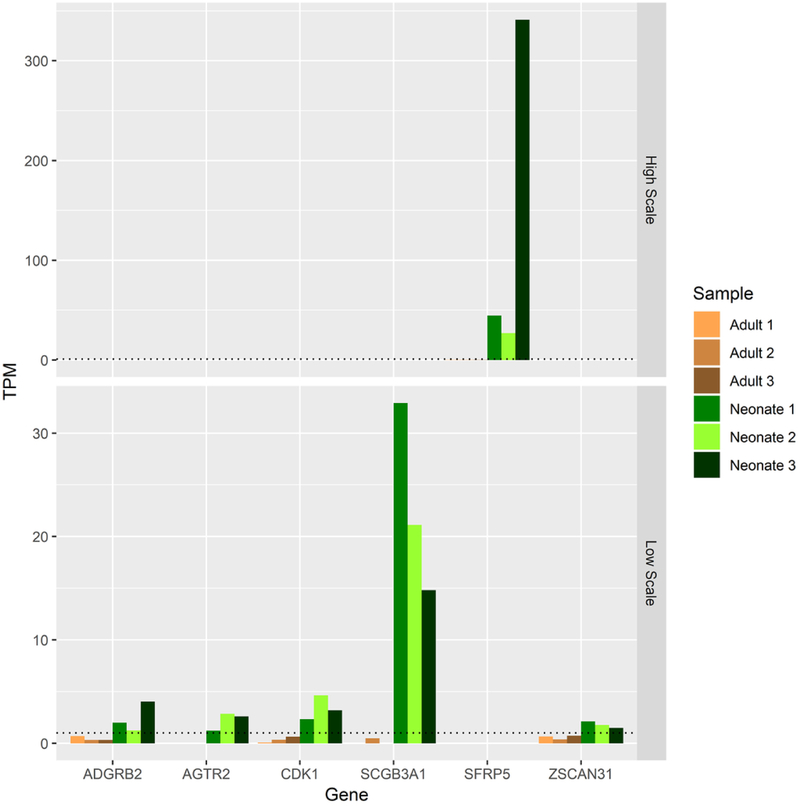
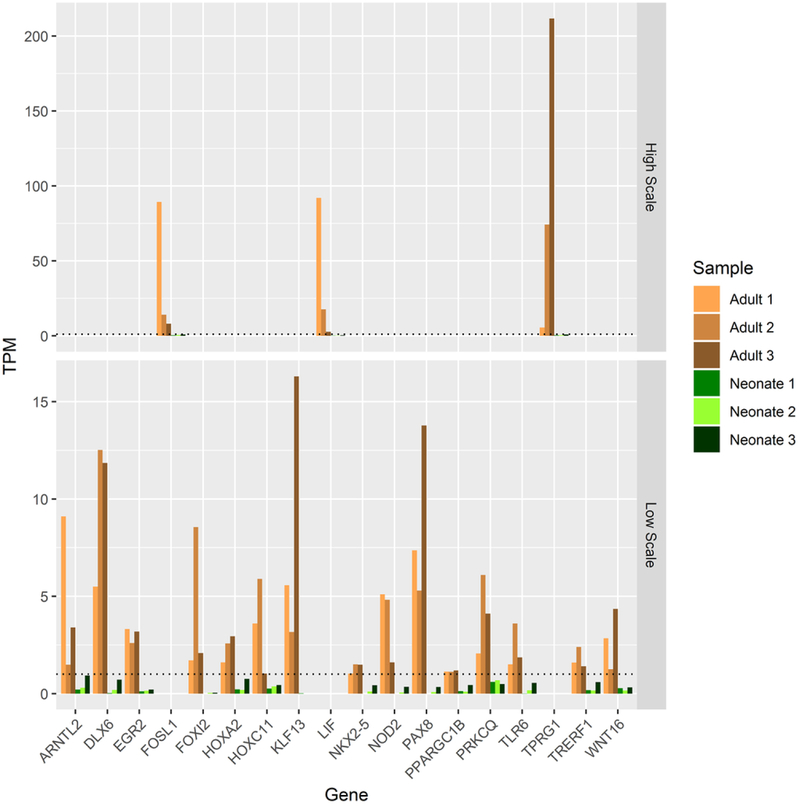
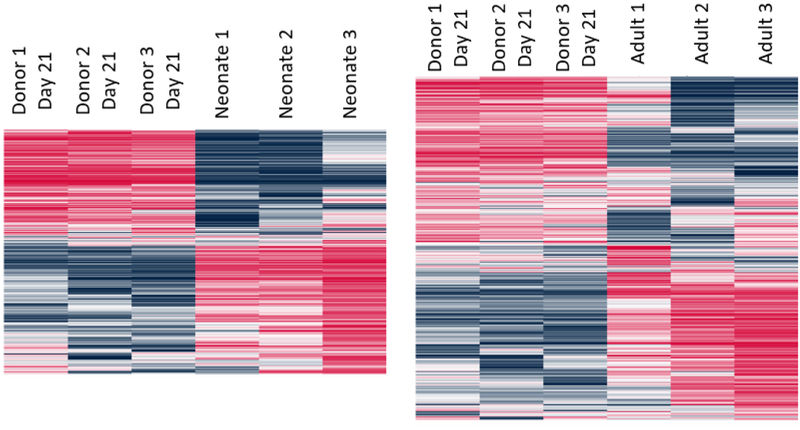
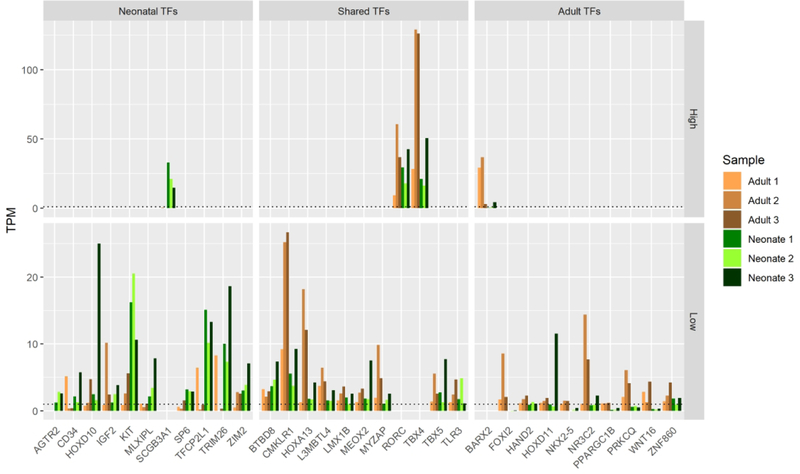
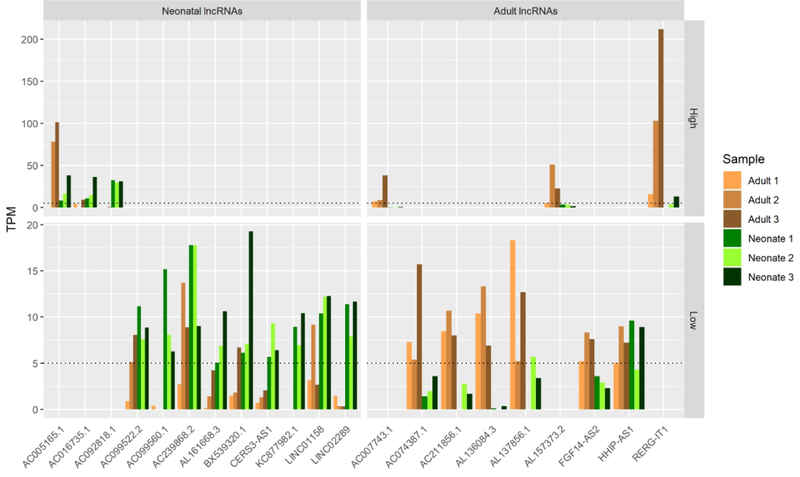
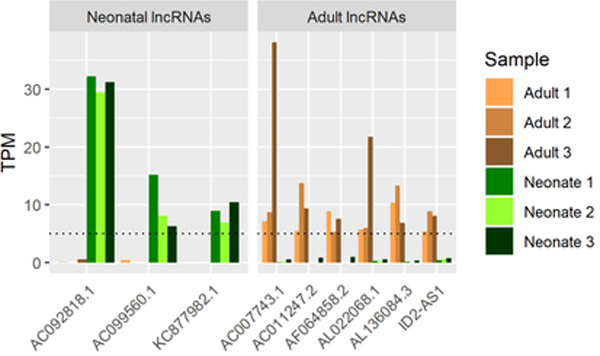
The engineering of a native-like articular cartilage (AC) is a long-standing objective that could serve the clinical needs of millions of patients suffering from osteoarthritis and cartilage injury. An incomplete understanding of the developmental stages of AC has contributed to limited success in this endeavor. Using next generation RNA sequencing, we have transcriptionally characterized two critical stages of AC development in humans-that is, immature neonatal and mature adult, as well as tissue-engineered cartilage derived from culture expanded human mesenchymal stem cells. We identified key transcription factors (TFs) and long noncoding RNAs (lncRNAs) as candidate drivers of the distinct phenotypes of these tissues. AGTR2, SCGB3A1, TFCP2L1, RORC, and TBX4 stand out as key TFs, whose expression may be capable of reprogramming engineered cartilage into a more expandable and neonatal-like cartilage primed for maturation into biomechanically competent cartilage. We also identified that the transcriptional profiles of many annotated but poorly studied lncRNAs were dramatically different between these cartilages, indicating that lncRNAs may also be playing significant roles in cartilage biology. Key neonatal-specific lncRNAs identified include AC092818.1, AC099560.1, and KC877982. Collectively, our results suggest that tissue-engineered cartilage can be optimized for future clinical applications by the specific expression of TFs and lncRNAs.
Keywords: cartilage; hMSCs; long noncoding RNAs; tissue engineering; transcription factors.
© 2019 John Wiley & Sons, Ltd.
Conflict of interest statement
Conflict of interest:
The authors declare that there is no conflict of interest to be declared.
Figures
References
-
- Bongers EM, Van Bokhoven H, Van Thienen MN, Kooyman MA, Van Beersum SE, Boetes C, … Hamel BC (2001). The small patella syndrome: description of five cases from three families and examination of possible allelism with familial patella aplasia-hypoplasia and nail-patella syndrome. Journal of Medical Genetics, 38(3), 209–214. Retrieved from http://www.ncbi.nlm.nih.gov/pubmed/11303519 - PMC - PubMed
-
- Brama PAJ, TeKoppele JM, Bank RA, Barneveld A, & van Weeren PR (2002). Development of biochemical heterogeneity of articular cartilage: influences of age and exercise. Equine Veterinary Journal, 34(3), 265–269. Retrieved from http://www.ncbi.nlm.nih.gov/pubmed/12108744 - PubMed
-
- Brommer H, Brama PAJ, Laasanen MS, Helminen HJ, van Weeren PR, & Jurvelin JS (2005). Functional adaptation of articular cartilage from birth to maturity under the influence of loading: a biomechanical analysis. Equine Veterinary Journal, 37(2), 148–154. Retrieved from http://www.ncbi.nlm.nih.gov/pubmed/15779628 - PubMed
Publication types
MeSH terms
Substances
Grants and funding
LinkOut - more resources
Full Text Sources
