


Effects of soy isoflavones on cognitive function: a systematic review and meta-analysis of randomized controlled trials
- PMID: 31504836
- PMCID: PMC7808187
- DOI: 10.1093/nutrit/nuz050
Effects of soy isoflavones on cognitive function: a systematic review and meta-analysis of randomized controlled trials
Abstract
Context: The results of preclinical and observational studies support the beneficial effect of soy isoflavones on cognition.
Objective: This review aimed to evaluate the effects of soy isoflavones on cognition in adults.
Data sources: The PUBMED, EMBASE, Ovid Medline, Cochrane Library, and clinicaltrials.gov databases were searched.
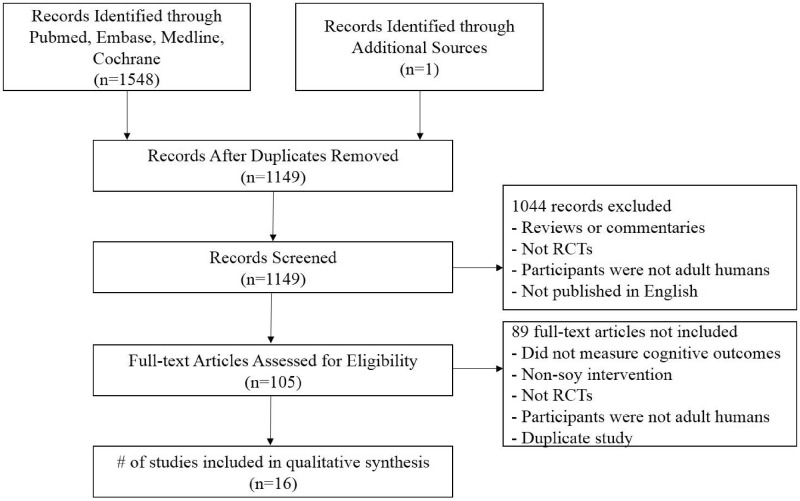
Study selection: Two researchers independently screened 1955 records, using the PICOS criteria: participants were adults; intervention was dietary sources with soy isoflavones or isolated soy isoflavones; comparator was any comparator; outcome was cognitive function; study type was randomized controlled trials (RCTs). A third researcher was consulted to resolve any discrepancies. Sixteen RCTs were included and their quality assessed.
Data extraction: Information on study design, characteristics of participants, and outcomes was extracted. PRISMA guidelines were followed.
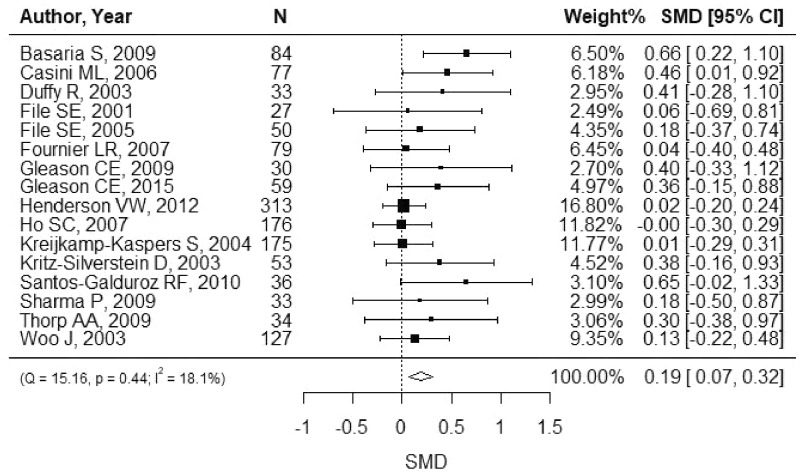
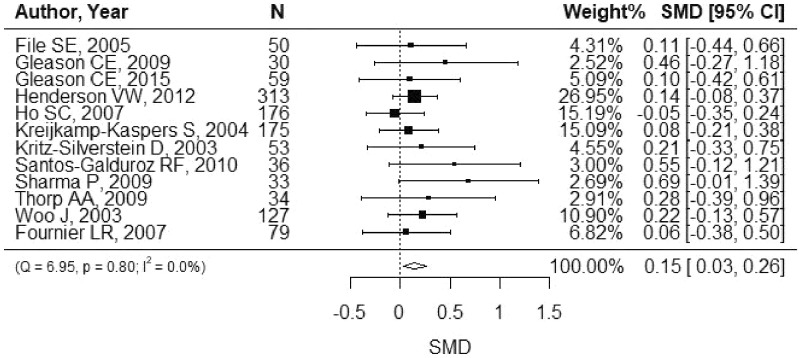
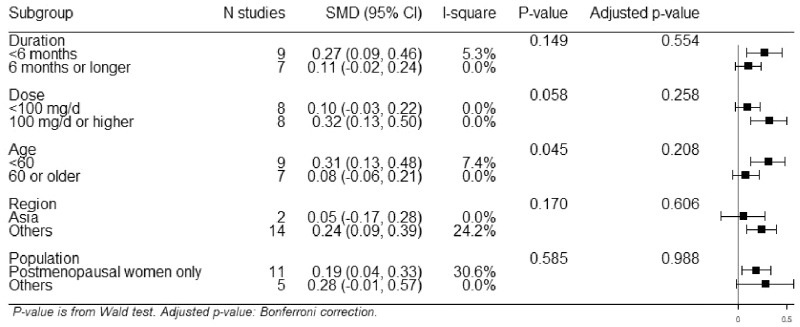
Data analysis: A random-effects meta-analysis was used to pool estimates across studies. In the 16 RCTs (1386 participants, mean age = 60 y), soy isoflavones were found to improve overall cognitive function (standardized mean difference [SMD], 0.19; 95% confidence interval [CI], 0.07-0.32) and memory (SMD, 0.15; 95%CI, 0.03-0.26).
Conclusion: The results showed that soy isoflavones may improve cognitive function in adults.
Systematic review registration: PROSPERO registration no. CRD42018082070.
Keywords: cognition; isoflavones; meta-analysis.
© The Author(s) 2019. Published by Oxford University Press on behalf of the International Life Sciences Institute. All rights reserved. For permissions, please e-mail: journals.permissions@oup.com.
Figures
References
-
- Alzheimer’s Association. 2017 Alzheimer’s disease facts and figures. Alzheimers Dement. 2017;13:325–373.
-
- Berendsen AM, Kang JH, Feskens EJM, et al. Association of long-term adherence to the MIND diet with cognitive function and cognitive decline in American women. J Nutr Health Aging. 2018;22:222–229. - PubMed
-
- Berendsen AAM, Kang JH, van de Rest O, et al. The dietary approaches to stop hypertension diet, cognitive function, and cognitive decline in American older women. J Am Med Directors Assoc. 2017;18:427–432. - PubMed
Publication types
MeSH terms
Substances
Grants and funding
LinkOut - more resources
Full Text Sources
Medical
