. 2019 Sep 10;9(1):12991.
doi: 10.1038/s41598-019-49417-1.

Endemic diversity and distribution of the Iranian vascular flora across phytogeographical regions, biodiversity hotspots and areas of endemism

Affiliations

Endemic diversity and distribution of the Iranian vascular flora across phytogeographical regions, biodiversity hotspots and areas of endemism

Jalil Noroozi et al. Sci Rep. .

Abstract

Endemism is one of the most important concepts in biogeography and is of high relevance for conservation biology. Nevertheless, our understanding of patterns of endemism is still limited in many regions of high biodiversity. This is also the case for Iran, which is rich in biodiversity and endemism, but there is no up-to-date account of diversity and distribution of its endemic species. In this study, a comprehensive list of all endemic vascular plant species of Iran, their taxonomic composition and their geographical distribution are presented. To this end, a total of 2,597 (sub)endemic vascular plant species of Iran were documented and their distribution in three phytogeographical regions, two biodiversity hotspots and five areas of endemism were analysed. The Irano-Turanian phytogeographical region harbours 88% of the Iranian endemics, the majority of which are restricted to the Irano-Anatolian biodiversity hotspot (84%). Nearly three quarters of the endemic species are restricted to mountain ranges. The rate of endemism increases along an elevational gradient, causing the alpine zone to harbour a disproportionally high number of endemics. With increasing pastoralism, urbanization, road construction and ongoing climate change, the risk of biodiversity loss in the Iranian mountains is very high, and these habitats need to be more effectively protected.


Conflict of interest statement

The authors declare no competing interests.

Figures
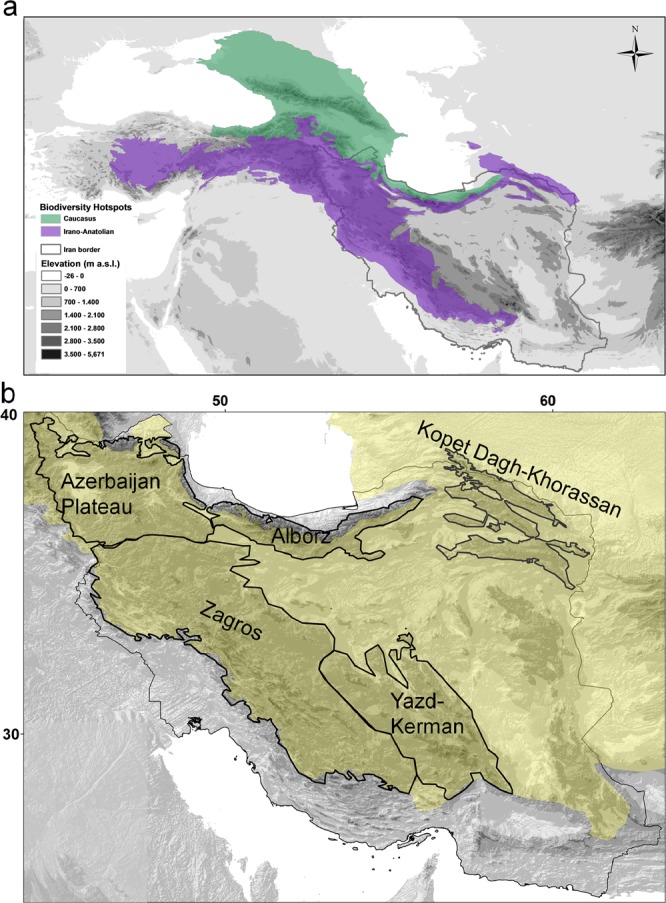
Figure 1
Figure 1
Global biodiversity hotspots, phytogeographic regions and areas of endemism in Iran. (a) Topographic map of Iran and adjacent regions showing the Irano-Anatolian and the Caucasus biodiversity hotspots. (b) Topographic map of Iran indicating phytogeographical regions (Irano-Turanian region indicated as yellow shaded area, the Saharo-Sindian region and the Euro-Siberian region indicated as unshaded areas south and north, respectively, of the Irano-Turanian region) and areas of endemism, well associated with high mountain ranges of Iran (indicated by outlines and their names).
Figure 2
Figure 2
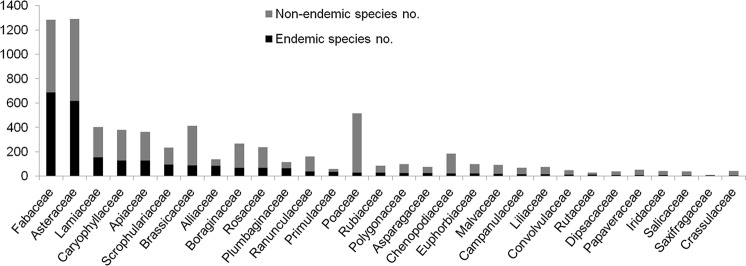
Number of endemic and non-endemic species in the 30 most endemic-rich families of the Iranian vascular flora (sorted by number of endemic species).
Figure 3
Figure 3
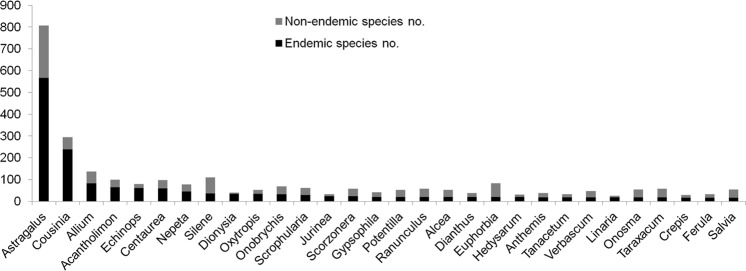
Number of endemic and non-endemic species of the 30 most endemic-rich genera of the Iranian vascular flora (sorted by number of endemic species).
Figure 4
Figure 4
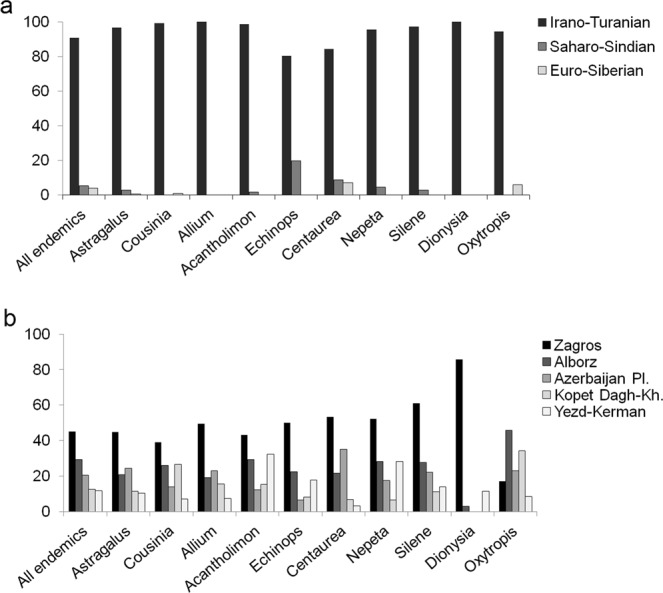
Distribution of endemic vascular plant species (total and in the 10 most endemic-rich genera) across (a) phytogeographical regions and (b) areas of endemism.
Figure 5
Figure 5
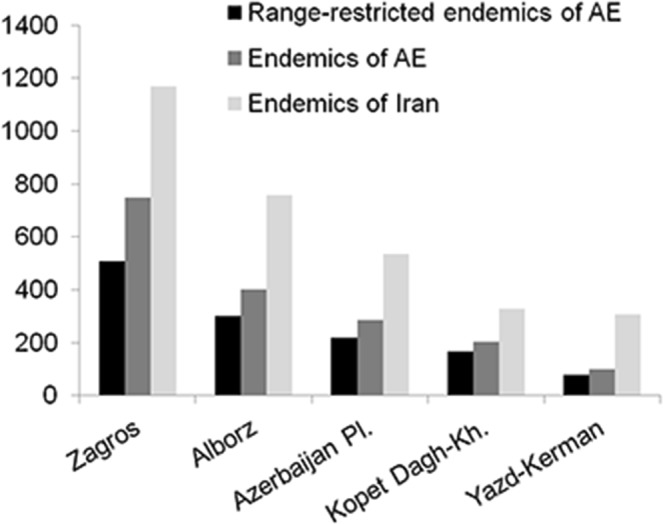
Distribution of endemic vascular plant species in general and of range-restricted endemic vascular plant species in Iran and its areas of endemism.
Figure 6
Figure 6
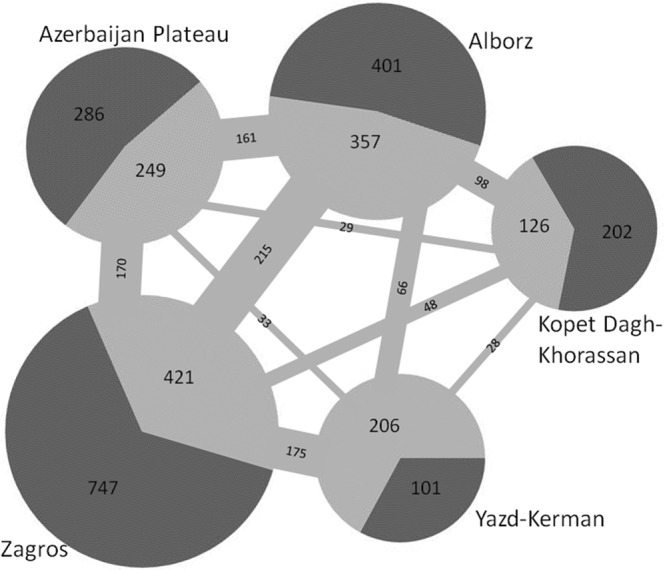
Endemic vascular plant species of Iran in areas of endemism. Endemic vascular plant species restricted to an area of endemism are indicated in dark grey, whereas those shared with other areas of endemism are indicated in light grey, their numbers being given in the bars connecting pie charts corresponding to areas of endemism.
Figure 7
Figure 7
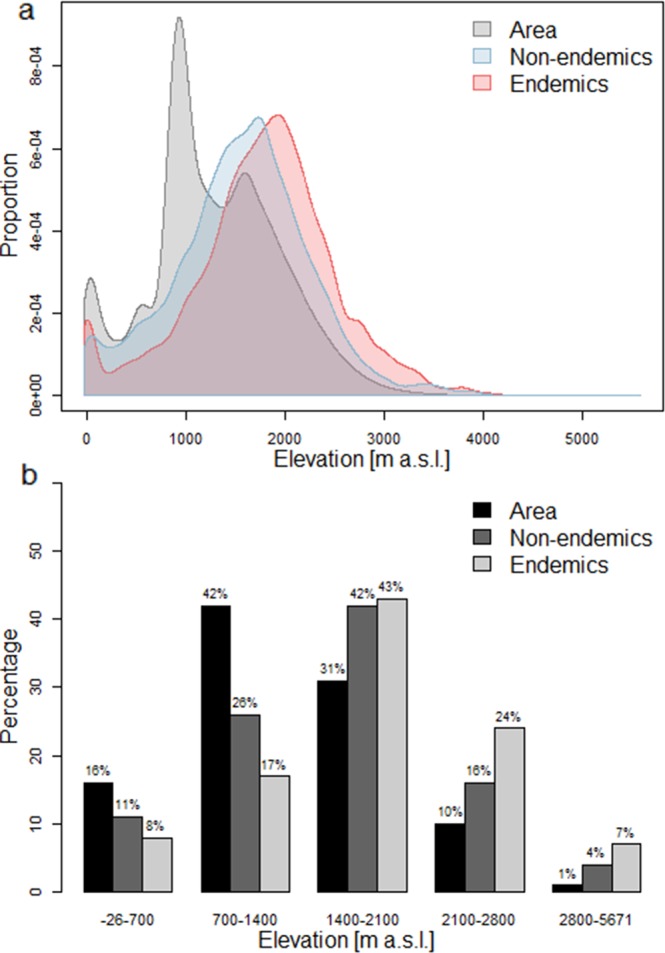
Elevational distribution of total endemic compared to non-endemic vascular flora of Iran. (a) Proportion of surface area, non-endemic and endemic species richness along the elevational gradient. (b) Percentage of surface area, non-endemic and endemic richness in different elevational zones.
Figure 8
Figure 8
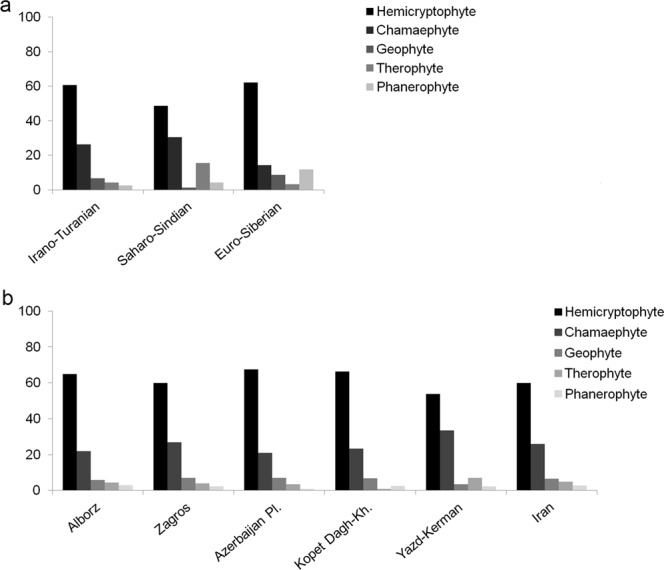
Life form spectra of the Iranian vascular flora in (a) phytogeographical regions and (b) areas of endemism.

References

    1. Anderson S. Area and endemism. The Quarterly Review of Biology. 1994;69:451–471. doi: 10.1086/418743. - DOI
    1. Lamoreux JF, et al. Global tests of biodiversity concordance and the importance of endemism. Nature. 2006;440:212–214. doi: 10.1038/nature04291. - DOI - PubMed
    1. Myers N, Mittermeier RA, Mittermeier CG, da Fonseca GAB, Kent J. Biodiversity hotspots for conservation priorities. Nature. 2000;403:853–858. doi: 10.1038/35002501. - DOI - PubMed
    1. Riemann H, Ezcurra E. Plant endemism and natural protected areas in the peninsula of Baja California, Mexico. Biological Conservation. 2005;122:141–150. doi: 10.1016/j.biocon.2004.07.008. - DOI
    1. Gotelli NJ, et al. Patterns and causes of species richness: a general simulation model for macroecology. Ecology Letters. 2009;12:873–886. doi: 10.1111/j.1461-0248.2009.01353.x. - DOI - PubMed

Publication types