


Comparison of Muscle Function, Bone Mineral Density and Body Composition of Early Starting and Later Starting Older Masters Athletes
- PMID: 31507432
- PMCID: PMC6719569
- DOI: 10.3389/fphys.2019.01050
Comparison of Muscle Function, Bone Mineral Density and Body Composition of Early Starting and Later Starting Older Masters Athletes
Abstract
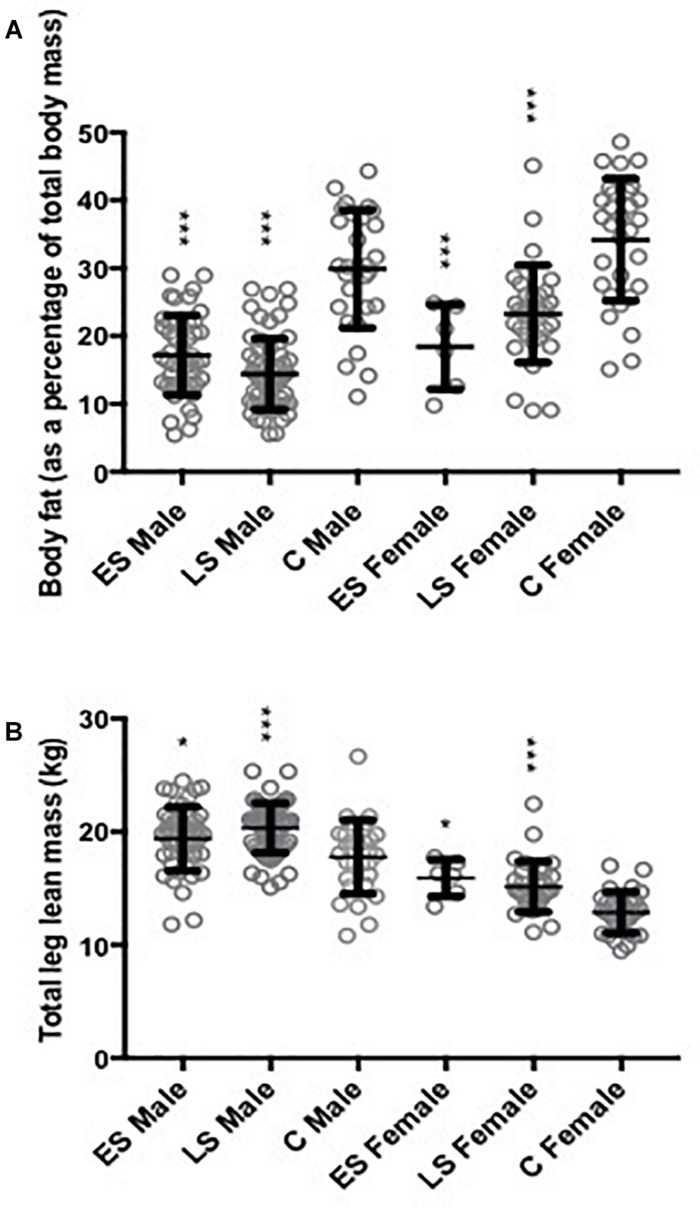
Masters endurance runners can epitomize healthy aging; being reflective of the physiological processes of aging without the compounded effects of inactivity. The primary aim of the present study was to determine, using cross-sectional data, whether individuals taking up training after the age of 50 years can achieve the same level of athletic performance and musculoskeletal characteristics in their older age as those who trained all of their adult lives. A total of 150 master endurance runners [age 68 (5) years; 111 male, 39 female] were divided into early starters (training all of their adulthood) and late starters (started training after age 50 years). A comparative non-athletic group of 59 healthy older adults [age 73 (4) years; 30 female, 29 male] were additionally included for analysis. Training intensity, age-graded performance (AGP) and musculoskeletal assessments were performed. Results showed that there was no difference between athlete groups for training intensity or age-graded performance, despite the 30-year difference in training history. Body fat percentage and leg lean mass did not differ between athlete groups, but were 17% lower and 12% greater, respectively, in athlete groups compared with controls. Power normalized to body mass did not differ between any groups. Spine BMD was lower in late starters than controls, while early starters did not differ from late starters or controls. Hip BMD did not differ between any of the groups. These findings show that the Masters athletes we studied that started intense endurance running after the age of 50 years had lower body fat and higher leg lean mass compared to non-athletes. Body composition and athletic performance of the late starters was very similar to those who trained all of their adult lives.
Keywords: body composition; bone mineral density; endurance running; masters athletes; starting age.
Figures
References
-
- Bauer J. M., Verlaan S., Bautmans I., Brandt K., Donini L. M., Maggio M., et al. (2015). Effects of a vitamin D and leucine-enriched whey protein nutritional supplement on measures of sarcopenia in older adults, the Provide study: a randomized, double-blind, placebo-controlled trial. J. Am. Med. Dir. Assoc. 16 740–747. 10.1016/j.jamda.2015.05.021 - DOI - PubMed
Grants and funding
LinkOut - more resources
Full Text Sources
