


Therapeutic alliance: satisfaction and attrition of patients from a mental health clinic in Ayacucho, Peru
- PMID: 31507779
- PMCID: PMC6735140
Therapeutic alliance: satisfaction and attrition of patients from a mental health clinic in Ayacucho, Peru
Abstract
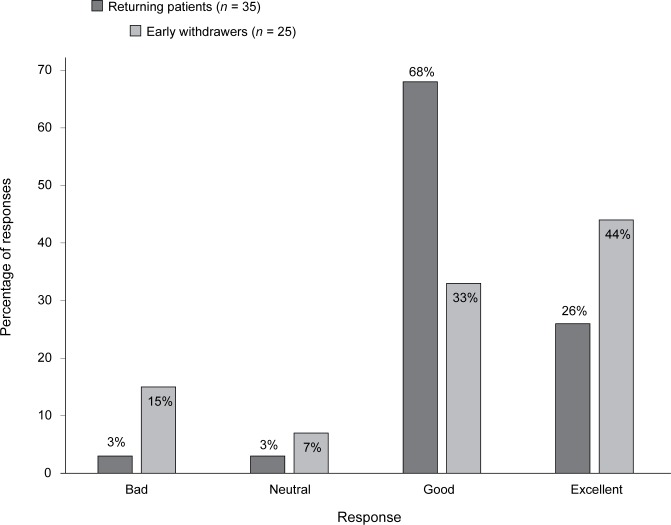
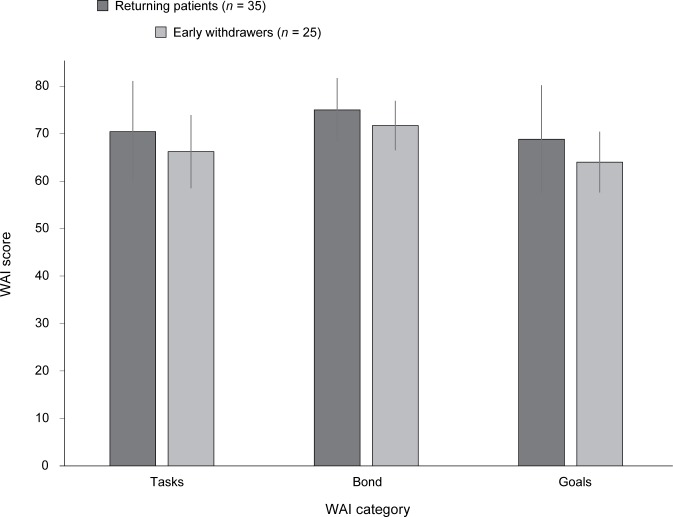
This study examines the role of the patient-provider relationship (alliance) and patient satisfaction in early patient withdrawal from mental health therapy in rural Peru. A prospective comparison of 60 patients demonstrated that early withdrawal was associated with the clinician's, but not the patient's, evaluation of the patient-provider alliance. This suggests that the satisfaction and alliance questionnaires typically used in high-income countries may not be effective in evaluating patient attitudes in this population, but may be useful for clinician evaluations of the alliance. Clinicians can use the Working Alliance Inventory to indicate the need for early intervention to prevent patient drop-out in middle- and low-income countries.
Figures
References
-
- Edlund, M. J., Wang, P. S., Berglund, P. A., et al. (2002) Dropping out of mental health treatment: patterns and predictors among epidemiological survey respondents in the United States and Ontario. American Journal of Psychiatry, 159, 845–851. - PubMed
-
- Hansen, N. B., Lambert, M. J. & Forman, E. M. (2002) The psychotherapy dose–response effect and its implications for treatment delivery services. Clinical Psychology: Science and Practice, 9, 329–343.
-
- Horvath, A. O. & Greenberg, L. S. (1989) Development and validation of the Working Alliance Inventory. Journal of Counseling Psychology, 36, 223–233.
-
- Lhullier, A. C., Nunes, M. L. T., Antochevis, A. F., et al. (2000) Change of therapist and therapy drop out in a training clinic. Aletheia, 11, 7–11.
LinkOut - more resources
Full Text Sources