


Systematic review of burnout among healthcare providers in sub-Saharan Africa
- PMID: 31510975
- PMCID: PMC6737653
- DOI: 10.1186/s12889-019-7566-7
Systematic review of burnout among healthcare providers in sub-Saharan Africa
Abstract
Background: Burnout is characterized by physical and emotional exhaustion from long-term exposure to emotionally demanding work. Burnout affects interpersonal skills, job performance, career satisfaction, and psychological health. However, little is known about the burden of burnout among healthcare providers in sub-Saharan Africa.
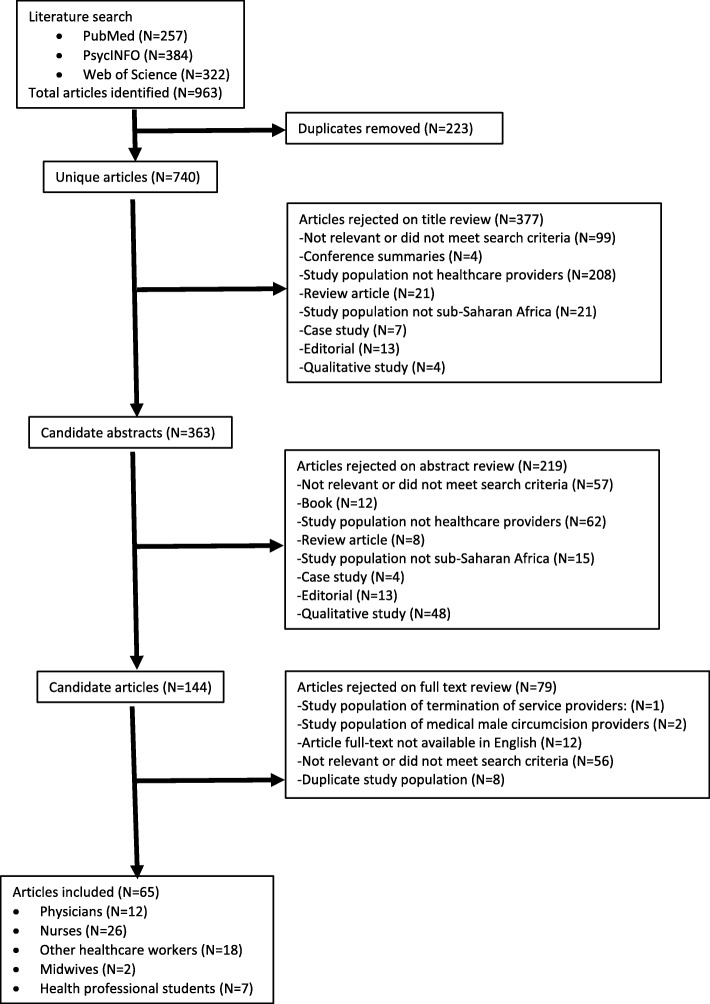
Methods: Relevant articles were identified through a systematic review of PubMed, Web of Science (Thomson Reuters), and PsycINFO (EBSCO). Studies were selected for inclusion if they examined a quantitative measure of burnout among healthcare providers in sub-Saharan Africa.
Results: A total of 65 articles met our inclusion criteria for this systematic review. Previous studies have examined burnout in sub-Saharan Africa among physicians (N = 12 articles), nurses (N = 26), combined populations of healthcare providers (N = 18), midwives (N = 2), and medical or nursing students (N = 7). The majority of studies assessed burnout using the Maslach Burnout Inventory. The highest levels of burnout were reported among nurses, although all healthcare providers showed high burnout. Burnout among healthcare providers is associated with their work environments, interpersonal and professional conflicts, emotional distress, and low social support.
Conclusions: Available studies on this topic are limited by several methodological challenges. More rigorously designed epidemiologic studies of burnout among healthcare providers are warranted. Health infrastructure improvements will eventually be essential, though difficult to achieve, in under-resourced settings. Programs aimed at raising awareness and coping with burnout symptoms through stress management and resilience enhancement trainings are also needed.
Keywords: Burnout; Health personnel; Sub-Saharan Africa.
Conflict of interest statement
JWD has received research support for investigator-initiated studies from Onyx/Amgen and Basis/Intel. All other authors declare that they have no competing interests. MLD has received remuneration from Harvard Health Publishing.
Figures
References
-
- Maslach C, Jackson SE. The measurement of experienced burnout. J Occup Behav. 1981;2:99–113. doi: 10.1002/job.4030020205. - DOI
Publication types
MeSH terms
Grants and funding
LinkOut - more resources
Full Text Sources
Miscellaneous
