


Incidence and death in 29 cancer groups in 2017 and trend analysis from 1990 to 2017 from the Global Burden of Disease Study
- PMID: 31511035
- PMCID: PMC6740016
- DOI: 10.1186/s13045-019-0783-9
Incidence and death in 29 cancer groups in 2017 and trend analysis from 1990 to 2017 from the Global Burden of Disease Study
Abstract
Background and aims: Cancer has become the second most serious disease threatening human health, followed by cardiovascular diseases. This study aimed to quantitatively estimate the mortality, morbidity, and analyze the trends of 29 cancer groups in 195 countries/regions between 1990 and 2017.
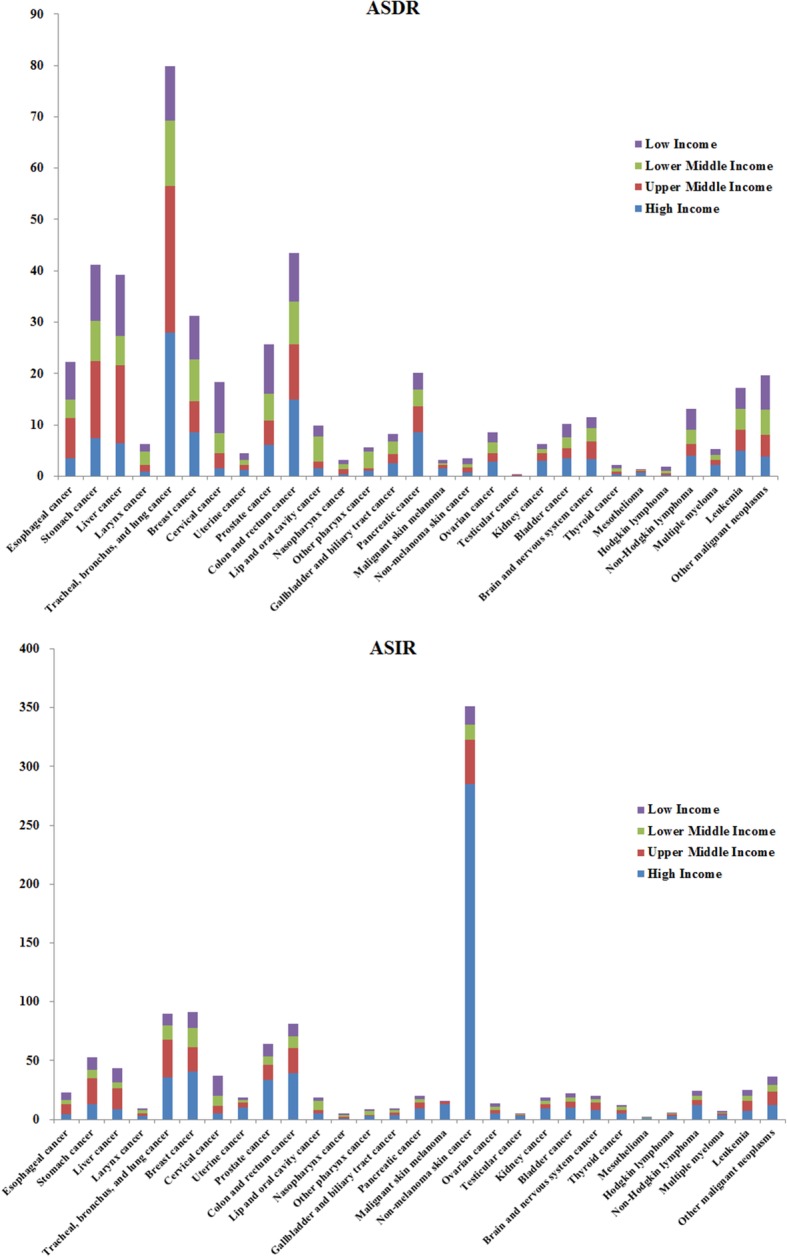
Methods: Detailed information of 29 cancer groups were collected from the Global Burden of Disease (GBD) study in 2017 and age-standardized incidence rates (ASIR) and age-standardized death rates (ASDR) of 29 cancer groups were calculated based on gender, age, region, and country. Trend analyses were conducted for major cancer types.
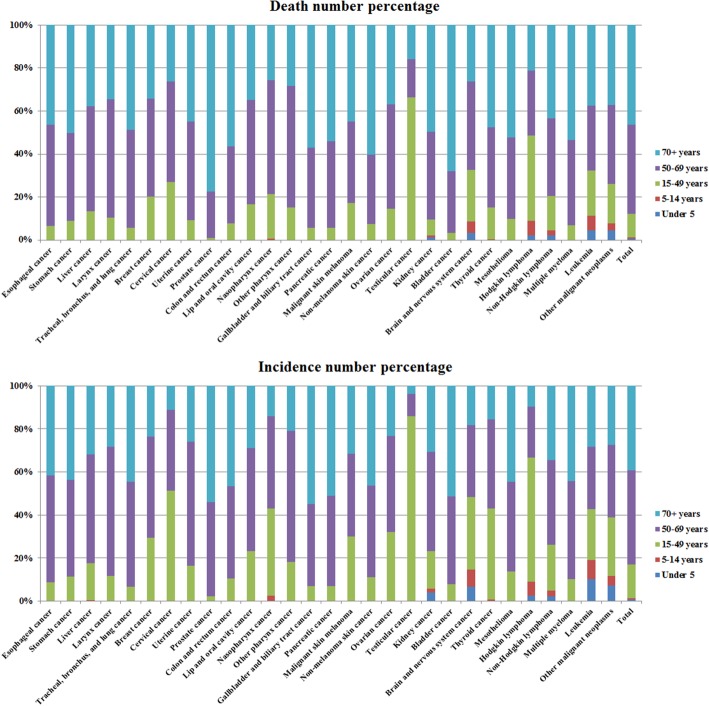
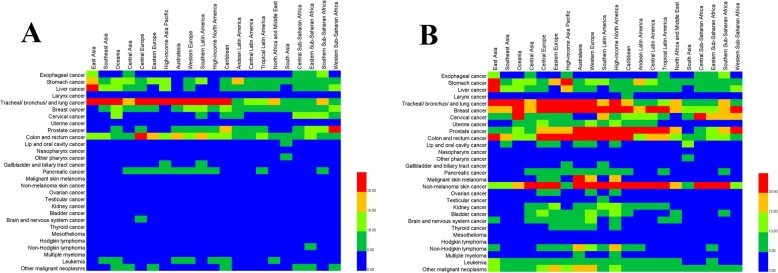
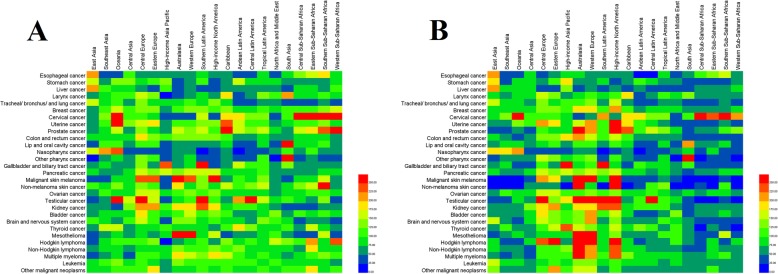
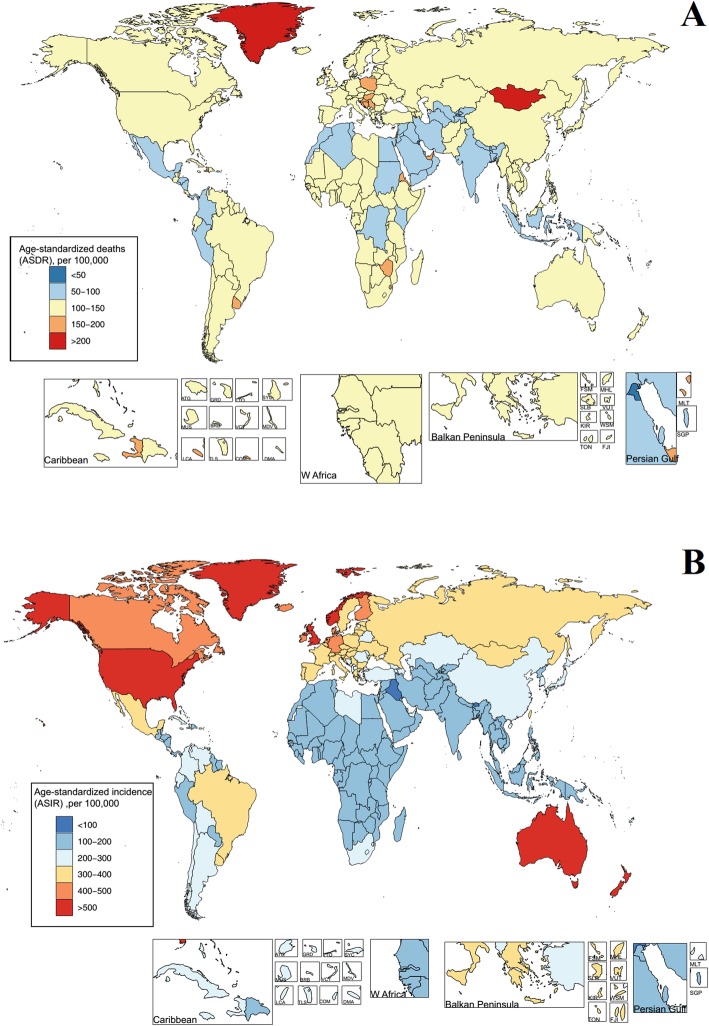
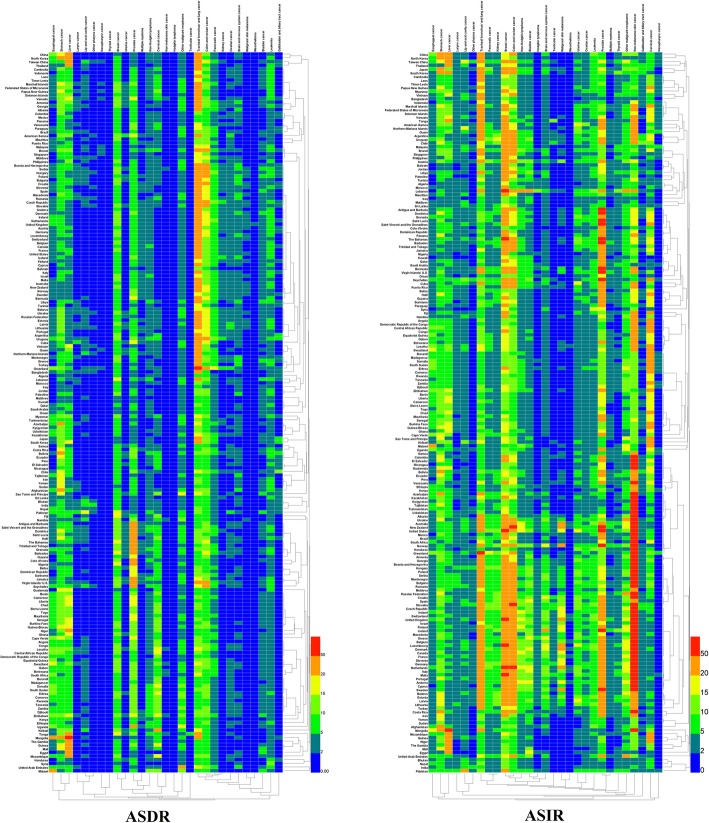
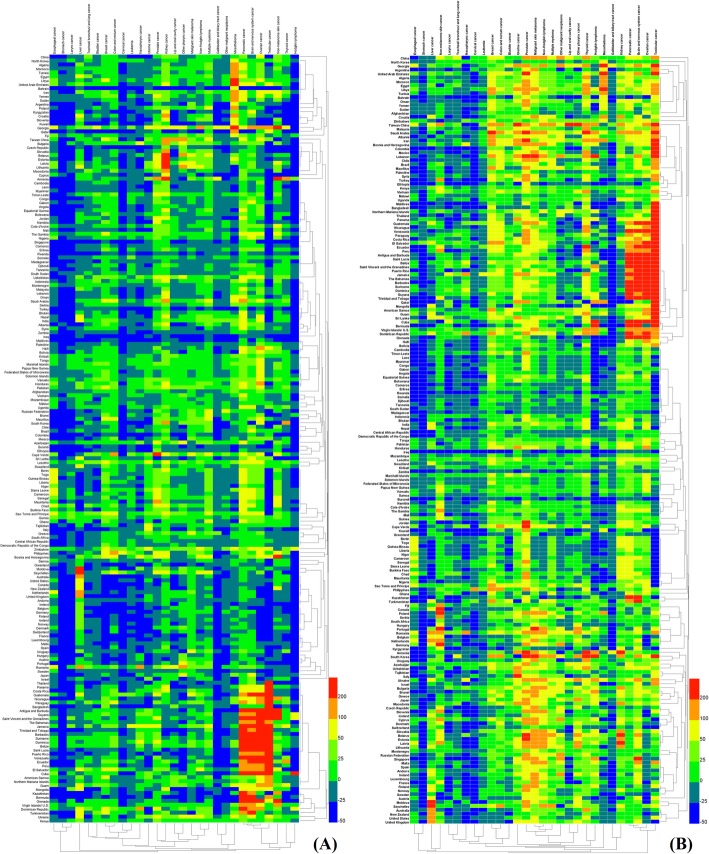
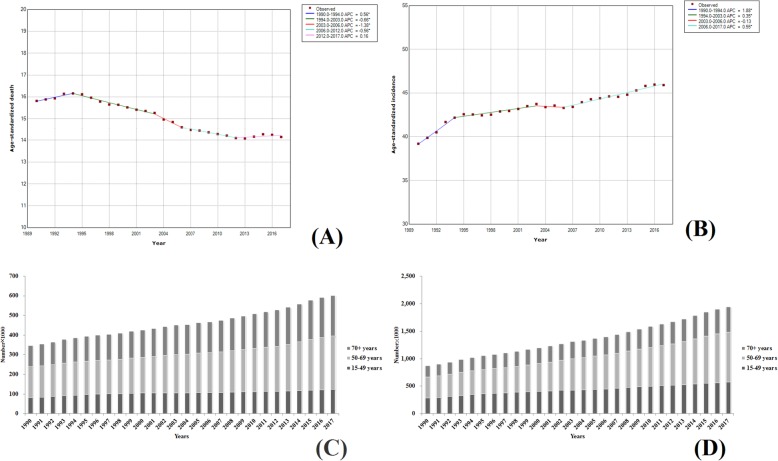
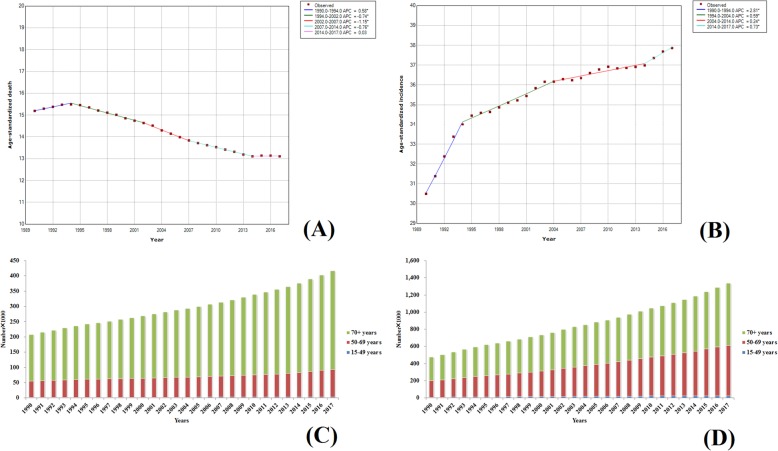
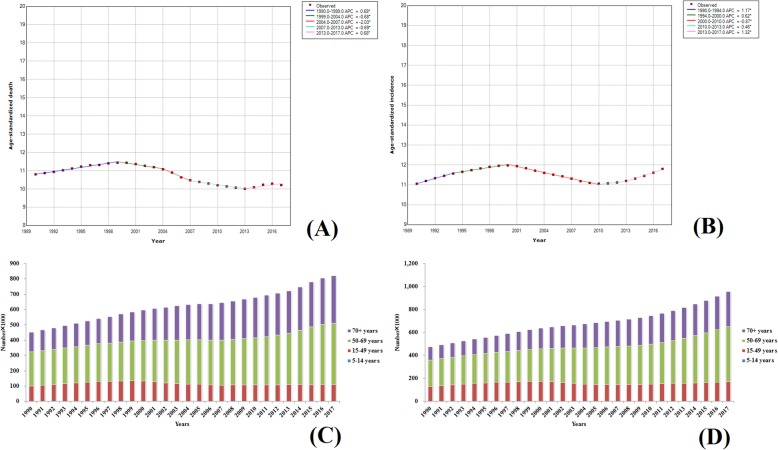
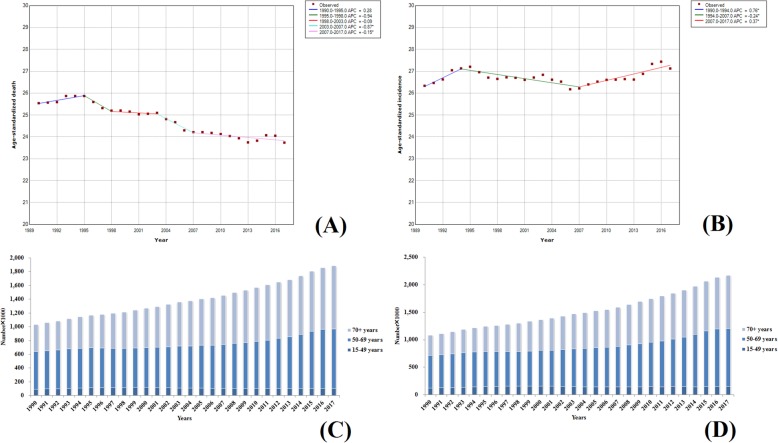
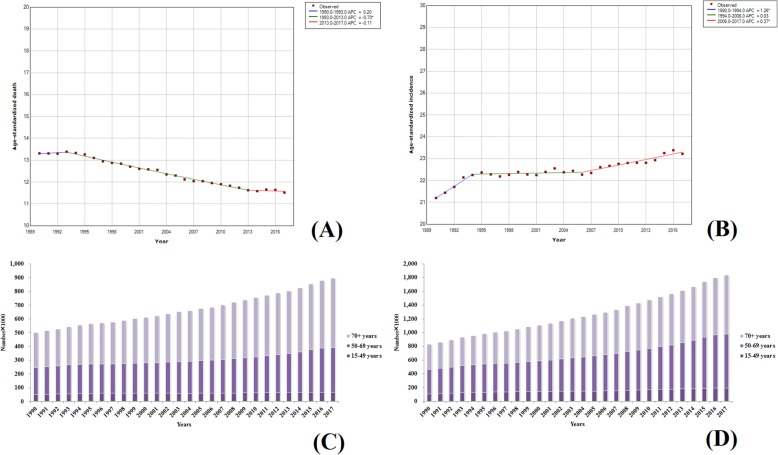
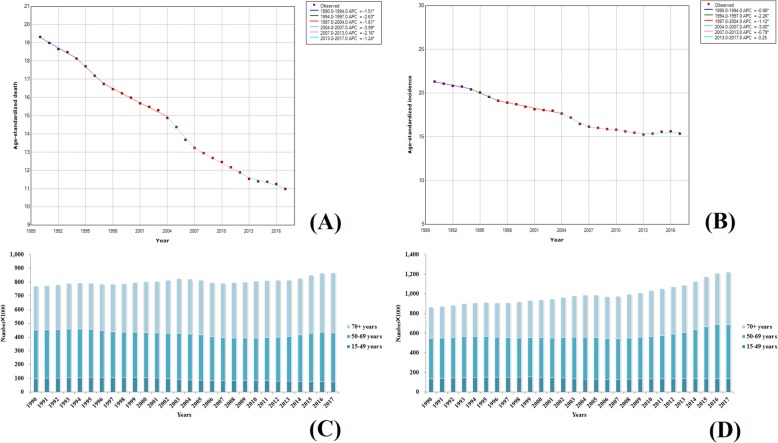
Results: In 2017, the global death population caused by cancer reached 9 million, which was nearly twice the number in 1990. The ASDR and ASIR of cancer in males were about 1.5 times those of females. Breast cancer showed the highest mortality rate in females in 2017. Individuals aged over 50 are at high risk of developing cancer and the number of cases and deaths in this age group accounted for more than 80% of all cancers in all age groups. Asia has the heaviest cancer burden due to its large population density. Different cancers in varied countries globally have their own characteristics. The ASDR and ASIR of some major cancers demonstrated changes from 1990 to 2017.
Conclusions: Analyses of these data provided basis for future investigations to the common etiological factors, leading to the occurrence of different cancers, the development of prevention strategies based on local characteristics, socioeconomic and other conditions, and the formulation of more targeted interventions.
Keywords: Cancer; Global burden of disease; Incidence and death; Trend analysis.
Conflict of interest statement
All financial and non-financial competing interests must be declared in this section.
Figures


References
-
- Balducci L, Ershler WB: Science & society—cancer and ageing: a nexus at several levels. Nat Rev Cancer 2005, 5(8):655-662. - PubMed
-
- Fitzmaurice C, Akinyemiju TF, Al Lami FH, Alam T, Alizadeh-Navaei R, Allen C, Alsharif U, Alvis-Guzman N, Amini E, Anderson BO, et al. Global, regional, and national cancer incidence, mortality, years of life lost, years lived with disability, and disability-adjusted life-years for 29 cancer groups, 1990 to 2016 a systematic analysis for the global burden of disease study. Jama Oncol. 2018;4(11):1553–1568. doi: 10.1001/jamaoncol.2018.2706. - DOI - PMC - PubMed
-
- Akinyemiju T, Abera S, Ahmed M, Alam N, Alemayohu MA, Allen C, Al-Raddadi R, Alvis-Guzman N, Amoako Y, Artaman A, et al. The burden of primary liver cancer and underlying etiologies from 1990 to 2015 at the global, regional, and national level results from the Global Burden of Disease Study 2015. Jama Oncol. 2017;3(12):1683–1691. doi: 10.1001/jamaoncol.2017.3055. - DOI - PMC - PubMed
Publication types
MeSH terms
LinkOut - more resources
Full Text Sources
