


Editorial
doi: 10.1186/s13613-019-0577-9.
Recruiting the microcirculation in septic shock
Affiliations
- PMID: 31512059
- PMCID: PMC6738355
- DOI: 10.1186/s13613-019-0577-9
Item in Clipboard
Editorial
Recruiting the microcirculation in septic shock
Ann Intensive Care.
.
Erratum in
-
Correction to: Recruiting the microcirculation in septic shock.Ann Intensive Care. 2019 Sep 24;9(1):107. doi: 10.1186/s13613-019-0581-0. Ann Intensive Care. 2019. PMID: 31552497 Free PMC article.
No abstract available
Figures
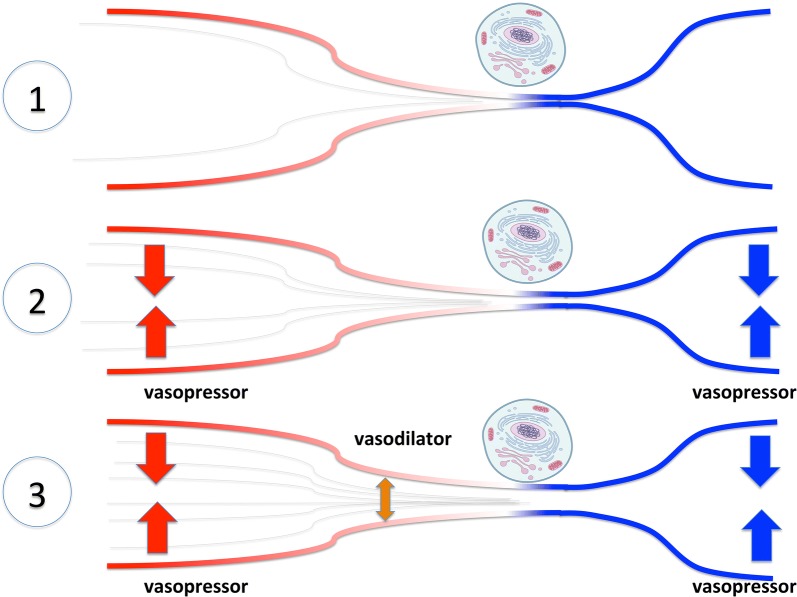
Schematic representation of microvascular recruitment strategies of microvessels in distributive shock. Impaired tissue perfusion in distributive shock may be associated with low arterial pressure due to systemic vasodilation and intense vasoconstriction of precapillaries arterioles and external compression of capillaries in some vascular territories (Panel 1). Vasopressor agents increase inflow pressure by arteriolar vasoconstriction. Cardiac output can also increase due to venous constriction. Perfusion pressure may not increase despite the arterial pressure rise if the increase in perfusion pressure is insufficient to overcome precapillary vascular resistance and its closing critical pressure (Panel 2). This obstruction—theorized as a vascular bottleneck—might be targeted using vasodilators, which may improve microcirculatory flow and oxygen supply in selected patients (Panel 3)
References
-
- Ince C, Boerma EC, Cecconi M, De Backer D, Shapiro NI, Duranteau J, et al. Second consensus on the assessment of sublingual microcirculation in critically ill patients: results from a task force of the European Society of Intensive Care Medicine. Intensive Care Med. 2018;44:281–299. doi: 10.1007/s00134-018-5070-7. - DOI - PubMed
Publication types
LinkOut - more resources
Full Text Sources
