. 2019 Sep 12;14(9):e0222363.
doi: 10.1371/journal.pone.0222363. eCollection 2019.

Genomic characterization of the complete terpene synthase gene family from Cannabis sativa

Affiliations

Genomic characterization of the complete terpene synthase gene family from Cannabis sativa

Keith D Allen et al. PLoS One. .

Abstract

Terpenes are responsible for most or all of the odor and flavor properties of Cannabis sativa, and may also impact effects users experience either directly or indirectly. We report the diversity of terpene profiles across samples bound for the Washington dispensary market. The remarkable degree of variation in terpene profiles ultimately results from action of a family of terpene synthase genes, only some of which have been described. Using a recently available genome assembly we describe 55 terpene synthases with genomic context, and tissue specific expression. The family is quite diverse from a protein similarity perspective, and subsets of the family are expressed in all tissues in the plant, including a set of root specific monoterpene synthases that could well have agronomic importance. Ultimately understanding and breeding for specific terpene profiles will require a good understanding of the gene family that underlies it. We intend for this work to serve as a foundation for that.


Conflict of interest statement

I have read the journal's policy and the authors of this manuscript have the following competing interests: RG is a member of the boards for PDX, Biomedcan and Rylies Smile Foundation and the advisory board for the California Cannabis Industry Association, was given an honorarium for speaking at the Cannabis Science Conference East, 2019, and has a personal relationship with Greg Copenhaver, Editor-in-Chief for PLoS Genetics. KJM owns stock on Medicinal Genomics, a Cannabis DNA sequencing and Cannabis microbial focused company. KDA, CP, JR and AT declare no competing interests.This does not alter our adherence to PLOS ONE policies on sharing data and materials.

Figures
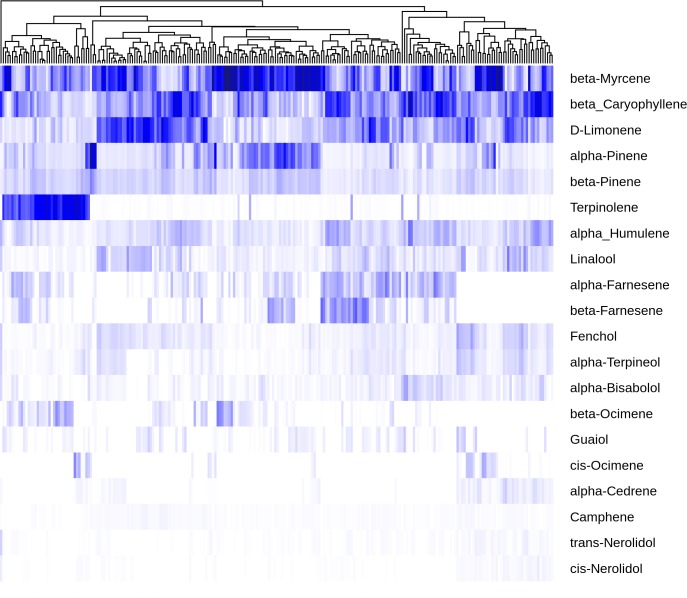
Fig 1
Fig 1. Variation in terpene abundance.
Abundance of the twenty most abundant terpenes across 240 cultivars sorted with the most abundant (β-myrcene) at the top. Individual samples were normalized to percent of total terpene present, euclidean distance was calculated with the R dist command prior to clustering with hclust using the “complete” method.
Fig 2
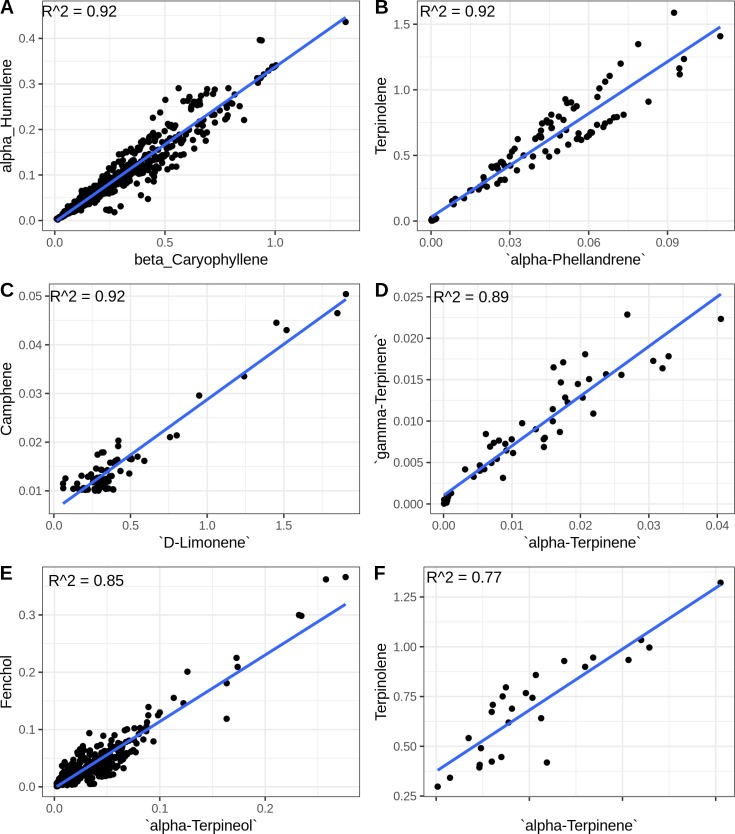
Fig 2. Highly correlated terpenes.Linear relationships between the six most highly correlated compound pairs in this data set.
Regression lines were fitted with the R lm command, the R^2 values are shown in the figure, and the F-test p-values for A-E are less than 2.2e-16, while F has a p-value of 3.296e-09.
Fig 3
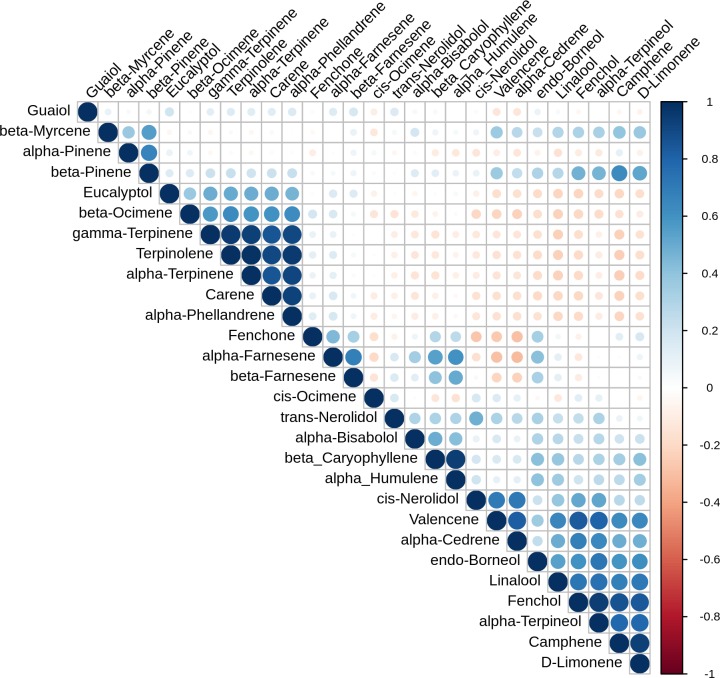
Fig 3. Terpene correlation plot.
Visual representation of the correlation matrix, Darker blue color and larger dot size indicate stronger positive correlation, while darker red means stronger negative correlation. Figure generated using the R corrplot package (https://github.com/taiyun/corrplot).
Fig 4
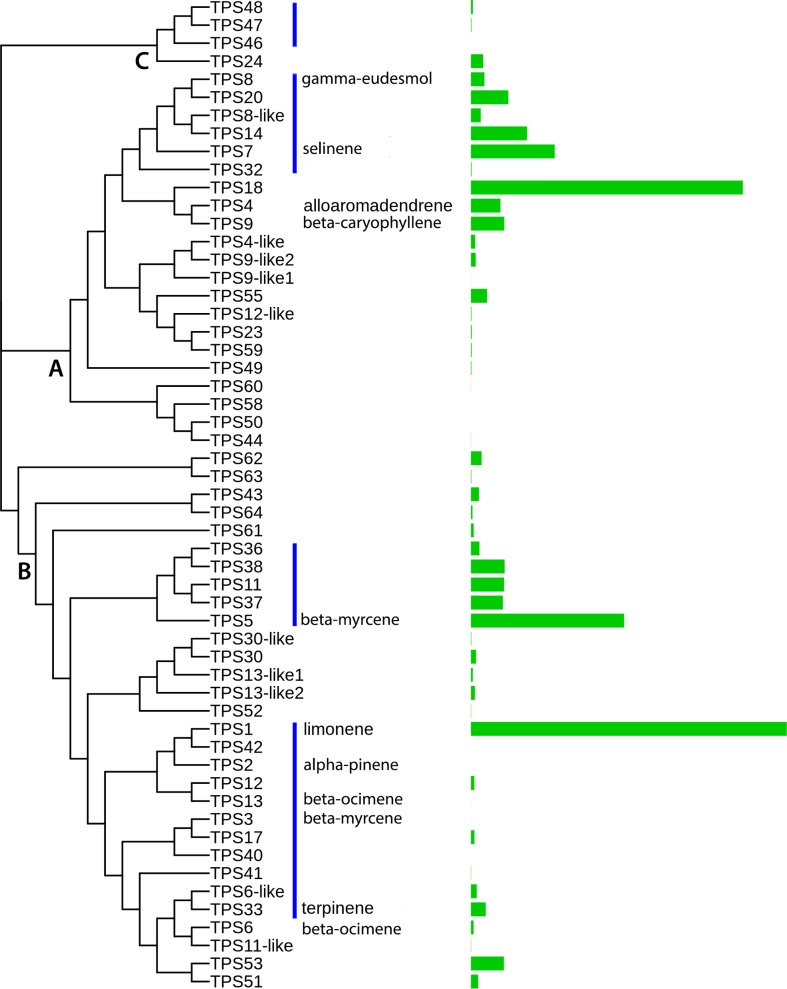
Fig 4. TPS family structure.
Neighbor-joining tree calculated for protein sequence of 55 full length TPS genes with ClustalW2. The bar plot on the right shows number of uniquely mapped reads from the combined Purple Kush RNA-Seq data set. TPS families are noted on the tree with A denoting TPS-a sesquiterpene synthases, B TPS-b monoterpene synthases, and C TPS-c diterpene synthases. Blue bars show related genes that exist in clusters on the genomic contigs. Note that TPS7 was not found in the genomic contigs, so the protein sequence was taken from [7].
Fig 5
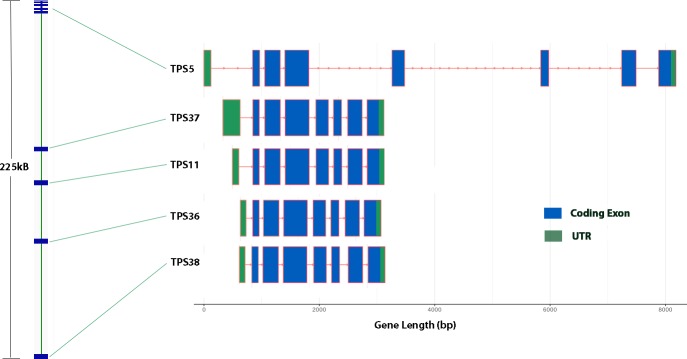
Fig 5. TPS5/TPS11 monoterpene synthase cluster.
On the left is the overall organization of this 225kB long cluster, with detailed exon structure on the right.
Fig 6
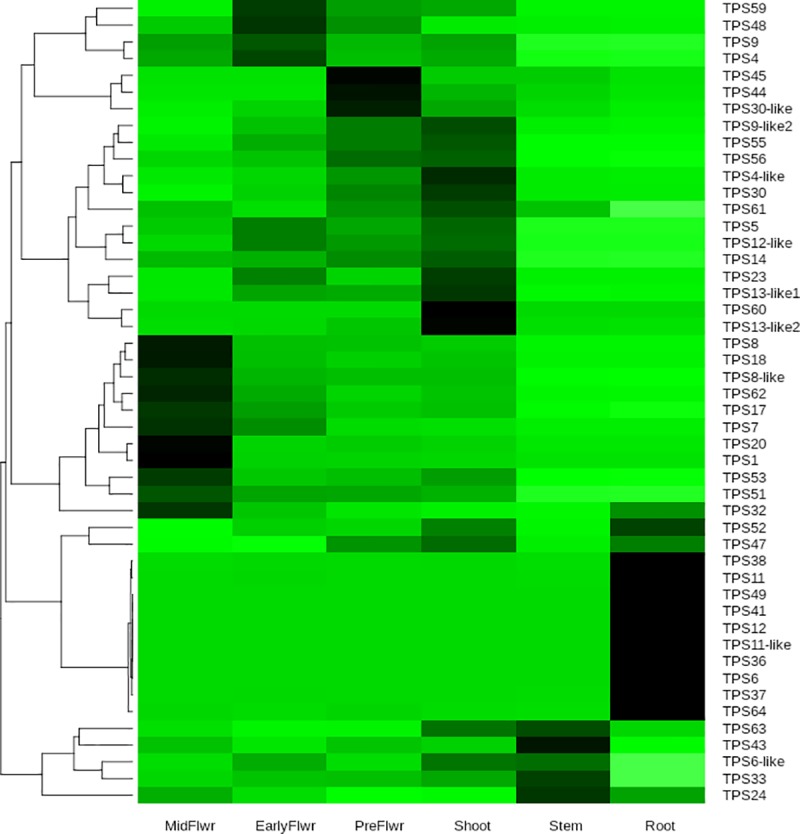
Fig 6. Tissue specific gene expression.
Heatmap of terpene synthase gene expression across the six tissues of the Purple Kush RNA-Seq data set [13] Each gene (row) normalized to percent of total expression for each gene (summed across all tissue types). Darker color means higher percentage of total expression for a given gene.
Fig 7
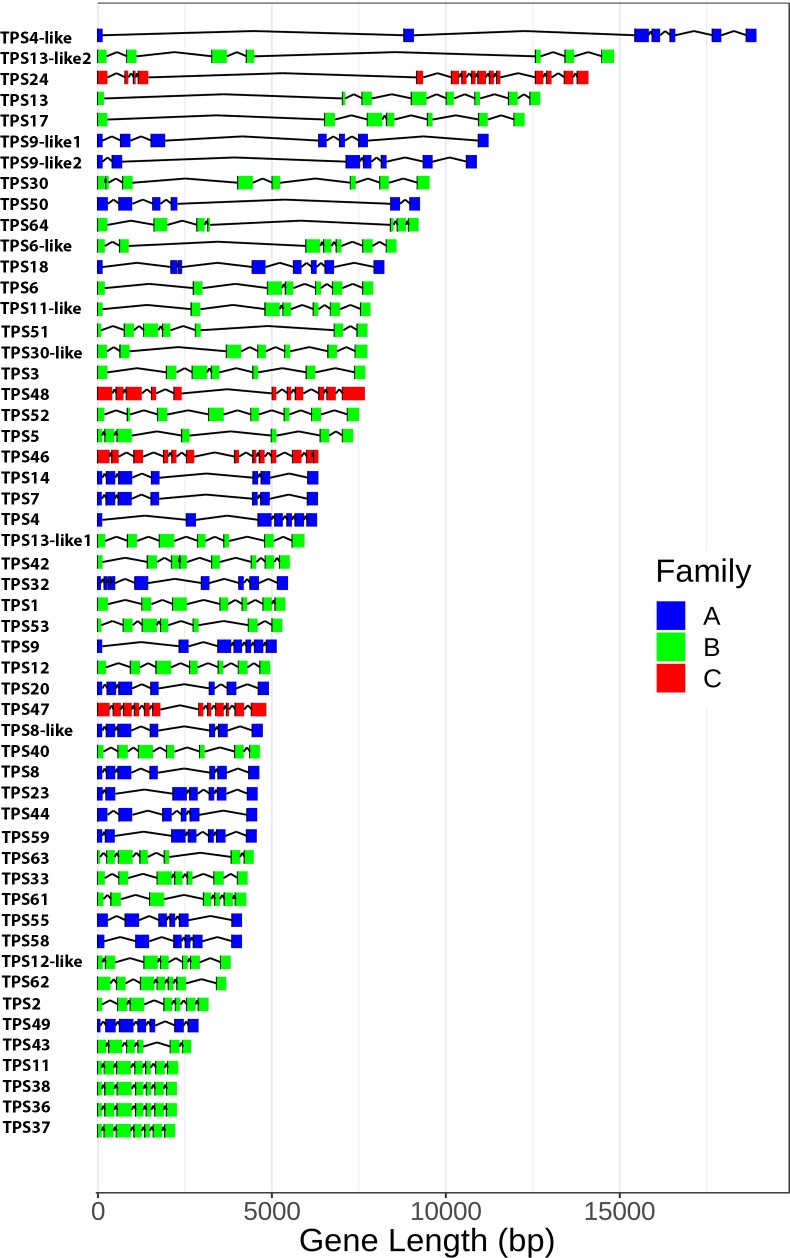
Fig 7. Gene length variation.
Gene structure of 55 full length TPS genes. TPS subfamily is indicated by color. A: sesquiterpene synthases, B: monoterpene synthases, C: diterpene synthases.
Fig 8
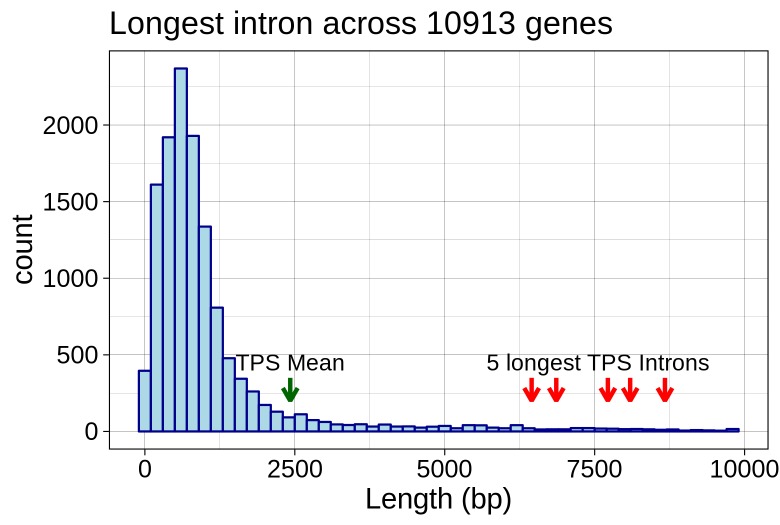
Fig 8. Longest intron size distribution.
Distribution of sizes for the longest intron across each of 10,913 multi-exon genes derived from a high confidence transcriptome. The median size, and the sizes from the five largest introns in the TPS family are indicated with arrows.
Fig 9
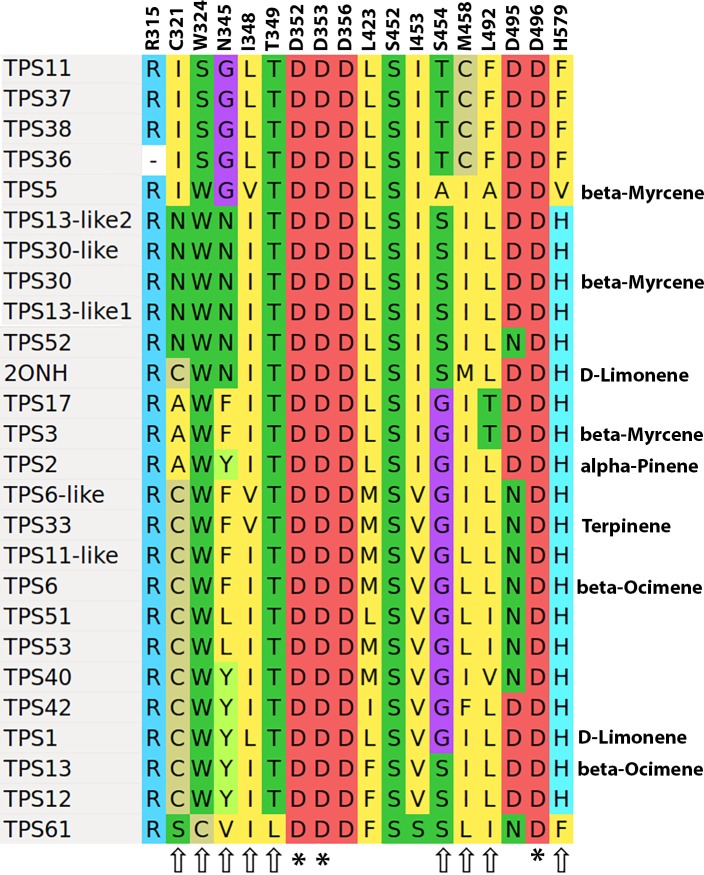
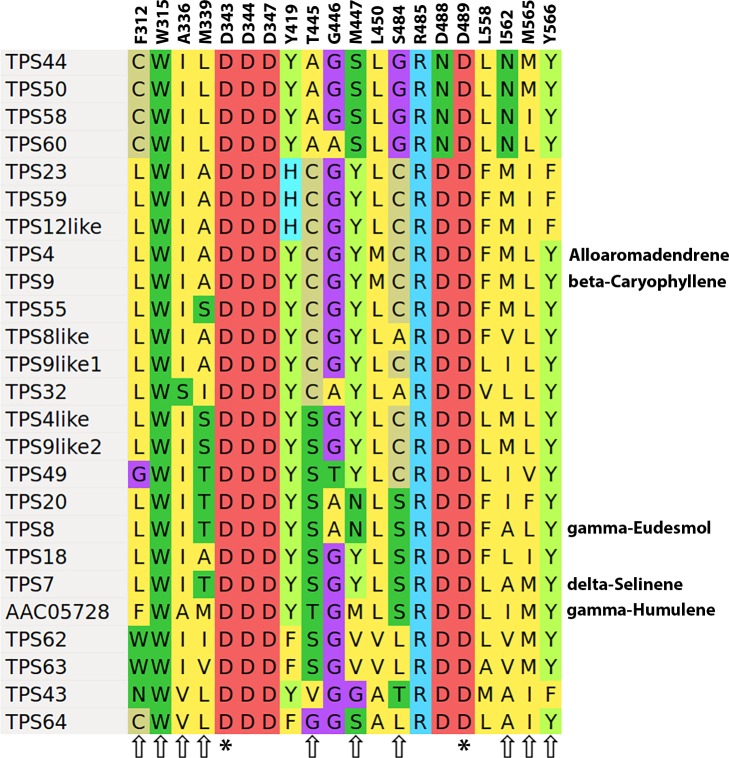
Fig 9. Monoterpene synthase active site residues.
Alignment of active site residues for Family B TPS genes. For characterized enzymes the most abundant product with GPP as substrate are shown on the right. Residues indicated with an asterisk (*) are essential for enzyme activity, while those indicated with arrows, if changed will alter the product profile of the enzyme. Amino acid numbering is according to the alignment in Dataset S4 of [9].
Fig 10
Fig 10. Sesquiterpene synthase active site residues.
Alignement of active site residues for Family A TPS genes, aligned to the Abies grandis γ-humulene synthase AAC05728. For characterized enzymes the most abundant product with FPP as substrate are shown on the right. Residues indicated with an asterisk (*) are essential for enzyme activity, while those indicated with arrows, if changed will alter the product profile of the enzyme. Residue numbering is taken from supplementary Fig 11 in reference .

References

    1. Chen F, Tholl D, Bohlmann J, Pichersky E. The family of terpene synthases in plants: a mid-size family of genes for specialized metabolism that is highly diversified throughout the kingdom. Plant J. 2011;66(1):212–29. 10.1111/j.1365-313X.2011.04520.x - DOI - PubMed
    1. Russo EB. Taming THC: potential Cannabis synergy and phytocannabinoid-terpenoid entourage effects. Br J Pharmacol. 2011;163(7):1344–64. 10.1111/j.1476-5381.2011.01238.x - DOI - PMC - PubMed
    1. Brenneisen R. Chemistry and Analysis of Phytocannabinoids and Other Cannabis Constituents In: Marijuana and the Cannabinoids. Totowa, NJ: Humana Press; 2007. p. 17–49.
    1. Xu J, Ai Y, Wang J, Xu J, Zhang Y, Yang D. Converting S-limonene synthase to pinene or phellandrene synthases reveals the plasticity of the active site. Phytochemistry. 2017;137:34–41. 10.1016/j.phytochem.2017.02.017 - DOI - PubMed
    1. Lesburg CA, Zhai G, Cane DE, Christianson DW. Crystal structure of pentalenene synthase: mechanistic insights on terpenoid cyclization reactions in biology. Science. 1997;277(5333):1820–4. 10.1126/science.277.5333.1820 - DOI - PubMed