


Effect of Tai Chi alone or as additional therapy on low back pain: Systematic review and meta-analysis of randomized controlled trials
- PMID: 31517838
- PMCID: PMC6750325
- DOI: 10.1097/MD.0000000000017099
Effect of Tai Chi alone or as additional therapy on low back pain: Systematic review and meta-analysis of randomized controlled trials
Abstract
Background: This is the first systematic review evaluating and statistically synthesis the current studies regarding the effects of Tai Chi on pain and disability in patients with low back pain (LBP).
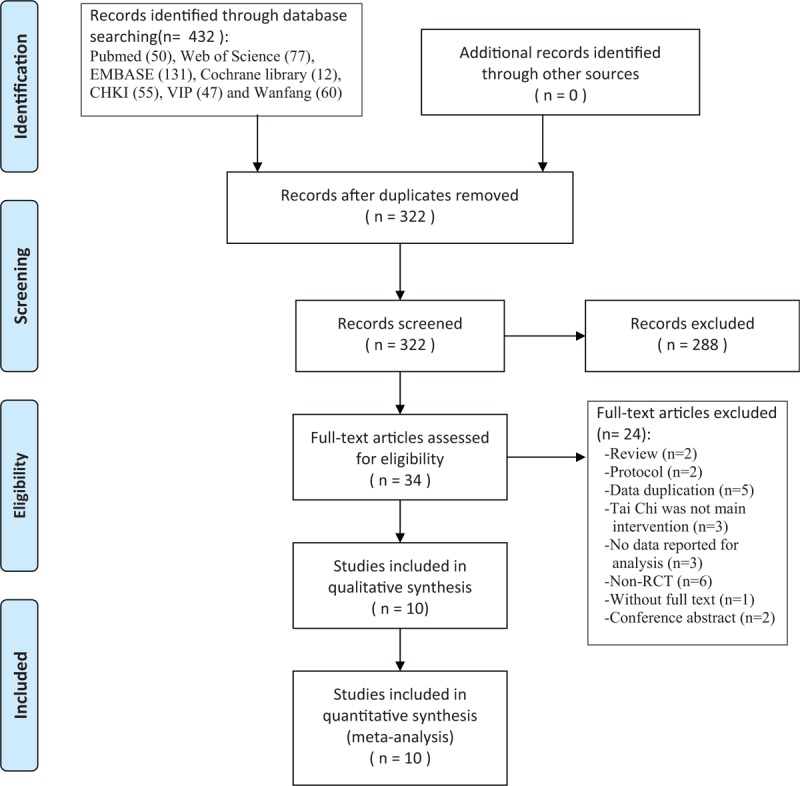
Methods: Seven electronic databases including PubMed, EMBASE, Web of Science, Cochrane Library, China National Knowledge Infrastructure (CNKI), Wanfang and VIP information from inception to early March 2019 were searched. The Physiotherapy Evidence Database (PEDro) Scale was used to assess quality of all included randomized controlled trials (RCTs). The pooled effect size (weight mean difference, WMD) and 95% confidence interval (CI) were calculated to determine the effect of Tai Chi on pain and disability among LBP patients based on random effects model.
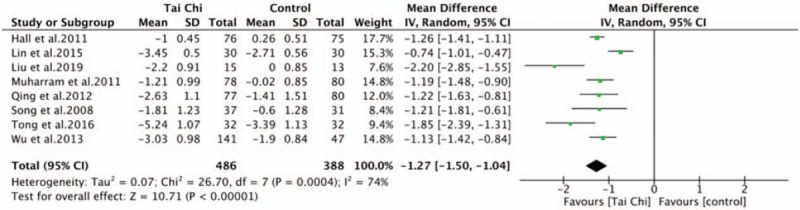
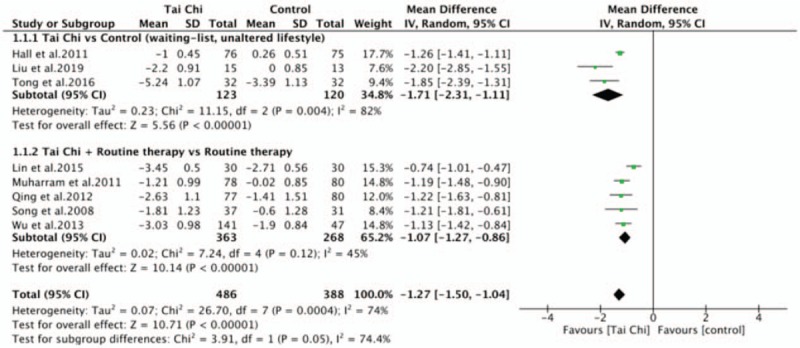
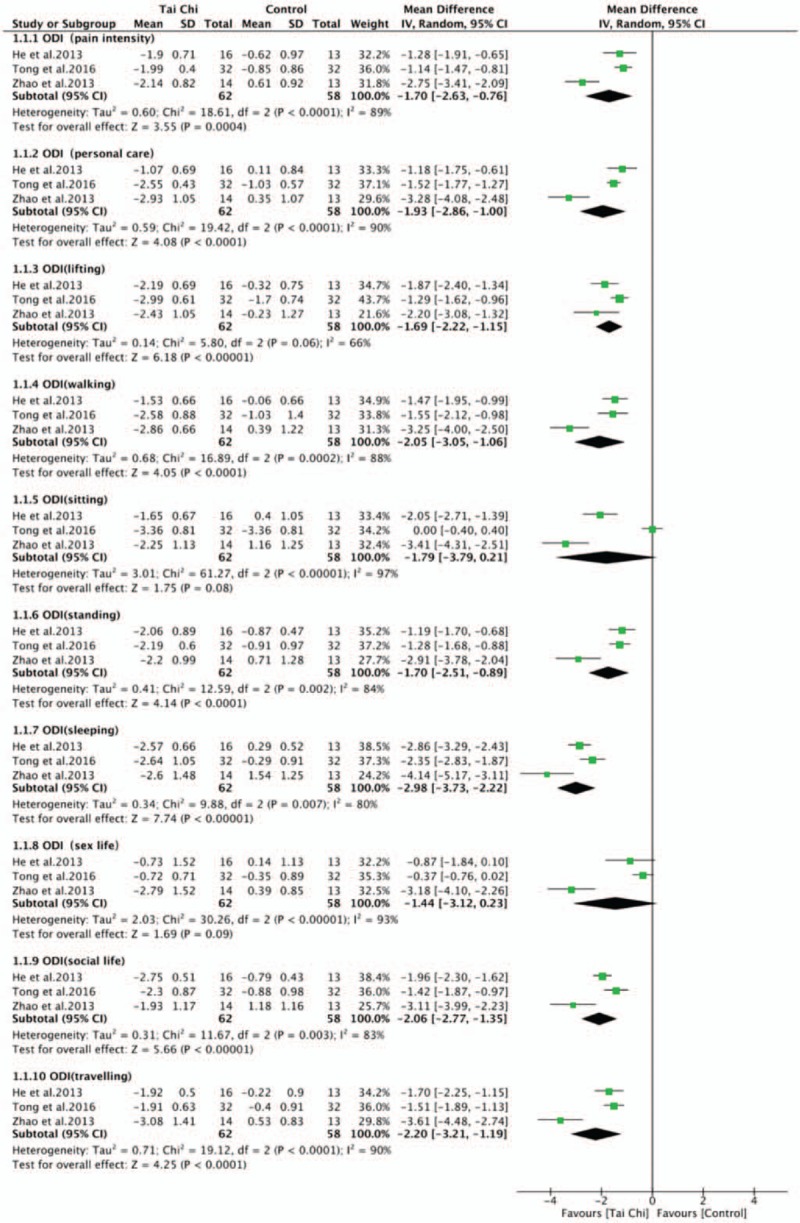
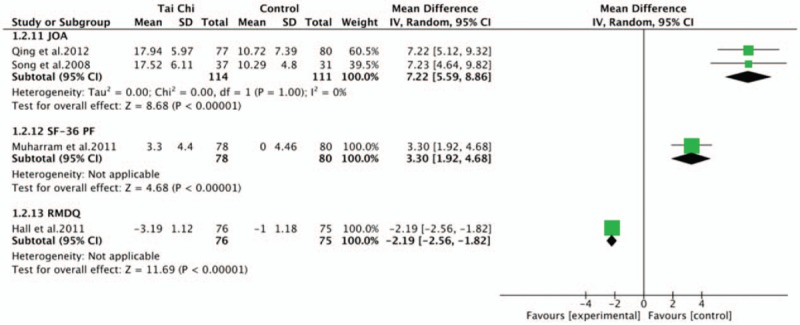
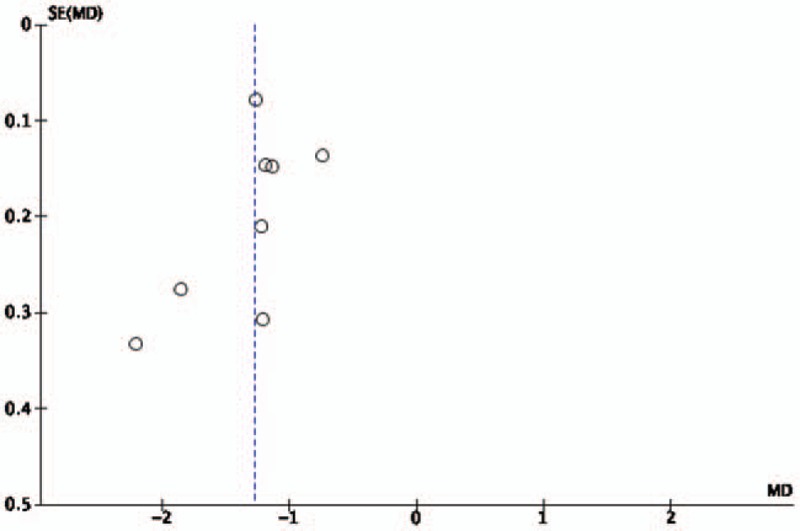
Results: The aggregated results of the meta-analysis suggested that Tai Chi significantly decreased pain (WMD = -1.27, 95%CI -1.50 to -1.04, P < .00001, I = 74%) and improve function disability, Oswestry disability index (ODI) subitems: pain intensity (WMD = -1.70, 95% CI -2.63 to -0.76, P = .0004, I = 89%); personal care (WMD = -1.93, 95% CI -2.86 to -1.00, P < .0001, I = 90%); lifting (WMD = -1.69, 95% CI -2.22 to -1.15, P < .0001, I = 66%); walking (WMD = -2.05, 95% CI -3.05 to -1.06, P < .0001, I = 88%); standing (WMD = -1.70, 95% CI -2.51 to -0.89, P < .0001, I = 84%); sleeping (WMD = -2.98, 95% CI -3.73 to -2.22, P < .00001, I = 80%); social life (WMD = -2.06, 95% CI -2.77 to -1.35, P < 0.00001, I = 80%) and traveling (WMD = -2.20, 95% CI -3.21 to -1.19, P < .0001, I = 90%), Japanese Orthopedic Association (JOA) score (WMD = 7.22, 95% CI 5.59-8.86, P < .00001, I = 0%), Medical Outcomes Study Questionnaire Short Form 36 Health Survey (SF-36) physical functioning (WMD = 3.30, 95% CI 1.92-4.68, P < .00001), and Roland-Morris Disability Questionnaire (RMDQ) (WMD = -2.19, 95% CI -2.56 to -1.82, P < .00001).
Conclusion: We drew a cautious conclusion that Tai Chi alone or as additional therapy with routine physical therapy may decrease pain and improve function disability for patients with LBP. Further trials are needed to be conducted with our suggestions mentioned in the systematic review.
Conflict of interest statement
The authors have no conflicts of interest to disclose.
Figures
References
-
- Dionne CE, Dunn KM, Croft PR, et al. A consensus approach toward the standardization of back pain definitions for use in prevalence studies. Spine (Phila Pa 1976) 2008;33:95–103. - PubMed
-
- Buchbinder R, van Tulder M, Oberg B, et al. Low back pain: a call for action. Lancet 2018;391:2384–8. - PubMed
-
- Hartvigsen J, Hancock MJ, Kongsted A, et al. What low back pain is and why we need to pay attention. Lancet 2018;391:2356–67. - PubMed
-
- Maher C, Underwood M, Buchbinder R. Non-specific low back pain. Lancet 2017;389:736–47. - PubMed
Publication types
MeSH terms
LinkOut - more resources
Full Text Sources
Medical
Miscellaneous
