Review
. 2019 Dec:152:108494.
doi: 10.1016/j.steroids.2019.108494. Epub 2019 Sep 10.

Nox1 downregulators: A new class of therapeutics

Affiliations
Review

Nox1 downregulators: A new class of therapeutics

Matthias Barton et al. Steroids. 2019 Dec.

Abstract

Chronic non-communicable diseases share the pathomechanism of increased reactive oxygen species (ROS) production by nicotinamide adenine dinucleotide phosphate (NADPH) oxidases, known as Nox. The recent discovery that expression of Nox1, a Nox isoform that has been implicated in the pathogenesis of cardiovascular and kidney disease and cancer is regulated by the expression and activity of G protein-coupled estrogen receptor (GPER) led to the identification of orally active small-molecule GPER blockers as selective Nox1 downregulators (NDRs). Preclinical studies using NDRs have demonstrated beneficial effects in vascular disease, hypertension, and glomerular renal injury. These findings suggest the therapeutic potential of NDRs, which reduce Nox1 protein levels, not only for cardiovascular disease conditions including arterial hypertension, pulmonary hypertension, heart failure with preserved ejection fraction (HFpEF), and chronic renal disease, but also for other non-communicable diseases, such as cerebrovascular disease and vascular dementia, Alzheimer's disease, autoimmune diseases and cancer, in which elevated Nox1-derived ROS production plays a causal role.

Keywords: Chronic renal disease; Coronary artery disease; HFpEF; Heart failure; Hypertension; NADPH oxidase; Non-communicable diseases; Oxidative stress; Stroke; Superoxide; Vascular.


Conflict of interest statement

Competing interests

M.B., M.R.M., and E.R.P. are inventors on U.S. patent No. 10,251,870, owned by the University of New Mexico, for the therapeutic use of Nox1-downregulators. E.R.P. is also an inventor on U.S. patent No. 7,875,721 for GPER-selective ligands, including G-1, G15, and G36,

Figures
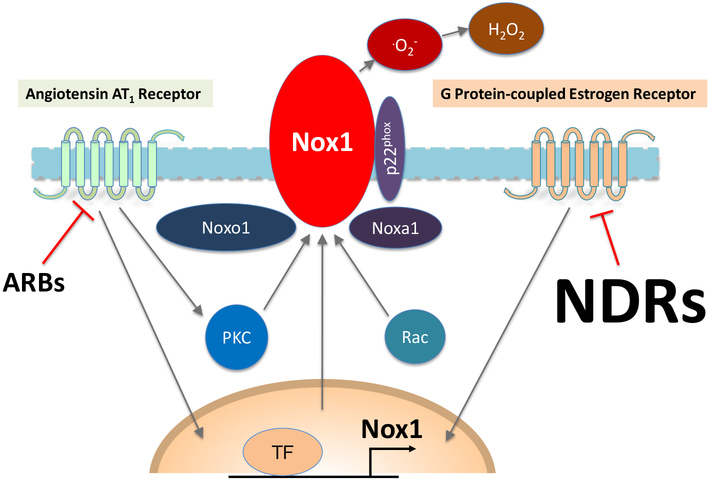
Figure 1.
Figure 1.. Schematic representation of the membrane-bound Nox1 enzyme complex and its regulation by angiotensin receptor blockers (ARBs) and Nox1 downregulators (NDRs).
ARBs inhibit angiotensin II-induced assembly and function of Nox1 and its specific activator (Noxo1, Rac1) and adaptor proteins (p22phox, Noxa1) through protein kinase C (PKC)-dependent and other rapid signaling pathways. NDRs reduce Nox1-dependent superoxide (O2) production by downregulating Nox1 protein synthesis. H2O2, hydrogen peroxide; TF, transcription factor. Modified from reference [20] and reproduced with permission of Elsevier.
Figure 2.
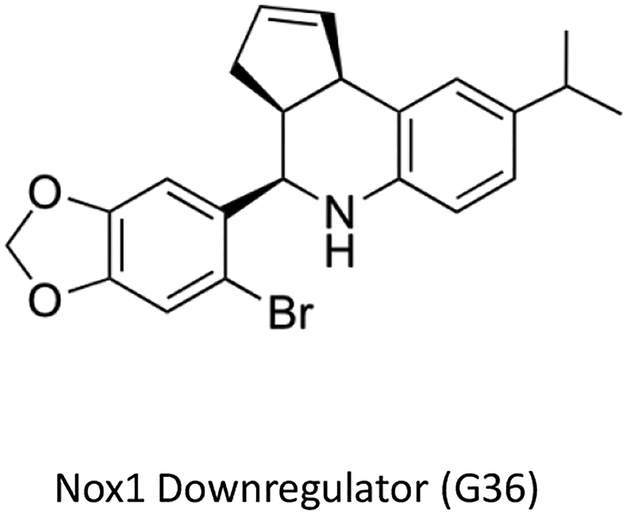
Figure 2.. Chemical structure of the first selective Nox1 downregulator, G36.
The small molecule compound G36 is the first selective Nox1 downregulator to reduce expression and function of Nox1, which is under constitutive control of G protein-coupled estrogen receptor (GPER). G36 was originally identified as a GPER blocker and thus has dual functions, on the one hand inhibiting estrogen-dependent pathways involving GPER, while on the other inhibiting Nox1 expression and reducing Nox1 protein levels that are activated through constitutive GPER expression independently of estrogen.
Figure 3.
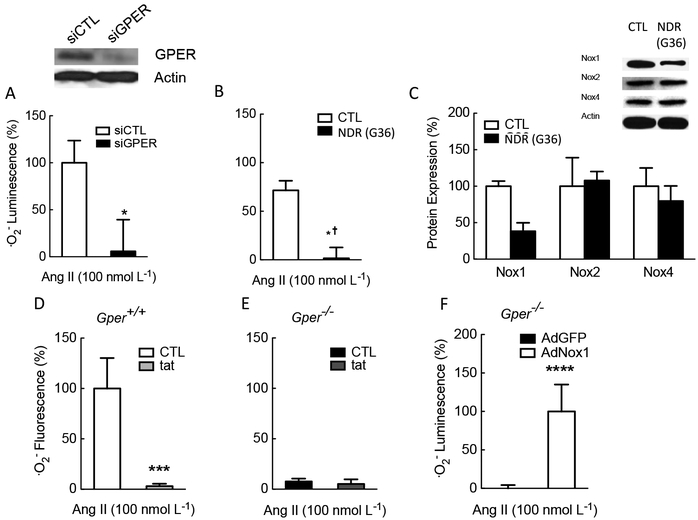
Figure 3.. Regulation of Nox1-dependent superoxide production through constitutive expression/activation of GPER in murine and human vascular smooth muscle cells in vitro.
Treatment with siRNA targeting Gper abrogated Ang II-induced superoxide production (A). Comparable effects were observed using the Nox1 downregulator G36 (B). Selectivity of G36 for the Nox1 isoform was demonstrated by a reduction of Nox1 protein, but not Nox2 or Nox4 protein (C). In contrast to wild-type cells (D), in vascular smooth muscle cells derived from mice lacking Gper, Ang II was ineffective at stimulating superoxide production (E). Conversely, adenoviral introduction of human Nox1 into cells from animals genetically lacking murine Gper restored the cells’ ability to produce superoxide anion in response to Ang II (F). Ang II, angiotensin II; siCTL, scrambled siRNA, siGPER, siRNA against Gper; NDR, Nox1 downregulator. Gper+/+, wild-type; Gper−/−, gper-deficient; tat, Nox1/2 inhibitor gp91ds-tat; AdGFP, adenoviral vector carrying sequence for control protein GFP; AdNox1, adenoviral vector carrying Nox1 sequence. *p<0.05 vs. siCTL; *† and **p<0.05 vs CTL; ***p<0.05 vs solvent CTL; ****p<0.05 vs AdGFP control protein; Modified from reference [25] and reproduced with permission of the AAAS.
Figure 4.
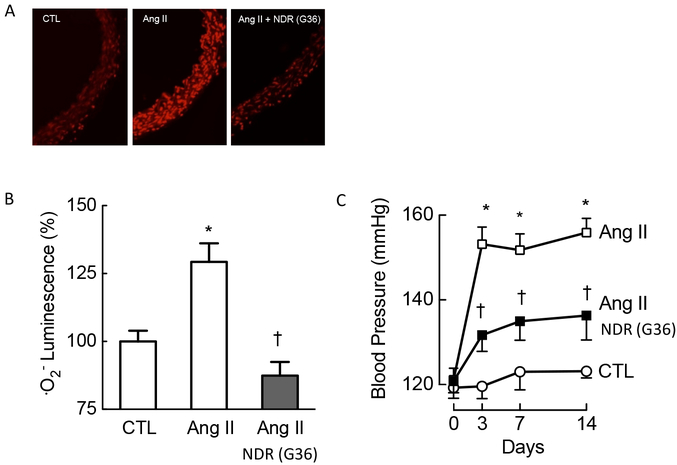
Figure 4.. Therapeutic effects of the Nox1 downregulator G36 in vivo in a model of chronic Nox1-dependent, AngII-induced hypertension.
Chronic treatment of wild-type mice with the NDR G36 completely prevented the Nox1-dependent increase of superoxide production (A, quantified in B), and had profound protective antihypertensive effects (C). Treatment was also associated with normalization of endothelium-dependent vascular function (not shown). CTL, control, Ang II, angiotensin II. *p<0.05 vs. CTL; †<0.05 vs. Ang II. Modified from reference [25] and reproduced with permission of the AAAS.
Figure 5.
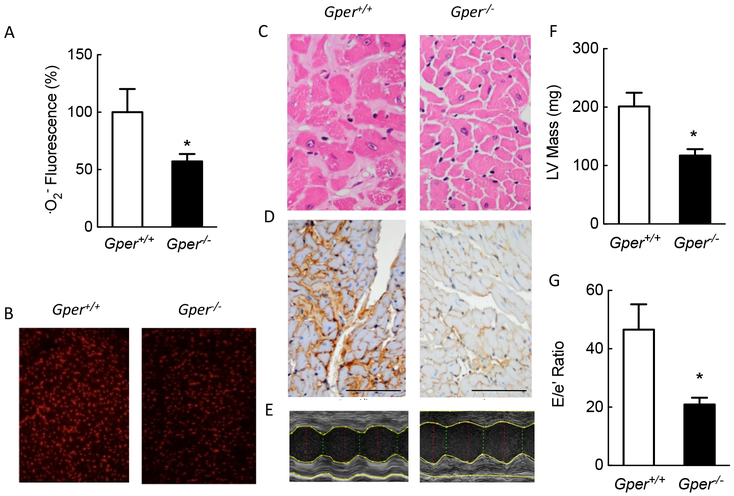
Figure 5.. Constitutive GPER-dependent Nox1 expression is essential for myocardial fibrosis and heart failure with preserved ejection fraction (HFpEF).
Shown are data obtained from aged mice, resembling cardiac changes in humans. Aging was associated with increased myocardial superoxide production (A and B), cardiomyocyte hypertrophy (C) and fibrosis (C and D), left ventricular hypertrophy (E and F), and diastolic dysfunction consistent with heart failure with preserved ejection fraction (HFpEF) as determined by the E/é ratio using transthoracic echocardiography (G). Genetic ablation of Gper essentially prevented myocardial aging at the structural and functional level, completely abrogating ventricular hypertrophy, fibrosis, and HFpEF. Scale bar in panel D: 100 μm. *p<0.05 vs. Gper+/+ Modified from reference [25] and reproduced with permission of the AAAS.

References

    1. GBD Diet Collaborators. Health effects of dietary risks in 195 countries, 1990–2017: a systematic analysis for the Global Burden of Disease Study 2017, Lancet 393(10184) (2019) 1958–1972. - PMC - PubMed
    1. Cao B, Bray F, Ilbawi A, Soerjomataram I, Effect on longevity of one-third reduction in premature mortality from non-communicable diseases by 2030: a global analysis of the Sustainable Development Goal health target, Lancet Glob Health 6(12) (2018) e1288–e1296. - PubMed
    1. Adair T, Progress towards reducing premature NCD mortality, Lancet Glob Health 6(12) (2018) e1254–e1255. - PubMed
    1. Dzau V, Fuster V, Frazer J, Snair M, Investing in Global Health for Our Future, N Engl J Med 377(13) (2017) 1292–1296. - PubMed
    1. Fuster V, Frazer J, Snair M, Vedanthan R, Dzau V, Committee on Global E. the Future of the United States: A Report of the National Academies of Sciences, Medicine, The Future Role of the United States in Global Health: Emphasis on Cardiovascular Disease, J Am Coll Cardiol 70(25) (2017) 3140–3156. - PubMed

Publication types