


Human bocavirus infection in Belgian children with respiratory tract disease
- PMID: 31520220
- PMCID: PMC7087345
- DOI: 10.1007/s00705-019-04396-6
Human bocavirus infection in Belgian children with respiratory tract disease
Abstract
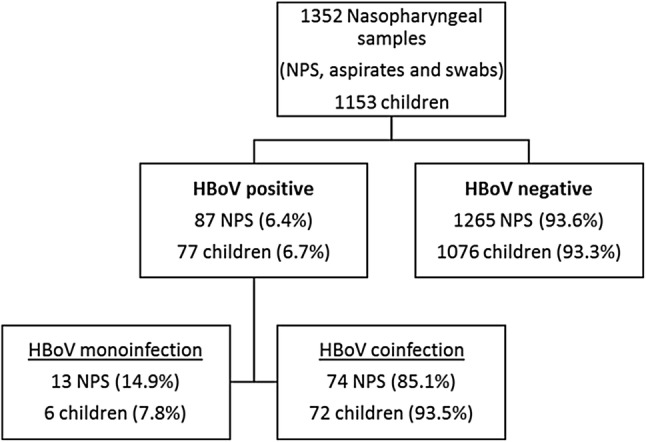
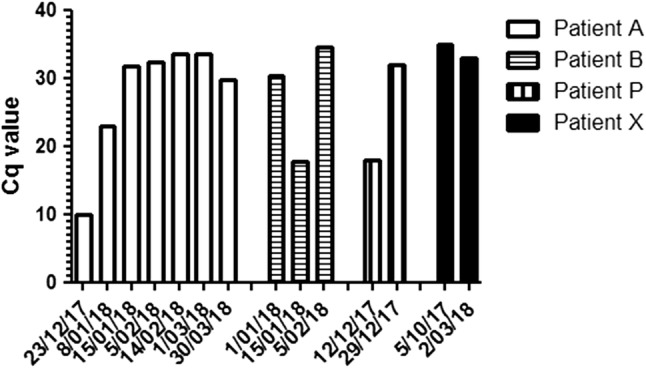
Human bocavirus (HBoV) has been detected primarily in children with acute lower respiratory tract disease (LRTD), but its occurrence, clinical profile, and role as a causative agent of RTD are not clear. The aim of this study was to investigate the prevalence and the potential clinical relevance of HBoV. Using molecular tests, we tested 1352 nasopharyngeal samples obtained between October 1, 2017 and April 30, 2018 from children up to the age of 16 with RTD for the presence of HBoV DNA and 20 other respiratory pathogens at three different hospitals in Belgium. HBoV was detected in 77 children with a median age of 10.6 months. Consecutive samples were available for 15 HBoV-positive children and showed persistent HBoV positivity in four of them. Monoinfection was observed in six infants. Four of them were born prematurely and were infected during hospitalization at the neonatal intensive care unit (NICU). Only one of these six monoinfected children was diagnosed with recurrent wheezing due to HBoV. This child was carried to term and had a high viral load. Coinfections, most frequently with rhinovirus (52.1%) and adenovirus (49.3%), were observed in 72 patients. In seventeen of them in which HBoV was present at high viral load or higher viral load than its copathogens, bronchi(oli)tis (n = 8), recurrent wheezing (n = 8) or episodic wheezing (n = 1) were diagnosed. Our results suggest that HBoV infection at high viral load in infants is associated with wheezing (P = 0.013, Cramer's V = 0.613).
Conflict of interest statement
The authors declare that they have no conflict of interest.
Figures
References
MeSH terms
Substances
LinkOut - more resources
Full Text Sources
Miscellaneous
