


Transcriptional regulation of stilbene synthases in grapevine germplasm differentially susceptible to downy mildew
- PMID: 31521112
- PMCID: PMC6744718
- DOI: 10.1186/s12870-019-2014-5
Transcriptional regulation of stilbene synthases in grapevine germplasm differentially susceptible to downy mildew
Abstract
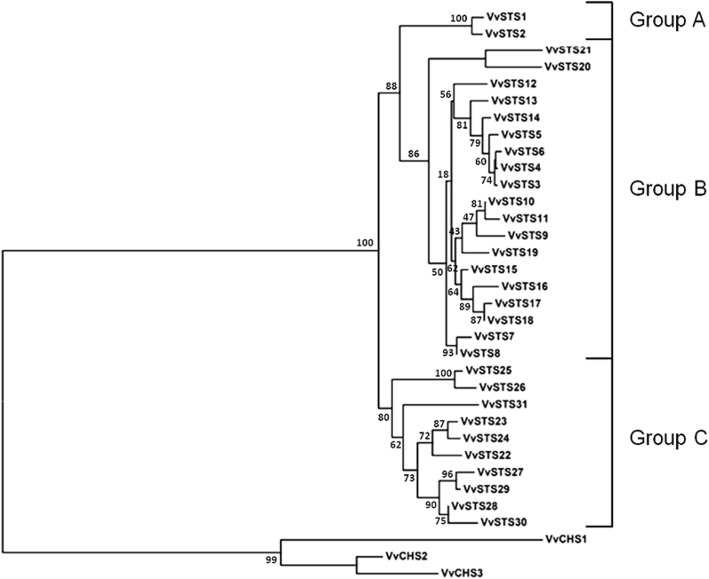
Background: To limit the impact of the downy mildew disease of grapevine and reduce the need to recur to chemical treatments, an effective strategy might be recovering adaptive resistance traits in both cultivated and wild V. vinifera germplasm. Considering that stilbenes represent the most important class of phytoalexins in the Vitaceae, the constitutive expression and transcriptional activation of all the functional members of the stilbene synthase gene family were analysed in a group of nine grapevine genotypes following artificial infection with the oomycete Plasmopara viticola, the causal agent of the disease. In addition, in the same genotypes we analyzed the expression of genes encoding for two transcription factors involved in the transcriptional regulation of the stilbene synthase genes, namely VvMYB14 and VvMYB15, and of genes encoding for chalcone synthases.
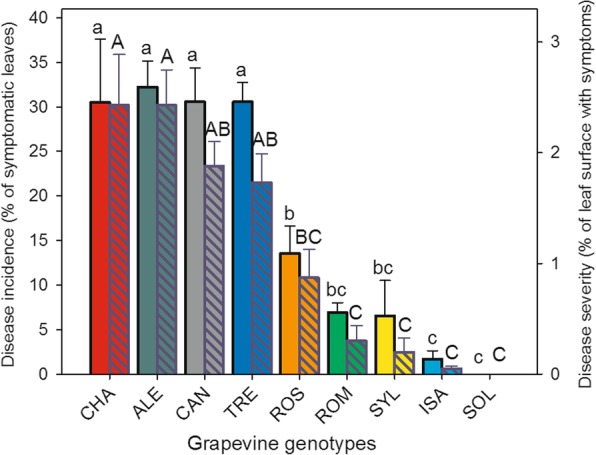
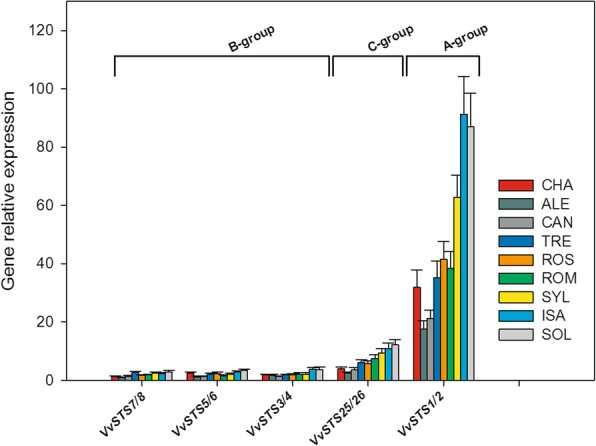
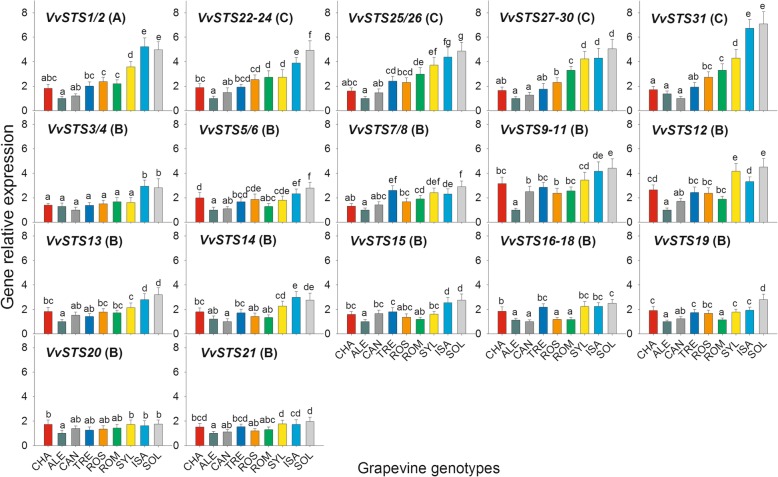
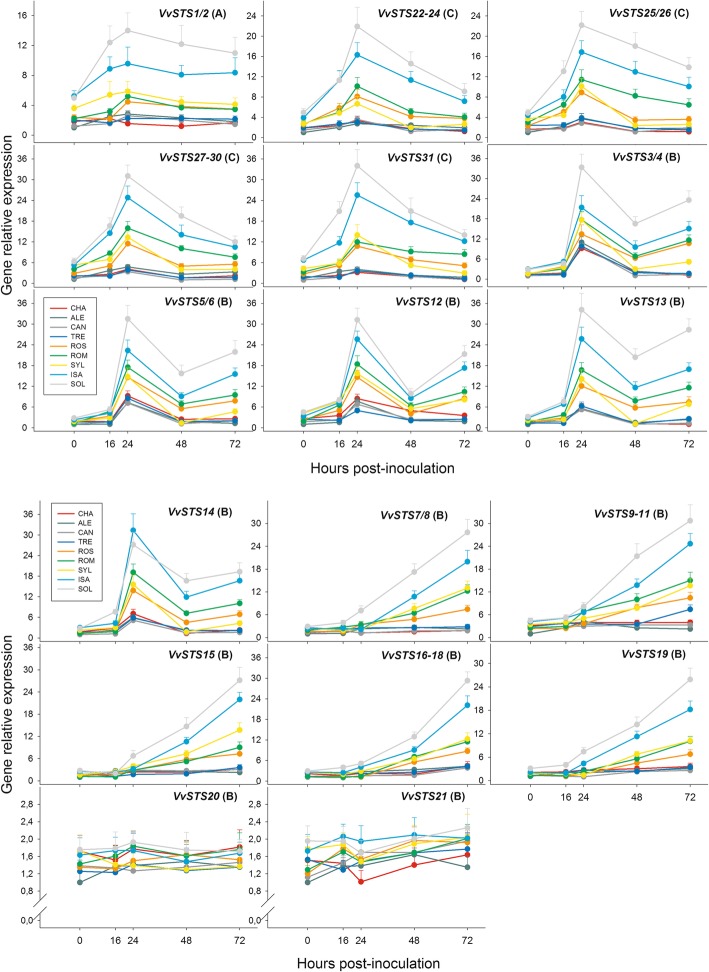
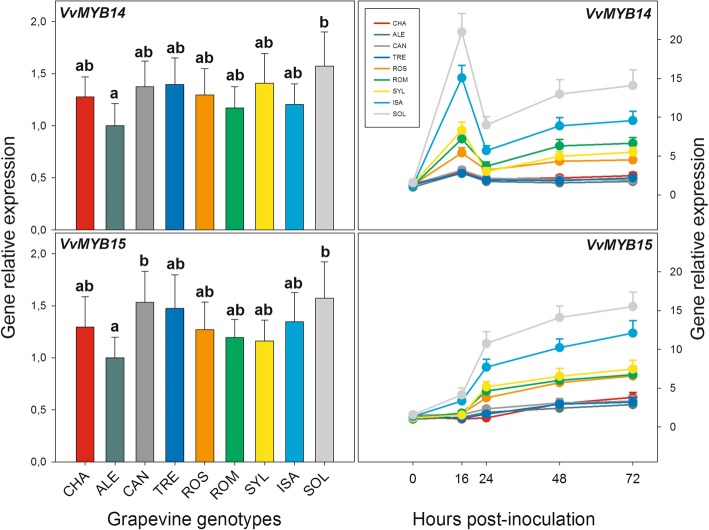
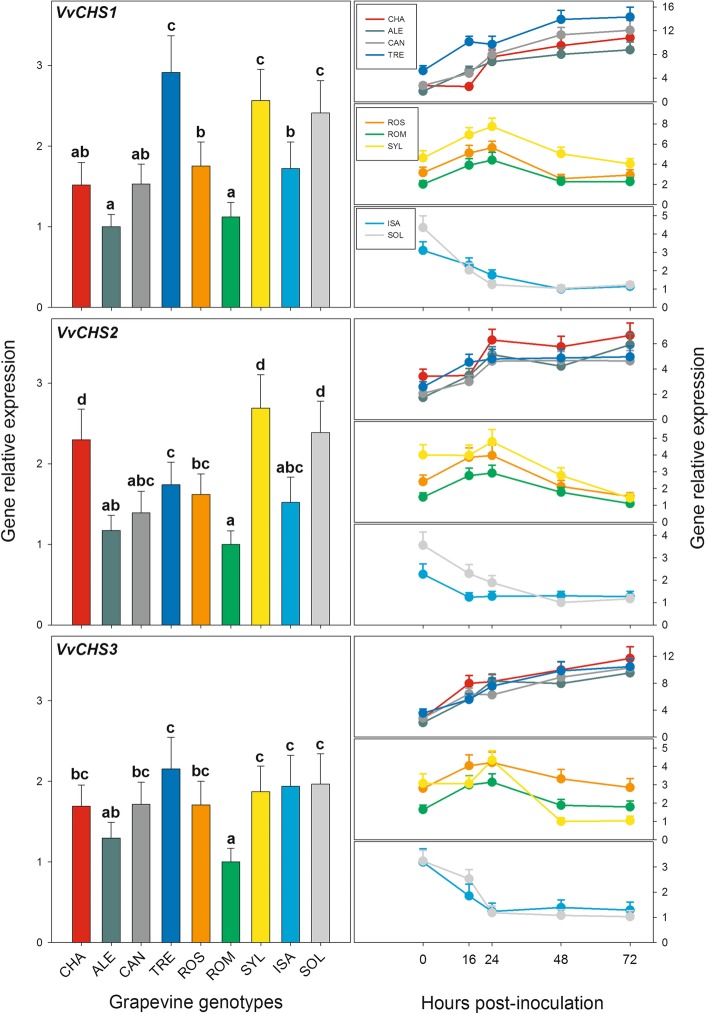
Results: Downy mildew incidence and severity ranged from nihil to high in the grapevine genotypes considered, being low to moderate in a subgroup of V. vinifera genotypes. The constitutive expression of the stilbene synthase genes as well as the extent of their transcriptional activation following P. viticola inoculation appeared to be inversely related to the proneness to develop disease symptoms upon infection. In a specular manner, following P. viticola inoculation all the chalcone synthase genes were up-regulated in the susceptible grapevine genotypes and down-regulated in the resistant ones. The infection brought by P. viticola appeared to elicit a co-ordinated and sequential transcriptional activation of distinct stilbene synthase genes subsets, each of which may be regulated by a distinct and specific MYB transcription factor.
Conclusions: The present results suggest that the induction of stilbene biosynthesis may contribute to the basal immunity against the downy mildew of grapevine, thus representing an adaptive resistance trait to recover, in both cultivated and wild V. vinifera germplasm. During the early stages of P. viticola infection, an antagonistic interaction between flavonol and stilbene biosynthesis might occur, whose outcome might determine the subsequent extent of disease symptoms. Further studies are needed to decipher the possible regulatory mechanisms involved in the antagonistic crosstalk between these two metabolic pathways in resistant and susceptible genotypes in response to P. viticola.
Keywords: Chalcone synthase; Downy mildew susceptibility; Grapevine germplasm; MYB14 and MYB15; Plant-pathogen interactions; Plasmopara viticola; Stilbene synthase; Vitis vinifera L.
Conflict of interest statement
The authors declare that they have no competing interests.
Figures
References
-
- OIV . International Organization of Vine and Wine, Statistical report on world vitiviniculture. 2018.
-
- Galet P. Les Maladies et les Parasites de la Vigne, Vol 1. Montpellier: Imp. Paysan du Midi; 1997.
-
- Muganu M, Balestra GM, Magro P, Pettinari G, Bignami C. Susceptibility of local grape cultivars to Plasmopara viticola and response to copper compounds with low cupric salts concentration in Latium (Central Italy) Acta Hortic. 2007;754:373–378. doi: 10.17660/ActaHortic.2007.754.49. - DOI
MeSH terms
Substances
LinkOut - more resources
Full Text Sources
