


Orchestrating stem cell fate: Novel tools for regenerative medicine
- PMID: 31523367
- PMCID: PMC6716083
- DOI: 10.4252/wjsc.v11.i8.464
Orchestrating stem cell fate: Novel tools for regenerative medicine
Abstract
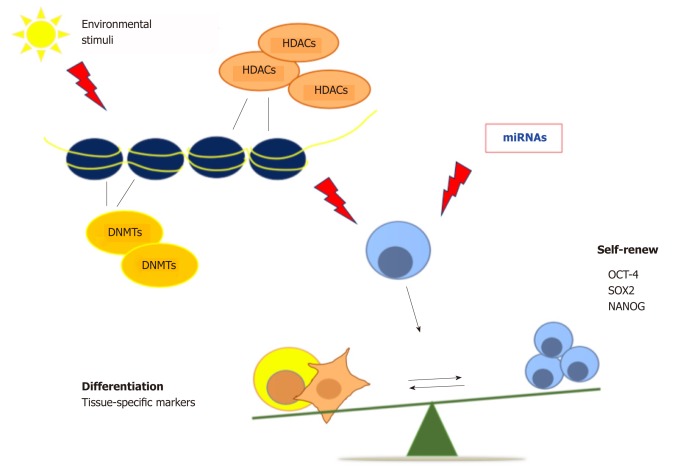
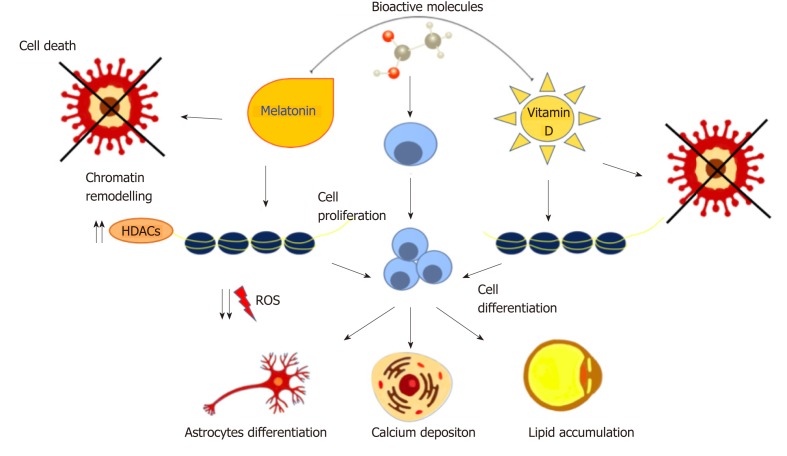
Mesenchymal stem cells are undifferentiated cells able to acquire different phenotypes under specific stimuli. In vitro manipulation of these cells is focused on understanding stem cell behavior, proliferation and pluripotency. Latest advances in the field of stem cells concern epigenetics and its role in maintaining self-renewal and differentiation capabilities. Chemical and physical stimuli can modulate cell commitment, acting on gene expression of Oct-4, Sox-2 and Nanog, the main stemness markers, and tissue-lineage specific genes. This activation or repression is related to the activity of chromatin-remodeling factors and epigenetic regulators, new targets of many cell therapies. The aim of this review is to afford a view of the current state of in vitro and in vivo stem cell applications, highlighting the strategies used to influence stem cell commitment for current and future cell therapies. Identifying the molecular mechanisms controlling stem cell fate could open up novel strategies for tissue repairing processes and other clinical applications.
Keywords: Cell transplantation; Clinical practice; Epigenetics; In vitro differentiation; Physical stimuli; Self-renewal; Stem cell fate; Stem cells.
Figures
References
Publication types
LinkOut - more resources
Full Text Sources
Research Materials
Miscellaneous
