


Subtype-specific transcriptional regulators in breast tumors subjected to genetic and epigenetic alterations
- PMID: 31529022
- PMCID: PMC7031777
- DOI: 10.1093/bioinformatics/btz709
Subtype-specific transcriptional regulators in breast tumors subjected to genetic and epigenetic alterations
Abstract
Motivation: Breast cancer consists of multiple distinct tumor subtypes, and results from epigenetic and genetic aberrations that give rise to distinct transcriptional profiles. Despite previous efforts to understand transcriptional deregulation through transcription factor networks, the transcriptional mechanisms leading to subtypes of the disease remain poorly understood.
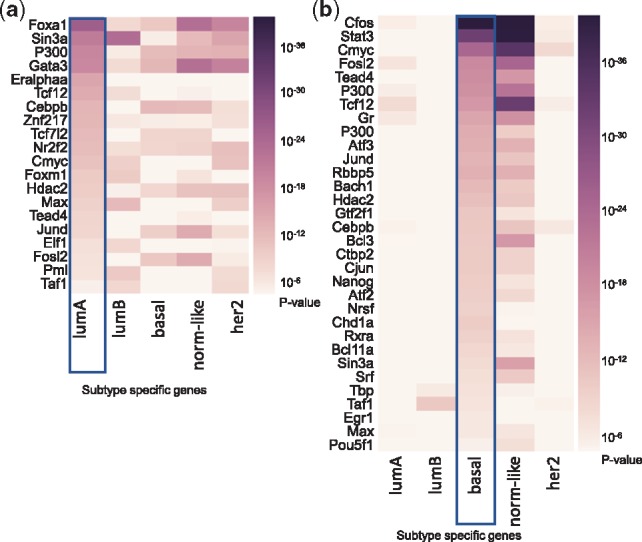
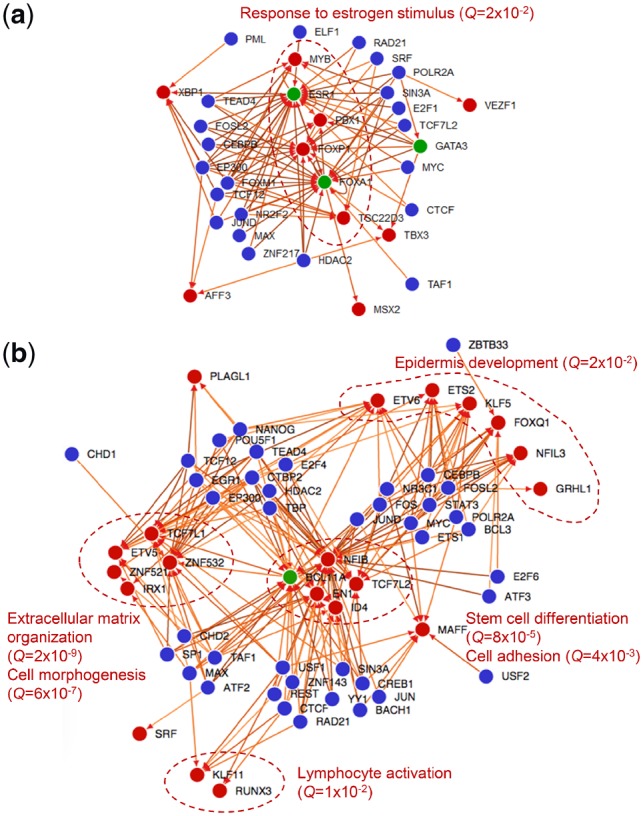
Results: We used a sophisticated computational search of thousands of expression datasets to define extended signatures of distinct breast cancer subtypes. Using ENCODE ChIP-seq data of surrogate cell lines and motif analysis we observed that these subtypes are determined by a distinct repertoire of lineage-specific transcription factors. Furthermore, specific pattern and abundance of copy number and DNA methylation changes at these TFs and targets, compared to other genes and to normal cells were observed. Overall, distinct transcriptional profiles are linked to genetic and epigenetic alterations at lineage-specific transcriptional regulators in breast cancer subtypes.
Availability and implementation: The analysis code and data are deposited at https://bitbucket.org/qzhu/breast.cancer.tf/.
Supplementary information: Supplementary data are available at Bioinformatics online.
© The Author(s) 2019. Published by Oxford University Press.
Figures
References
Publication types
MeSH terms
Substances
Grants and funding
LinkOut - more resources
Full Text Sources
Miscellaneous
