


The association of smoking and socioeconomic status on cutaneous melanoma: a population-based, data-linkage, case-control study
- PMID: 31529485
- PMCID: PMC7383980
- DOI: 10.1111/bjd.18526
The association of smoking and socioeconomic status on cutaneous melanoma: a population-based, data-linkage, case-control study
Abstract
Background: Previous studies have identified an inverse association between melanoma and smoking; however, data from population-based studies are scarce.
Objectives: To determine the association between smoking and socioeconomic (SES) on the risk of development of melanoma. Furthermore, we sought to determine the implications of smoking and SES on survival.
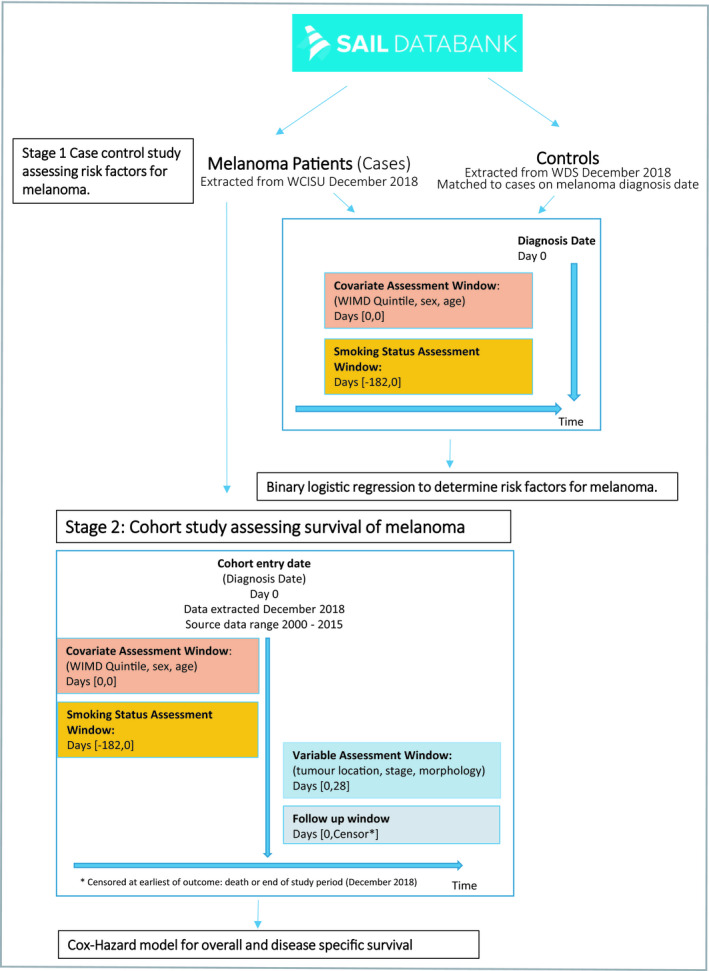
Methods: We conducted a population-based case-control study. Cases were identified from the Welsh Cancer Intelligence and Surveillance Unit (WCISU) during 2000-2015 and controls from the general population. Smoking and SES were obtained from data linkage with other national databases. The association of smoking status and SES on the incidence of melanoma were assessed using binary logistic regression. Multivariate survival analysis was performed on a melanoma cohort using a Cox proportional hazard model using survival as the outcome.
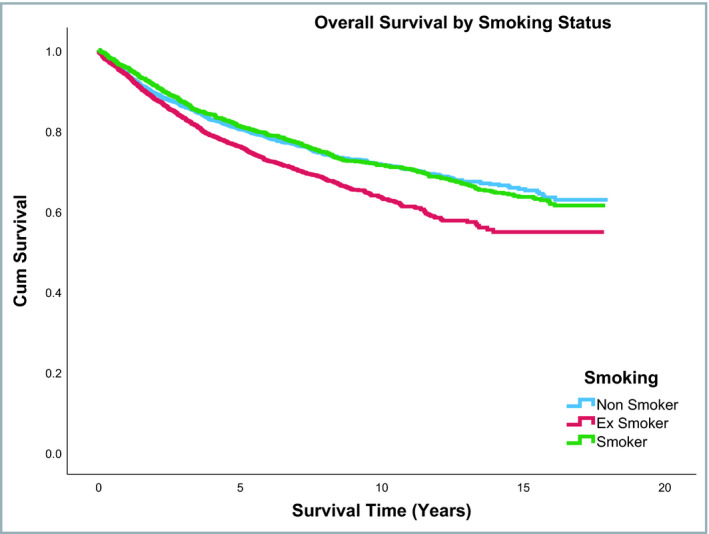
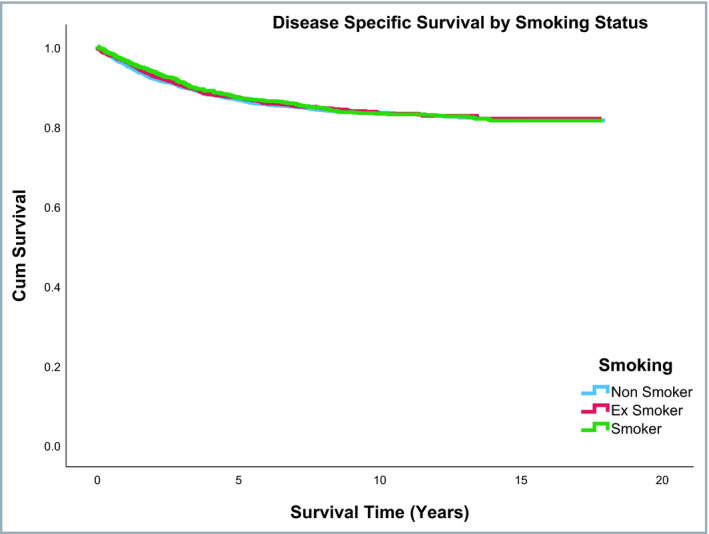
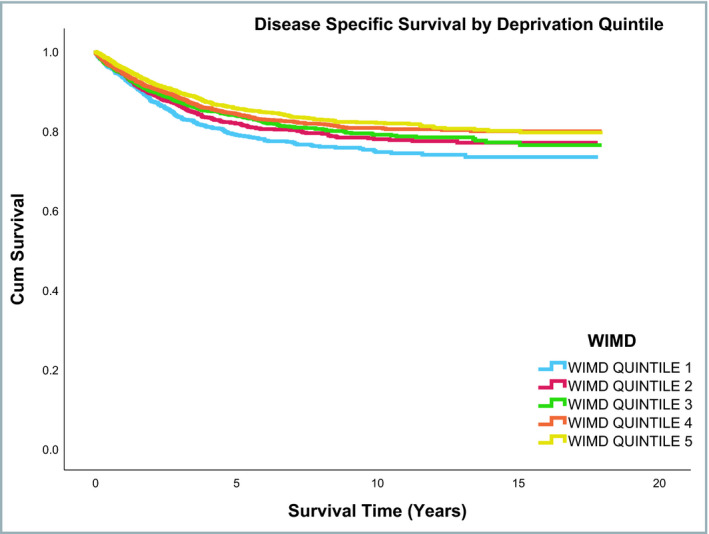
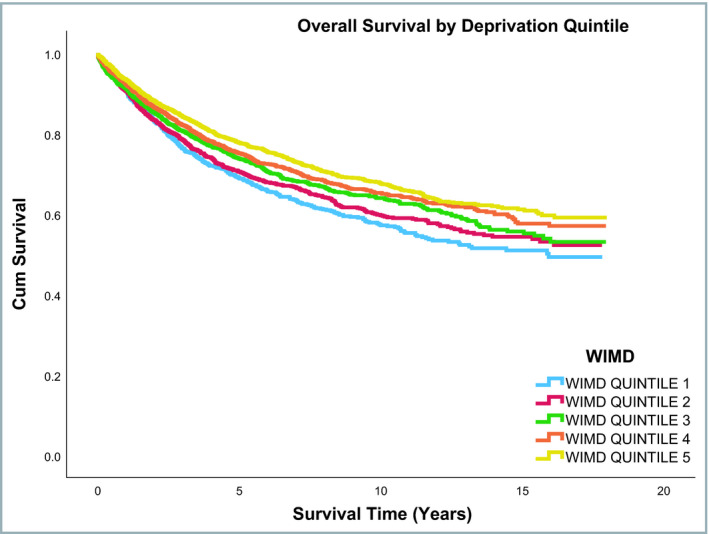
Results: During 2000-2015, 9636 patients developed melanoma. Smoking data were obtained for 7124 (73·9%) of these patients. There were 26 408 controls identified from the general population. Smoking was inversely associated with melanoma incidence [odds ratio (OR) 0·70, 95% confidence interval (CI) 0·65-0·76]. Smoking was associated with an increased overall mortality [hazard ratio (HR) 1·30, 95% CI 1·09-1·55], but not associated with melanoma-specific mortality. Patients with higher SES had an increased association with melanoma incidence (OR 1·58, 95% CI 1·44-1·73). Higher SES was associated with an increased chance of both overall (HR 0·67, 95% CI 0·56-0·81) and disease-specific survival (HR 0·69, 95% CI 0·53-0·90).
Conclusions: Our study has demonstrated that smoking appeared to be associated with reduced incidence of melanoma. Although smoking increases overall mortality, no association was observed with melanoma-specific mortality. Further work is required to determine if there is a biological mechanism underlying this relationship or an alternative explanation, such as survival bias. What's already known about this topic? Previous studies have been contradictory with both negative and positive associations between smoking and the incidence of melanoma reported. Previous studies have either been limited by publication bias because of selective reporting or underpowered. What does this study add? Our large study identified an inverse association between smoking status and melanoma incidence. Although smoking status was negatively associated with overall disease survival, no significant association was noted in melanoma-specific survival. Socioeconomic status remains closely associated with melanoma. Although higher socioeconomic populations are more likely to develop the disease, patients with lower socioeconomic status continue to have a worse prognosis.
© 2019 British Association of Dermatologists.
Figures
Comment in
-
The intriguing association between smoking and reduced melanoma risk.Br J Dermatol. 2020 May;182(5):1080. doi: 10.1111/bjd.18728. Epub 2019 Dec 23. Br J Dermatol. 2020. PMID: 31872423 No abstract available.
References
-
- Jiang AJ, Rambhatla PV, Eide MJ. Socioeconomic and lifestyle factors and melanoma: a systematic review. Br J Dermatol 2015; 172:885–915. - PubMed
-
- Secretan B, Straif K, Baan R et al A review of human carcinogens; Part E: tobacco, areca nut, alcohol, coal smoke, and salted fish. Lancet Oncol 2009; 10:1033–4. - PubMed
-
- Li Z, Wang Z, Yu Y et al Smoking is inversely related to cutaneous malignant melanoma: results of a meta‐analysis. Br J Dermatol 2015; 173:1540–3. - PubMed
-
- Dusingize JC, Olsen CM, Pandeya N et al Smoking and cutaneous melanoma: findings from the QSkin Sun and Health Cohort Study. Cancer Epidemiol Biomarkers Prev 2018; 27:874–81. - PubMed
Publication types
MeSH terms
Grants and funding
LinkOut - more resources
Full Text Sources
Medical
