


Association of the eukaryotic vaginal virome with prophylactic antibiotic exposure and reproductive outcomes in a subfertile population undergoing in vitro fertilisation: a prospective exploratory study
- PMID: 31529767
- PMCID: PMC6910962
- DOI: 10.1111/1471-0528.15951
Association of the eukaryotic vaginal virome with prophylactic antibiotic exposure and reproductive outcomes in a subfertile population undergoing in vitro fertilisation: a prospective exploratory study
Abstract
Objective: The objective of this study was to use high-throughput sequencing to describe the vaginal eukaryotic DNA virome in patients undergoing in vitro fertilisation (IVF) to examine associations between the vaginal virome, antibiotic exposure and IVF outcomes.
Design: Prospective exploratory study.
Setting: Single academic fertility centre.
Population: Subfertile women age 18-43 years undergoing their first IVF cycle with a fresh embryo transfer.
Methods: The primary exposure was prophylactic azithromycin or no azithromycin before IVF. A mid-vaginal swab was obtained at the time of embryo transfer for virome analysis.
Main outcome measures: The primary outcomes compared between exposure groups were characteristics of vaginal virome and clinical pregnancy rates. Secondary outcomes were virome associations with number of oocytes retrieved, number of blastocysts and implantation rate.
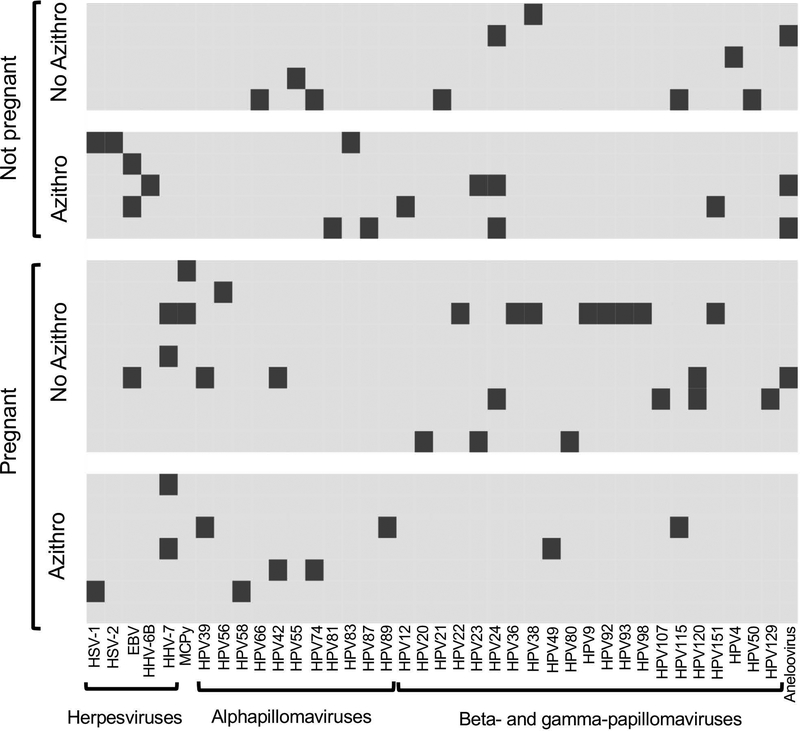
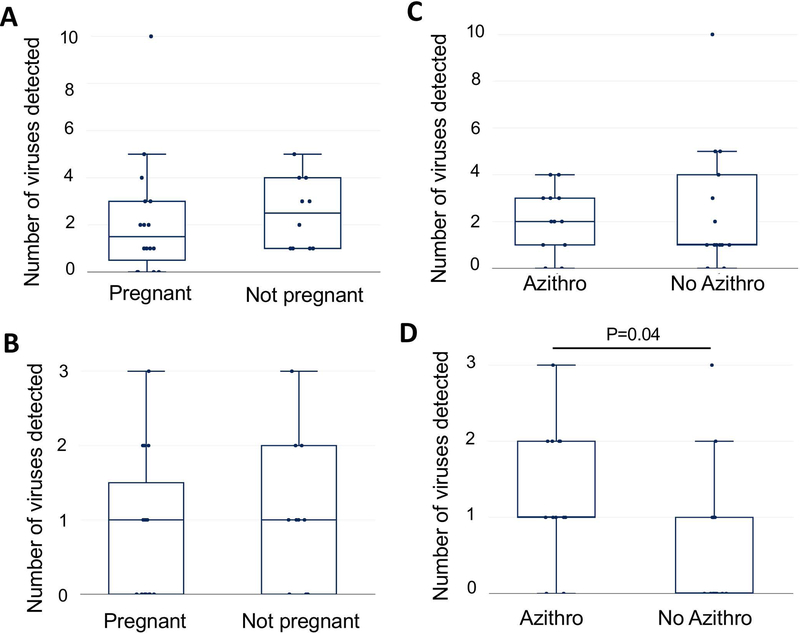
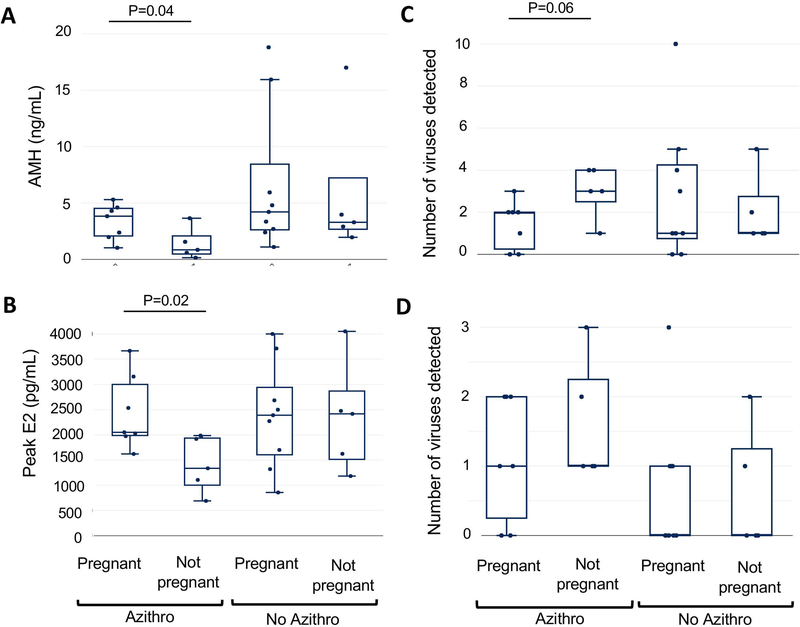
Results: Twenty-six women contributed a vaginal swab before embryo transfer. There were no significant differences in IVF outcomes between azithromycin groups. There was no association between viral diversity and clinical pregnancy overall. A higher diversity of herpesviruses and α-papillomaviruses was observed in samples from the azithromycin-treated group compared with the no azithromycin group (P = 0.04). In women that received azithromycin, viral diversity was higher in the group that did not achieve clinical pregnancy compared with those who did (P = 0.06).
Conclusions: We demonstrate that the vaginal eukaryotic virome in women undergoing IVF is associated with antibiotic exposure. Additionally, we demonstrate an inverse trend between viral diversity and pregnancy, with a higher number of viruses detected associated with failure to achieve clinical pregnancy in the azithromycin group.
Tweetable abstract: Higher viral diversity is associated with prophylactic antibiotic exposure in subfertile women undergoing IVF.
Keywords: Embryo transfer; in vitro fertilisation; reproductive tract microbiome; vaginal virus; virome.
© 2019 Royal College of Obstetricians and Gynaecologists.
Figures
References
-
- Chandra A, Copen CE, Stephen EH. Infertility Service Use in the United States: Data from the National Survey of Family Growth, 1982–2010 National Health Statistics Reports; no 73 Hyattsville, MD: National Center for Health Statistics; 2014. - PubMed
-
- Society for Assisted Reproductive Technology. c1996- [cited 2019 May 10] Available from: https://www.sartcorsonline.com/rptCSR_PublicMultYear.aspx?reportingYear=....
-
- Moreno I, Codoner FM, Vilella F, Valbuena D, Martinez-Blanch JF, Jimenez-Almazan J, et al. Evidence that the endometrial microbiota has an effect on implantation success or failure. Am J Obstet Gynecol. 2016;215(6):684–703. - PubMed
-
- Haahr T, Humaidan P, Elbaek HO, Alsbjerg B, Laursen RJ, Rygaard K, et al. Vaginal microbiota and IVF outcomes: development of a simple diagnostic tool to predict patients at risk of a poor reproductive outcome. J Infect Dis. 2018;219(11):1809–17. - PubMed
Publication types
MeSH terms
Substances
Grants and funding
- St Louis Children's Hospital/International
- T32 HD055172/HD/NICHD NIH HHS/United States
- UL1TR002345/NIH/National Center for Advancing Translational Sciences (NCATS)/International
- T32HD055172/National Institute of Child Health and Human Development of the National Institutes of Health/International
- UL1 TR002345/TR/NCATS NIH HHS/United States
LinkOut - more resources
Full Text Sources
Medical
