Review
. 2019 Aug 20:2019:5397804.
doi: 10.1155/2019/5397804. eCollection 2019.

The Potential Role of Seminal Plasma in the Fertilization Outcomes

Affiliations
Review

The Potential Role of Seminal Plasma in the Fertilization Outcomes

Justyna Szczykutowicz et al. Biomed Res Int. .

Abstract

For human infertility both male and female factors may be equally important. Searching for molecular biomarkers of male infertility, neglected for decades, and the attempts to explain regulatory mechanisms of fertilization become thus extremely important. Apart from examination of the structure and function of male gametes, also the possible importance of seminal plasma components should be considered. In this article we discuss data that indicate for the substantial significance of active seminal plasma components for conception and achievement of healthy pregnancy. Seminal plasma impact on the storage and cryopreservation of human and animal sperm and regulatory role of glycodelin on human sperm capacitation as well as hypothesized course of female immune response to allogenic sperm and conceptus has been discussed. The possible involvement of carbohydrates in molecular mechanism of fetoembryonic defense has been also mentioned.


Conflict of interest statement

The authors declare that there are no conflicts of interest regarding the publication of this paper.

Figures
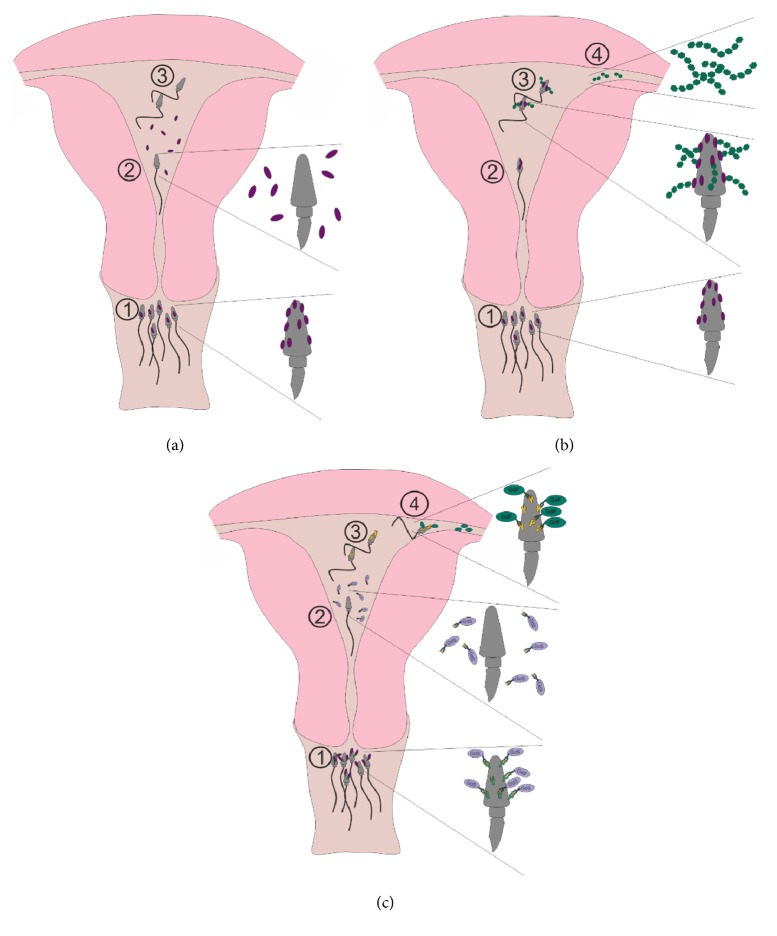
Figure 1
Figure 1
The concepts of involvement of seminal plasma factors in regulation of sperm capacitation (a): 1: sperm coated with SP decapacitation factors (BSP, binder of sperm proteins); 2: decapacitation factors shedded; 3: capacitated sperm: hyperactive motion (b): 1: sperm coated with decapacitation factors (BSP); 2: uterine cavity: BSP still on the sperm head; 3: attachment of GAGs: capacitation; 4: tubular junction GAGs: chemotaxy and capacitation signal (c): 1: sperm coated with SP glycodelin S (Gd-S); 2: Gd-S shedded: capacitation; 3: capacitated sperm; 4: attachment of Gd-F.
Figure 2
Figure 2
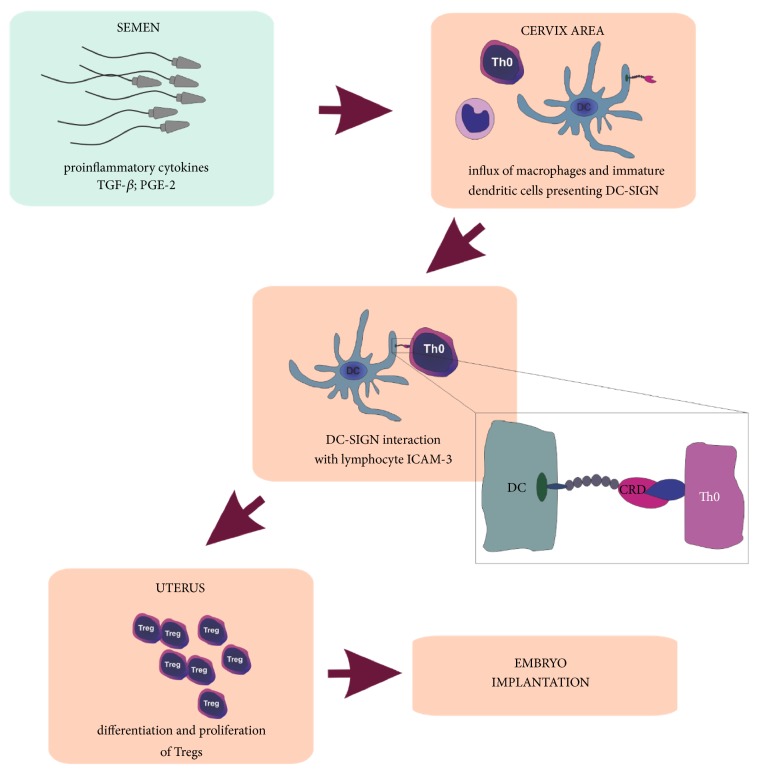
The hypothesized impact of seminal plasma components on the immunomodulation in female reproductive tract.

References

    1. Boivin J., Bunting L., Collins J. A., Nygren K. G. International estimates of infertility prevalence and treatment-seeking: potential need and demand for infertility medical care. Human Reproduction. 2007;22(6):1506–1512. doi: 10.1093/humrep/dem046. - DOI - PubMed
    1. Esteves S. C., Miyaoka R., Agarwal A. An update on the clinical assessment of the infertile male. Clinics. 2011;66(4):691–700. doi: 10.1590/S1807-59322011000400026. - DOI - PMC - PubMed
    1. Gilany K., Minai-Tehrani A., Savadi-Shiraz E., Rezadoost H., Lakpour N. Exploring the human seminal plasma proteome: An unexplored gold mine of biomarker for male Infertility and male reproduction disorder. Journal of Reproduction and Infertility. 2015;16(2):61–71. - PMC - PubMed
    1. Lefièvre L., Bedu-Addo K., Conner S. J., et al. Counting sperm does not add up any more: time for a new equation? Reproduction. 2007;133(4):675–684. doi: 10.1530/rep-06-0332. - DOI - PubMed
    1. World Health Organization. WHO Laboratory Manual for The Examination And Processing of Human Semen. 5th. Geneva, Swizerland: World Health Organization; 2010.

LinkOut - more resources