


Hepatitis B infection in the general population of China: a systematic review and meta-analysis
- PMID: 31533643
- PMCID: PMC6751646
- DOI: 10.1186/s12879-019-4428-y
Hepatitis B infection in the general population of China: a systematic review and meta-analysis
Abstract
Background: Hepatitis B virus (HBV) infection is a major public health problem in China. Over a decade has passed since the last National Hepatitis Seroepidemiological Survey was conducted in 2006. The lack of updated data on hepatitis B in China makes assessing the current prevalence and burden of the disease inadequate. In response to the above situation, a systematic review and meta-analysis was conducted to provide a better understanding of hepatitis B epidemiology in the general population of China.
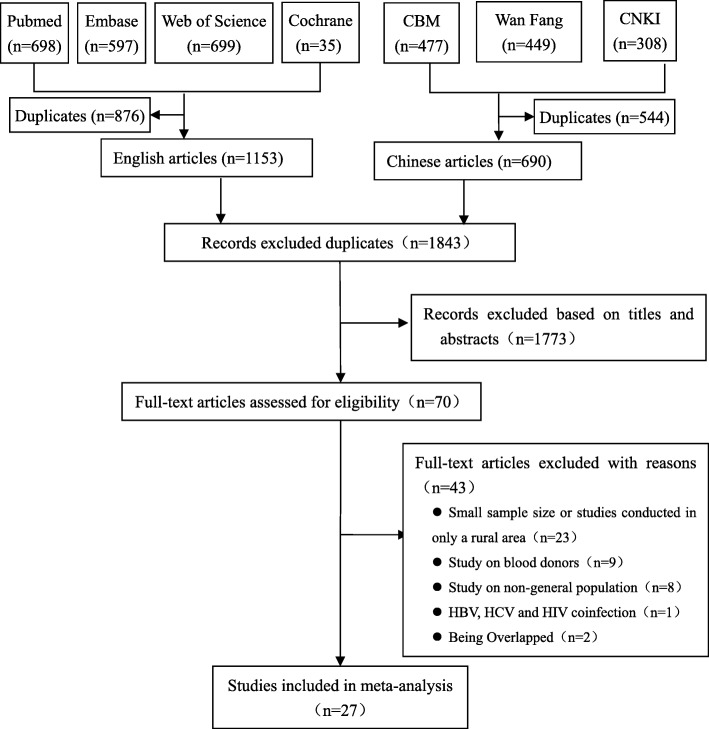
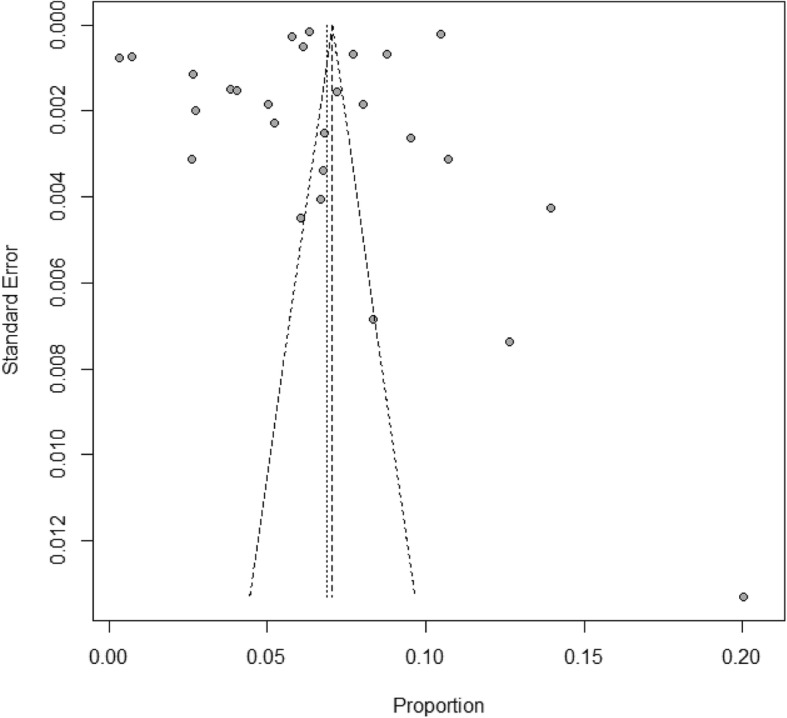
Methods: A systematic search was conducted in international databases (Medline through PubMed, EMBASE, Cochrane, Web of Science) and national databases (CBM, CNKI, WanFang Data) to retrieve primary studies published between January 1, 2013 and December 31, 2017. The pooled prevalence of HBV infection and 95% confidence intervals were calculated. Quality assessment, heterogeneity testing and publication bias assessment were also performed.
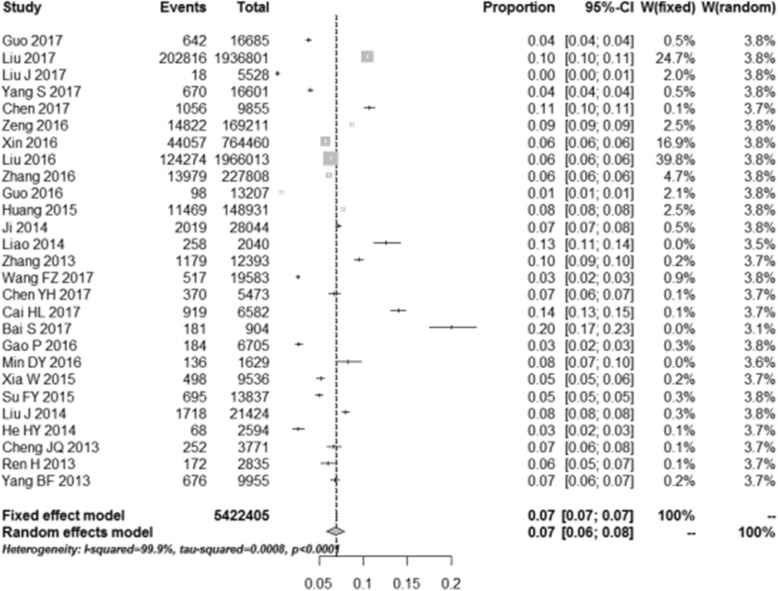
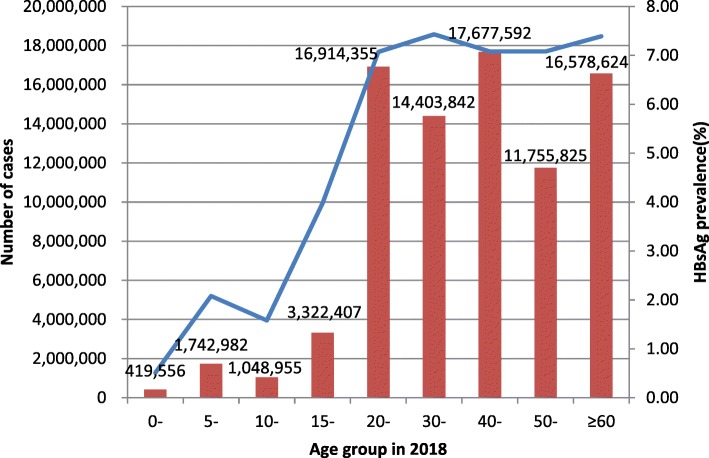
Results: Of the 27 studies included in the meta-analysis, the pooled estimated prevalence of HBV infection in the general population of China from 2013 to 2017 was 6.89% (95% CI:5.84-7.95%), which could be extrapolated to an estimated population of 84 million living with HBsAg in 2018. The prevalence of HBV infection in males was higher than that in females (5.88% vs 5.05%), and rural areas had a higher prevalence than urban areas (5.86% vs 3.29%). The highest prevalence of HBV infection was reported in Western provinces (8.92, 95% CI: 7.19-10.64%). In adults older than 20 years, the prevalence of HBV infection was approximately 7%, which was higher than that in children.
Conclusion: The prevalence of HBV infection in the general population of China was classified as higher intermediate prevalence (5-7.99%), of which more than 90% of the HBV infection population included adults older than 20 years. The blocking of mother-to-infant hepatitis B transmission and plans involving timely birth dose of hepatitis B vaccine within 24 h should be implemented. Additionally, improving the quality of life and survival rate of the infected population through antiviral therapy and high-risk adult vaccination will be the priority of our future work. Moreover, various control measures should be implemented in different provinces across China.
Keywords: China; Hepatitis B; Meta-analysis; Prevalence.
Conflict of interest statement
The authors declare that they have no competing interests.
Figures
References
-
- WHO. Global hepatitis report. 2017[EB/OL]. Licence: CC BY-NC-SA 3.0 IGO. Available at: https://www.who.int/hepatitis/publications/global-hepatitis-report2017/en/.
-
- WHO. Hepatitis B fact sheets[EB/OL]. Available at: http://www.who.int/news-room/fact-sheets/detail/hepatitis-b.
Publication types
MeSH terms
Substances
Grants and funding
LinkOut - more resources
Full Text Sources
Medical
