


Global use, utility, and methods of tele-health in COPD: a health care provider survey
- PMID: 31534325
- PMCID: PMC6682175
- DOI: 10.2147/COPD.S202640
Global use, utility, and methods of tele-health in COPD: a health care provider survey
Abstract
Introduction: Advances in technology offer various solutions that might help optimize the care provided to patients living with chronic non-communicable diseases such as chronic obstructive pulmonary disease (COPD). However, the efficacy of tele-health in COPD is still controversial. Despite this, there appears to be widespread adoption of this technology.
Aim: To explore the international use of tele-heath for COPD, to assess the perceptions of clinicians employing tele-health in COPD, and to summarize the techniques that have been used by health care providers to personalize alarm limits for patients with COPD enrolled on tele-health programs.
Methods: A cross-sectional survey consisting of 15 questions was distributed and advertised to health care professionals worldwide. Questions were designed to cover five different aspects of tele-health in COPD: purpose of use, equipment type, clinician perceptions, variables monitored, and personalization of alarm limits.
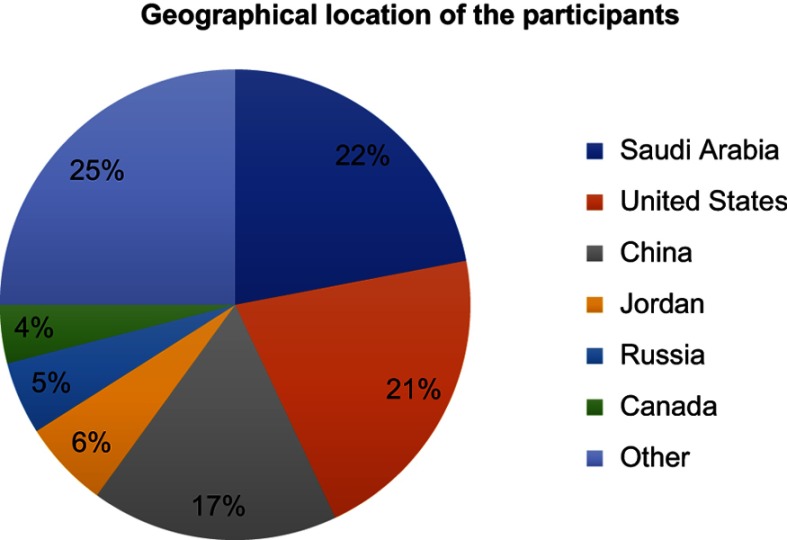
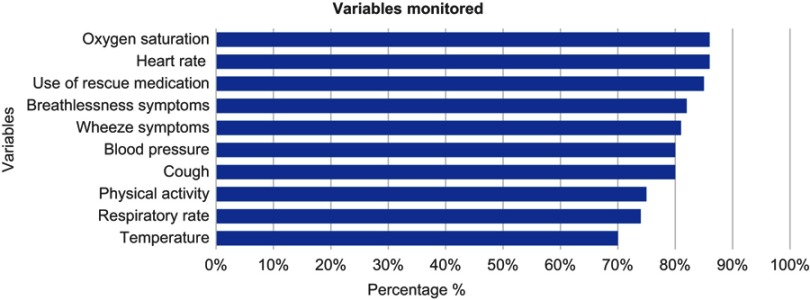
Results: A total of 138 participants completed the survey from 29 different countries. As high as 59% of the participants had ever used tele-health for COPD, and 33% still provided tele-health services to patients with COPD. Tele-health was most commonly used for baseline monitoring, with 90% believing it to be effective. The three most commonly monitored variables were oxygen saturation, heart rate, and the use of rescue medication.
Conclusion: Twenty-nine different countries use tele-health for managing COPD and therefore there is widespread international use of tele-health in COPD. The majority of providers thought tele-health was effective despite evidence to the contrary.
Keywords: COPD; alarm limits; chronic obstructive pulmonary disease; home monitoring; perception; tele-health.
Conflict of interest statement
Professor JR Hurst reports grants, personal fees, non-financial support from Companies that make drugs to treat COPD, outside the submitted work. The authors declare no financial nor non-financial conflicts of interest in this work.
Figures
References
-
- World Health Organization. Chronic obstructive pulmonary disease (COPD). 2017. Available from: https://www.who.int/en/news-room/fact-sheets/detail/chronic-obstructive-...). Accessed March 24, 2018.
-
- World Health Organization.The Top 10 Causes of Death. 2018.. Available from: https://www.who.int/news-room/fact-sheets/detail/the-top-10-causes-of-death. Accessed June 02, 2018.
-
- Global Initiative for Chronic Obstructive Lung Disease. The global strategy for the diagnosis, management, and prevention of chronic obstructive pulmonary disease. GOLD Report. 2019;1:4. - PubMed
Publication types
MeSH terms
LinkOut - more resources
Full Text Sources
Medical
Research Materials
