Shift Work and Poor Mental Health: A Meta-Analysis of Longitudinal Studies
- PMID: 31536404
- PMCID: PMC6775929
- DOI: 10.2105/AJPH.2019.305278
Shift Work and Poor Mental Health: A Meta-Analysis of Longitudinal Studies
Abstract
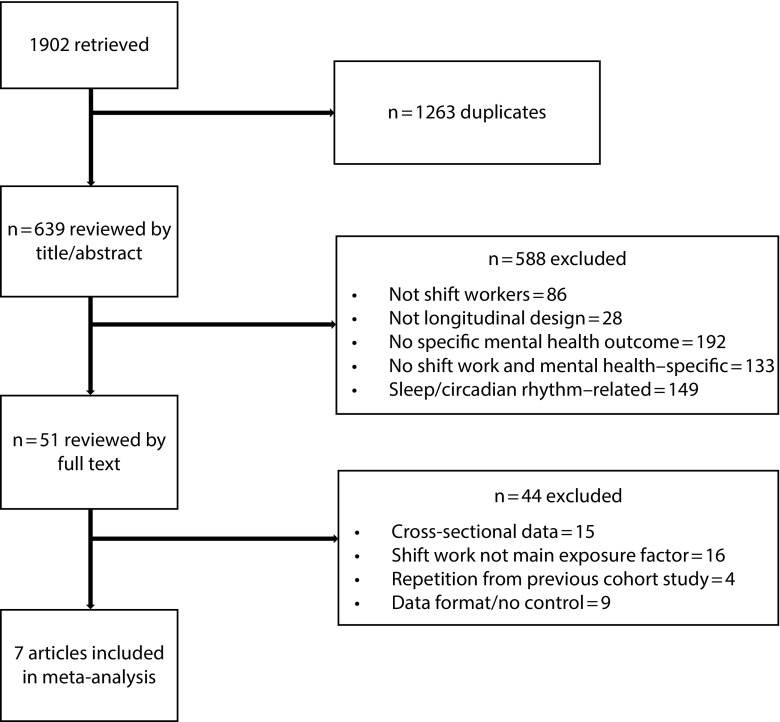
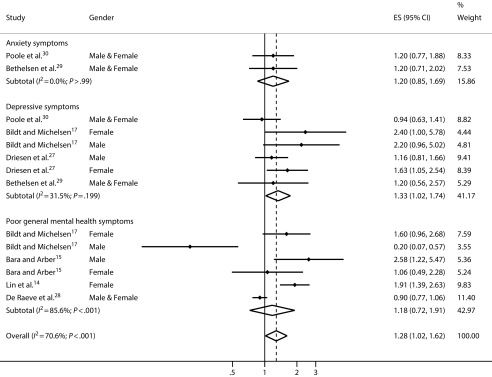
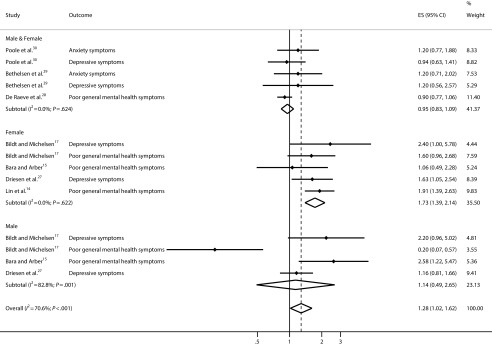
Background. Shift work is characterized by employees working outside the standard hours of 7:00 am to 6:00 pm. Because shift work includes night work, the normal sleep-wake cycle (circadian rhythm) is disrupted, with potential consequences for shift workers' physical and mental health.Objectives. To assess the pooled effects of shift work on mental health and to evaluate whether these differ in men and women.Search Methods. We searched PubMed, Scopus, and Web of Science databases for peer-reviewed or government reports published up to August 2018Selection Criteria. To be included, studies had to be longitudinal or case-control studies of shift work exposure associated with adverse mental health outcomes. For subanalyses, we grouped these outcomes as anxiety symptoms, depressive symptoms, or general poor mental health symptoms.Data Collection and Analysis. We followed the Meta-Analysis of Observational Studies in Epidemiology Group guidelines. We extracted adjusted risk estimates for each study to calculate pooled effect sizes (ESs) using random effect models and metaregression analysis to explore sources of heterogeneity.Main Results. We included 7 longitudinal studies, with 28 431 unique participants. Shift work was associated with increased overall risk of adverse mental health outcomes combined (ES = 1.28; 95% confidence interval [CI] = 1.02, 1.62; I2 = 70.6%) and specifically for depressive symptoms (ES = 1.33; 95% CI = 1.02, 1.74; I2 = 31.5%). Gender differences explained more than 90% of heterogeneity, with female shift workers more likely to experience depressive symptoms than female non-shift workers (odds ratio = 1.73; 95% CI = 1.39, 2.14).Authors' Conclusions. To our knowledge, this is the first meta-analysis to investigate the pooled effects of shift work on the risk of poor mental health, including subanalyses by type of poor mental health and gender. Shift workers, particularly women, are at increased risk for poor mental health, particularly depressive symptoms.Public Health Implications. Depression accounts for 4.3% of the global burden of disease and incidence, with mental disorders worldwide predicted to cost US $16.3 million by 2030. With 1 in 5 people in the United States and Europe doing shift work, and the increased risk of poor mental health among shift workers, shift work industries are a priority context for reducing this burden. Workplace health promotion programs and policies are needed to minimize shift workers' risk of poor mental health.
Figures
Comment in
-
Shift Work Adversely Affects Mental Health.Am J Nurs. 2020 Mar;120(3):67. doi: 10.1097/01.NAJ.0000656368.67026.9f. Am J Nurs. 2020. PMID: 32079804 No abstract available.
References
-
- Straif K, Baan R, Grosse Y et al. Carcinogenicity of shift-work, painting, and fire-fighting. Lancet Oncol. 2007;8(12):1065–1066. - PubMed
-
- Parent-Thirion A, Vermeylen G, Cabrita J . Sixth European Working Conditions Survey—Overview Report. Luxembourg City, Luxembourg: Publications Office of the European Union; 2016.
-
- Wyse C, Celis Morales C, Graham N et al. Adverse metabolic and mental health outcomes associated with shiftwork in a population-based study of 277,168 workers in UK biobank. Ann Med. 2017;49(5):411–420. - PubMed
-
- Torquati L, Mielke G, Brown W, Kolbe-Alexander T. Shift work and the risk of cardiovascular disease. A systematic review and meta-analysis including dose-response relationship. Scand J Work Environ Health. 2018;44(3):229–238. - PubMed
Publication types
MeSH terms
LinkOut - more resources
Full Text Sources
Medical