Review
. 2019 Sep 19;5(1):64.
doi: 10.1038/s41572-019-0113-0.

Chromosome instability syndromes

Affiliations
Review

Chromosome instability syndromes

A Malcolm R Taylor et al. Nat Rev Dis Primers. .

Abstract

Fanconi anaemia (FA), ataxia telangiectasia (A-T), Nijmegen breakage syndrome (NBS) and Bloom syndrome (BS) are clinically distinct, chromosome instability (or breakage) disorders. Each disorder has its own pattern of chromosomal damage, with cells from these patients being hypersensitive to particular genotoxic drugs, indicating that the underlying defect in each case is likely to be different. In addition, each syndrome shows a predisposition to cancer. Study of the molecular and genetic basis of these disorders has revealed mechanisms of recognition and repair of DNA double-strand breaks, DNA interstrand crosslinks and DNA damage during DNA replication. Specialist clinics for each disorder have provided the concentration of expertise needed to tackle their characteristic clinical problems and improve outcomes. Although some treatments of the consequences of a disorder may be possible, for example, haematopoietic stem cell transplantation in FA and NBS, future early intervention to prevent complications of disease will depend on a greater understanding of the roles of the affected DNA repair pathways in development. An important realization has been the predisposition to cancer in carriers of some of these gene mutations.


Conflict of interest statement

Competing interests

The authors declare no competing interests.

Figures
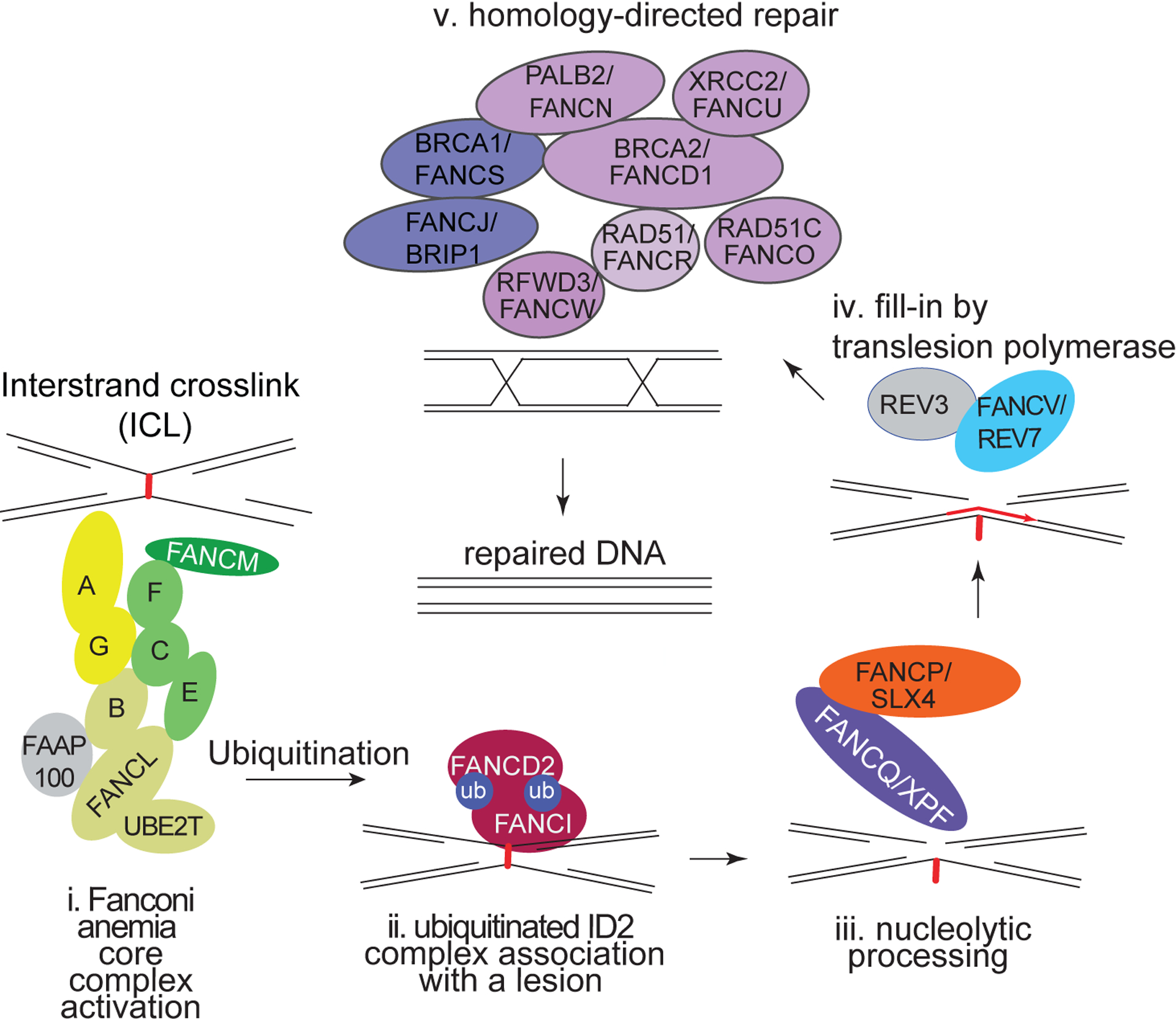
Figure 1.
Figure 1.. Repair of DNA interstrand crosslinks.
A series of steps, allows removal of the crosslink beginning with its recognition by the core complex (i) of Fanconi proteins (FANCA, FANCB, FANCC, FANCE, FANCF, FANCG, FANCL, FANCM and FANCT). This in turn activates the ID2 complex (ii) that allows the structure specific nuclease FANQ (also known as XPF) bound to scaffold protein FANCP (also known as SLX4) to cut the DNA on one strand (iii). This is followed by a DNA synthesis step (iv) performed by the translesion polymerase FANCV (also known as REV7). The final step is involves homology directed repair (v) involving the homologous recombination repair proteins (FANCS/BRCA1, FANJ/BRIP1, FANCR/RAD51, FANCO/RAD51C, FANCN/PALB2, FANCD1/BRCA2, FANCU/XRCC2 and FANW/RFWD3).
Figure 2.
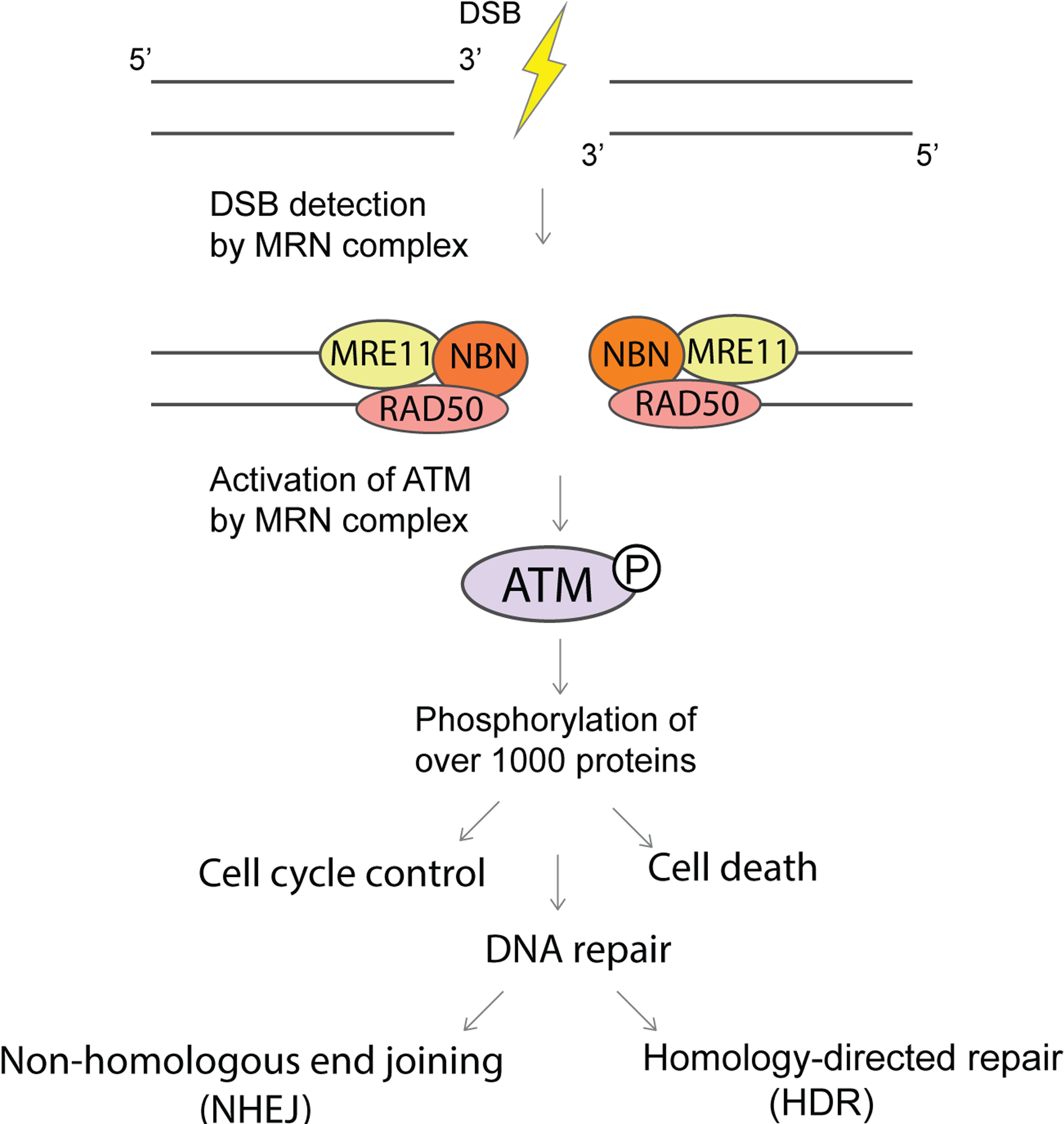
Figure 2.. DNA double strand break (DSB) repair – the role of NBN and ATM in the recognition and signalling of the breaks.
DNA double-strand break repair. Nibrin (NBN) recognizes DNA double-strand breaks (DSBs) via its involvement in the MRN complex, which is composed of DSB repair protein MRE11, DNA repair protein RAD50 and NBN. This recognition is required to activate serine-protein kinase ATM (ATM). ATM phosphorylates many downstream proteins to regulate DNA damage response pathways that include DNA repair, which in the case of DSBs can proceed through non-homologous end-joining or homology-directed repair. Mutations in NBN are pathognomonic of Nijmegen breakage syndrome and mutations in ATM are pathognomonic of ataxia telangiectasia. ATLD, ataxia telangiectasia-like disorder; NBSLD, Nijmegen breakage syndrome-like disorder.
Figure 3.
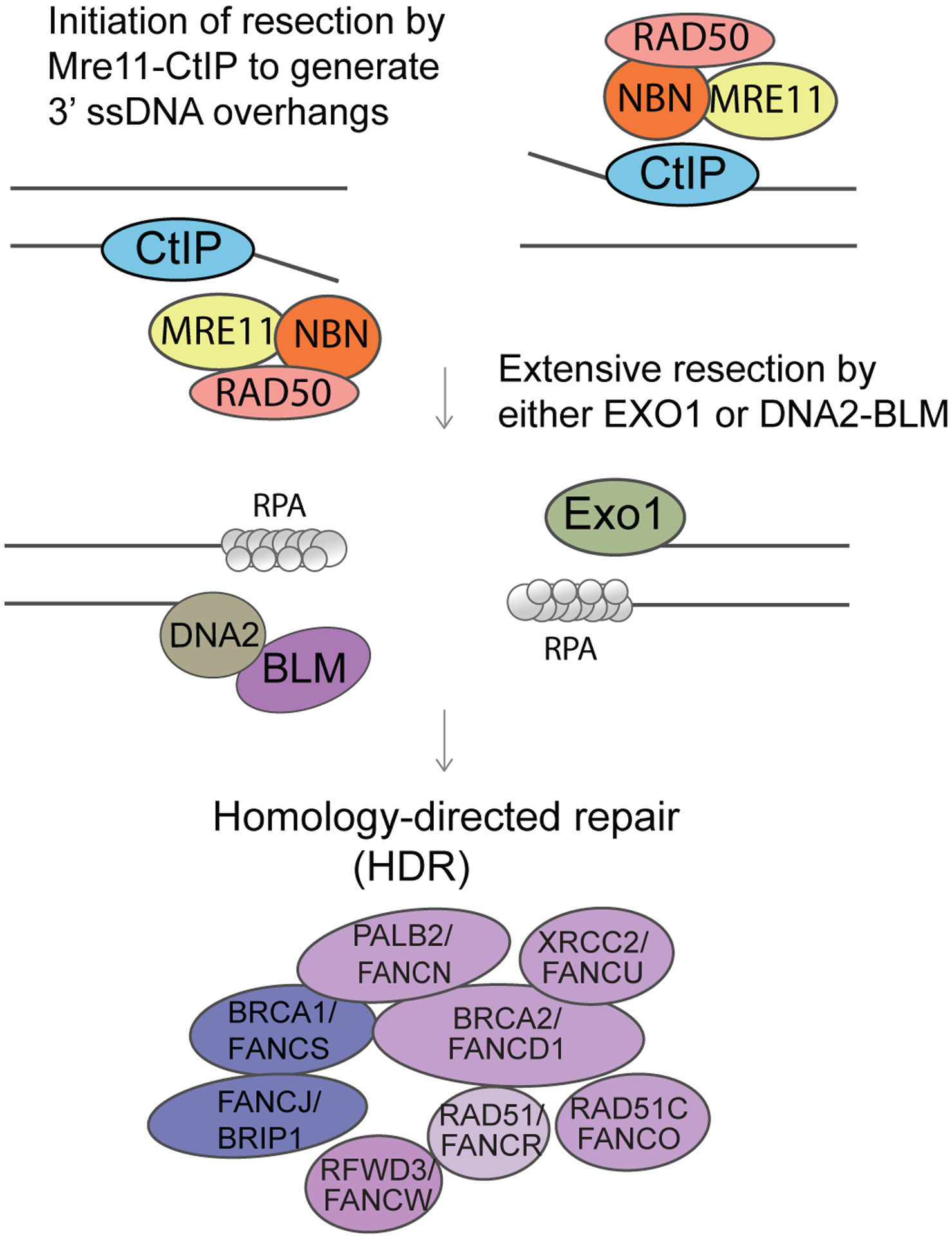
Figure 3.. DNA end resection of the 5’ end.
Undertaken by the MRN complex together with CtIP that results in RPA-3’ coated ssDNA overhangs. Long-range resection is carried by the BLM/DNA2 (helicase/nuclease) complex. 53BP1 and Rif1 suppress any excessive resection. Here BLM is promoting HR. The BRCA1/FANCS, BRCA2/FANCD1, PALB2/FANCN complex allows removal of RPA and the formation of RAD51 coated ssDNA nucleofilaments that catalyse strand invasion of the unbroken homologous template. The BLM helicase can suppress HR by destabilising the RAD51 coated nucleofilaments. Recombination repair is facilitated by Rad51 and co-factors
Figure 4.
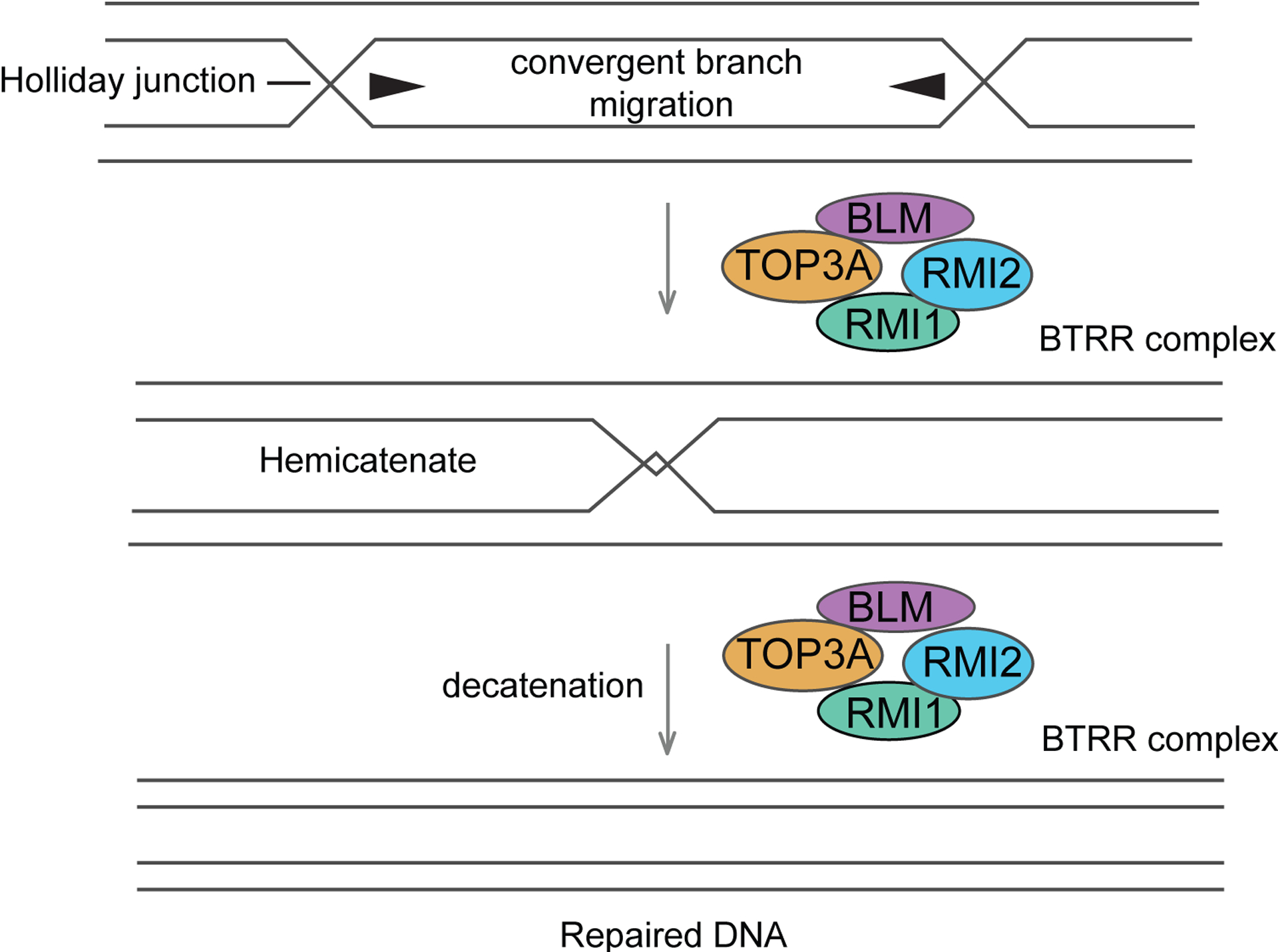
Figure 4.. Dissolution of double Holliday (dHJs) junctions.
Mechanism of double Holliday junction (dHJ) dissolution by the combined action of the BTRR complex. BLM catalyzes convergent branch migation of the HJs to convert the dHJ into a hemicatenane, which is then decatenated by Topo IIIα.
Figure 5.
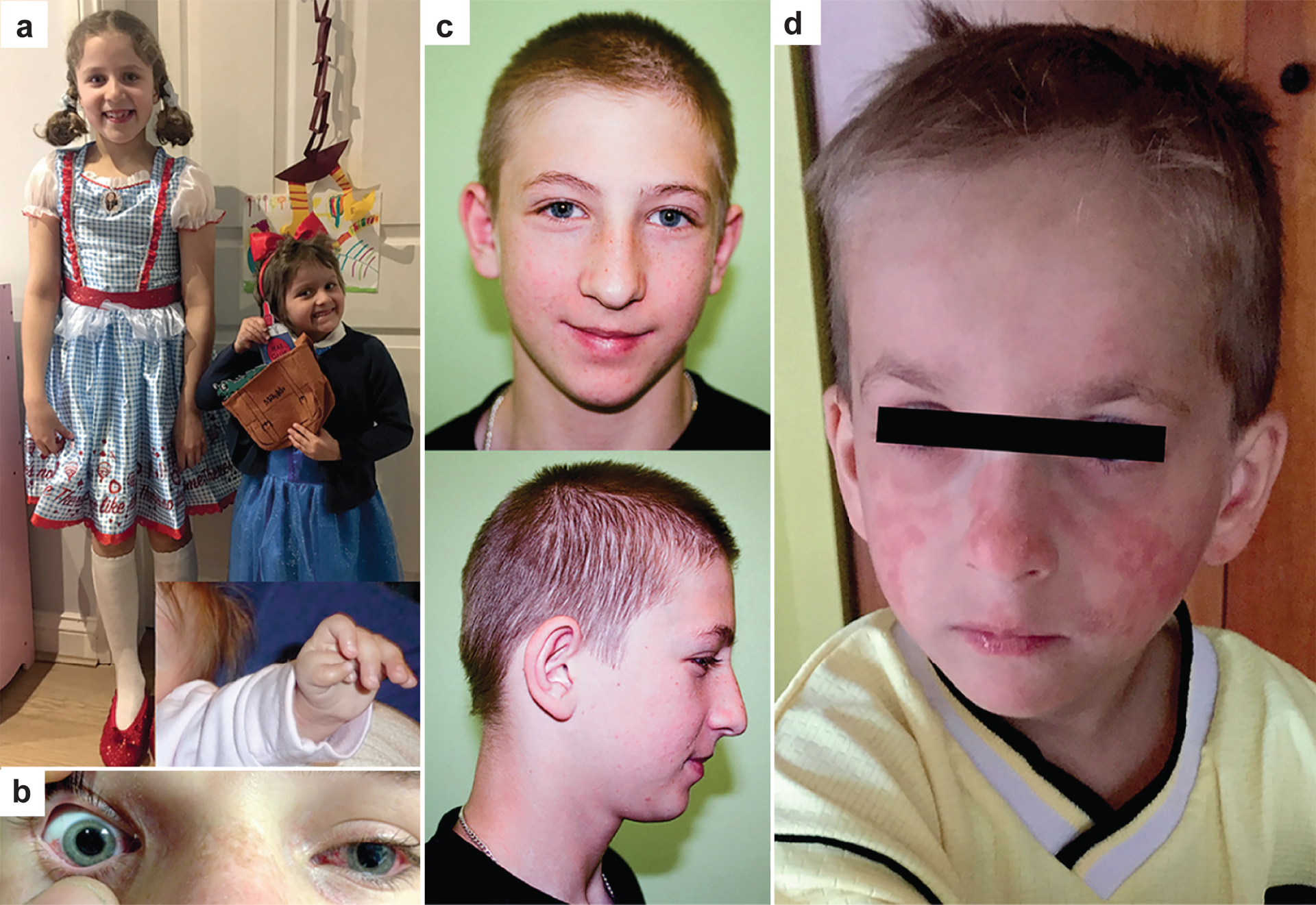
Figure 5.. Characteristic features of the chromosome instability syndromes
Characteristic features of the chromosome instability syndromes. a. The characteristic clinical features of children with Fanconi anaemia include extreme short stature, microcephaly and mid-facial hypoplasia, as illustrated in a 5-year-old girl (right) next to her unaffected 8-year-old sister. Inset shows the duplex thumb of the affected girl before surgical correction. b. Characteristic ocular telangiectasis of the exposed, but not the unexposed, bulbar conjunctiva in ataxia telangiectasia. c. The craniofacial features of those with Nijmegen breakage syndrome include receding forehead, receding mandible and prominent mid face with long nose. d. Characteristic sun-sensitive facial erythema in a young boy with Bloom syndrome.
Figure 6.
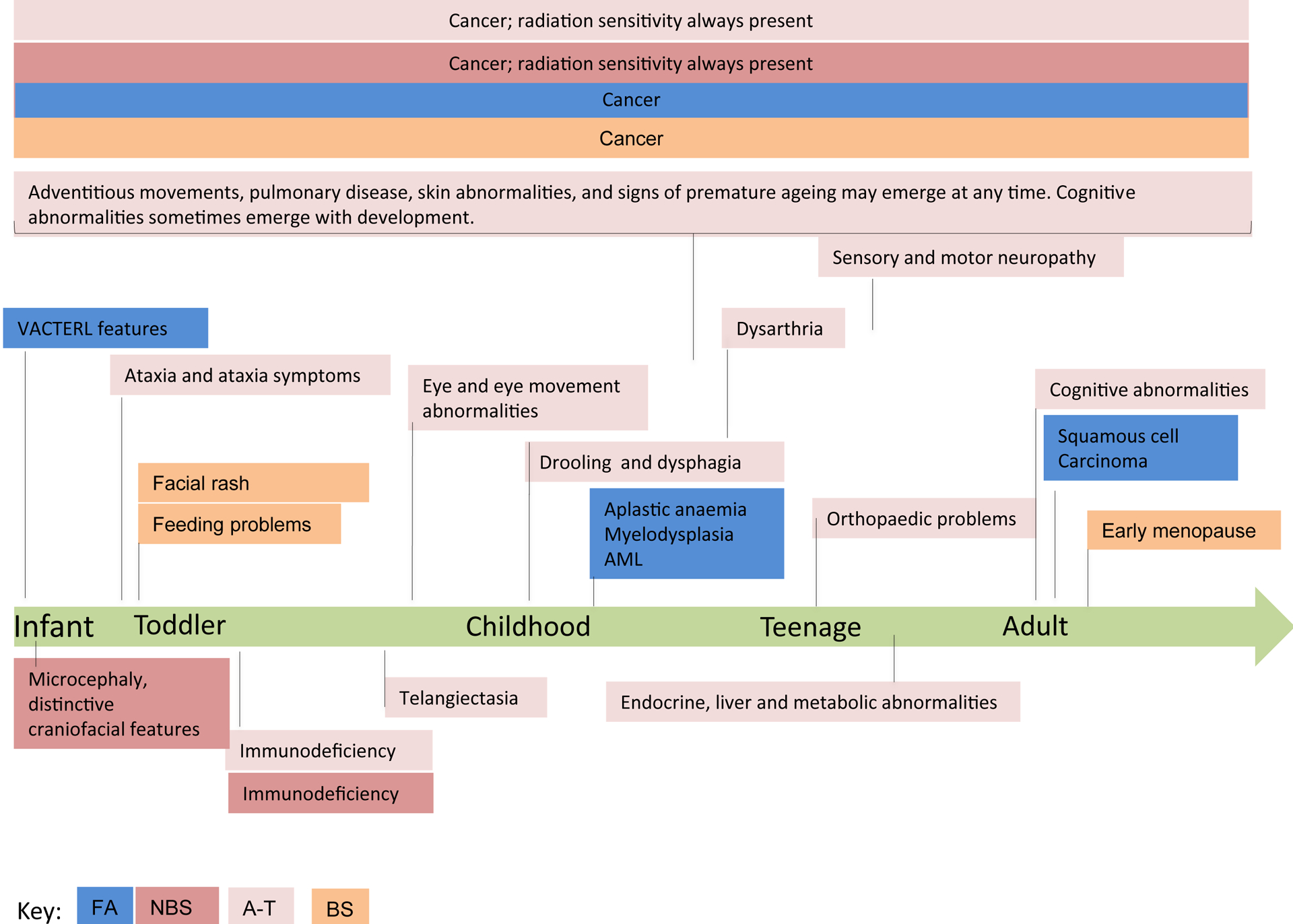
Figure 6.. The natural history of the chromosome breakage disorders.
Each disorder has its own spectrum of age-related clinical features; in the case of most individuals with Fanconi anaemia this is focused on the consequences of bone marrow failure; in those with ataxia telangiectasia the progressive neurodegeneration and requirement for wheelchair use; in NBS the immunodeficiency and learning difficulties and in Bloom Syndrome small size and slowness with certainty about the diagnosis. All the disorders have a greatly increased likelihood of developing cancer.

References

    1. Bluteau D et al. Biallelic inactivation of REV7 is associated with Fanconi anemia. The Journal of clinical investigation 126, 3580–3584, doi:10.1172/jci88010 (2016). - DOI - PMC - PubMed
    1. Ceccaldi R, Sarangi P & D’Andrea AD The Fanconi anaemia pathway: new players and new functions. Nature reviews. Molecular cell biology 17, 337–349, doi:10.1038/nrm.2016.48 (2016). - DOI - PubMed
    2. Biochemistry and cell biology of the FANC pathway proteins

    1. Knies K et al. Biallelic mutations in the ubiquitin ligase RFWD3 cause Fanconi anemia. The Journal of clinical investigation 127, 3013–3027, doi:10.1172/jci92069 (2017). - DOI - PMC - PubMed
    1. Neveling K, Endt D, Hoehn H & Schindler D Genotype-phenotype correlations in Fanconi anemia. Mutation research 668, 73–91, doi:10.1016/j.mrfmmm.2009.05.006 (2009). - DOI - PubMed
    1. Rosenberg PS, Tamary H & Alter BP How high are carrier frequencies of rare recessive syndromes? Contemporary estimates for Fanconi Anemia in the United States and Israel. American journal of medical genetics. Part A 155a, 1877–1883, doi:10.1002/ajmg.a.34087 (2011). - DOI - PMC - PubMed

Publication types

MeSH terms