


A Portable Electrospinner for Nanofiber Synthesis and Its Application for Cosmetic Treatment of Alopecia
- PMID: 31540131
- PMCID: PMC6781269
- DOI: 10.3390/nano9091317
A Portable Electrospinner for Nanofiber Synthesis and Its Application for Cosmetic Treatment of Alopecia
Abstract
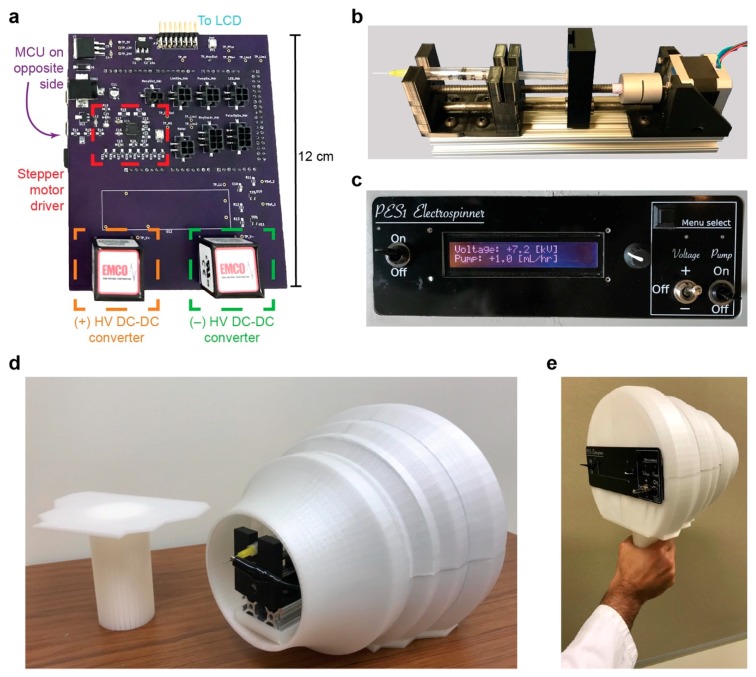
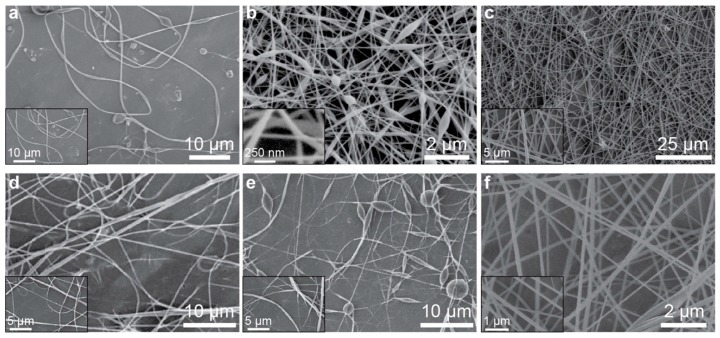
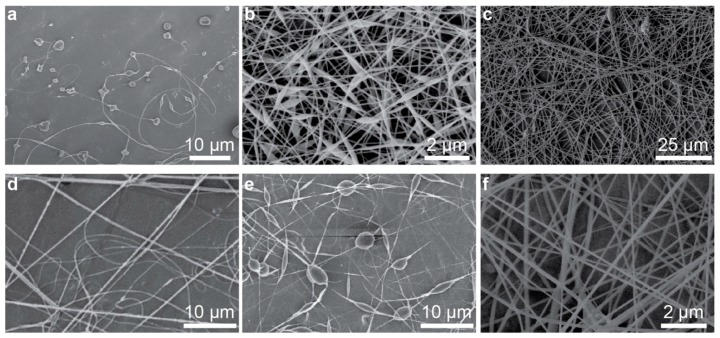
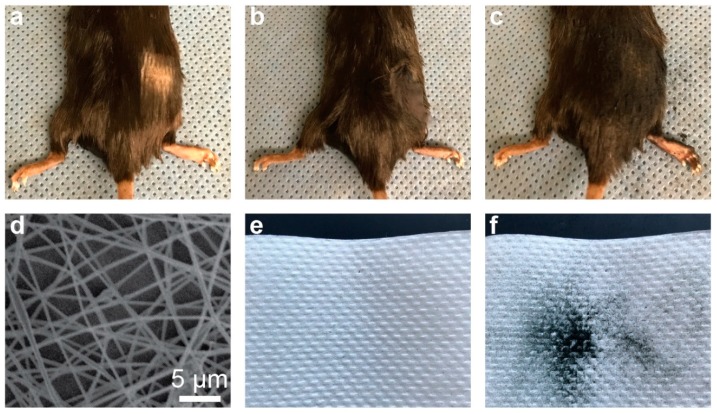
A portable, handheld electrospinning apparatus is designed and constructed using off-the-shelf components and 3D-printed parts. The portable electrospinner is used to generate nanofibers with diameters ranging from 85 to 600 nm; examination of these fibers is achieved with scanning electron microscopy. This portable electrospinner has similar capabilities to standard stationary benchtop electrospinners in terms of the diversity of polymers the device is able to spin into nanofibers and their resulting size and morphology. However, it provides much more ambulatory flexibility, employs current-limiting measures that allow for safer operation and is cost effective. As a demonstration of the device's unique application space afforded by its portability, the device is applied in direct-to-skin electrospinning to improve the aesthetics of simulated hair loss in a mouse model by electrospinning dyed polyacrylonitrile nanofibers that mimic hair. The superficial nanofiber treatment for thinning hair is able to achieve an improvement in appearance similar to that of a commercially available powder product but outperforms the powder in the nanofiber's superior adherence to the affected area. The portable electrospinning apparatus overcomes many limitations of immobile benchtop electrospinners and holds promise for applications in consumer end-use scenarios such as the treatment of alopecia via cosmetic hair thickening.
Keywords: alopecia; cosmetics; electrospinning; nanofibers; portable device.
Conflict of interest statement
The authors declare no conflict of interest.
Figures
References
-
- Lee K.S., Shim J., Park M., Kim H.Y., Son D.I. Transparent nanofiber textiles with intercalated ZnO@graphene QD LEDs for wearable electronics. Compos. Part B: Eng. 2017;130:70–75. doi: 10.1016/j.compositesb.2017.07.046. - DOI
-
- Lin S.-C., Lu Y.-T., Chien Y.-A., Wang J.-A., You T.-H., Wang Y.-S., Lin C.-W., Ma C.-C.M., Hu C.-C. Asymmetric supercapacitors based on functional electrospun carbon nanofiber/manganese oxide electrodes with high power density and energy density. J. Power Sources. 2017;362:258–269. doi: 10.1016/j.jpowsour.2017.07.052. - DOI
-
- Sultana A., Mehebub Alam M., Sadhukhan P., Ghorai U.K., Das S., Middya T.R., Mandal D. Organo-lead halide perovskite regulated green light emitting poly(vinylidene fluoride) electrospun nanofiber mat and its potential utility for ambient mechanical energy harvesting application. Nano Energy. 2018;49:380–392. doi: 10.1016/j.nanoen.2018.04.057. - DOI
-
- Pazhamalai P., Krishnamoorthy K., Mariappan V.K., Sahoo S., Manoharan S., Kim S.J. A high efficacy self-charging MoSe2 solid-state supercapacitor using electrospun nanofibrous piezoelectric separator with ionogel electrolyte. Adv. Mater. Interfaces. 2018;5:1800055. doi: 10.1002/admi.201800055. - DOI
Grants and funding
LinkOut - more resources
Full Text Sources
Research Materials
