


Cell-free nuclear, but not mitochondrial, DNA concentrations correlate with the early host inflammatory response after severe trauma
- PMID: 31541163
- PMCID: PMC6754448
- DOI: 10.1038/s41598-019-50044-z
Cell-free nuclear, but not mitochondrial, DNA concentrations correlate with the early host inflammatory response after severe trauma
Abstract
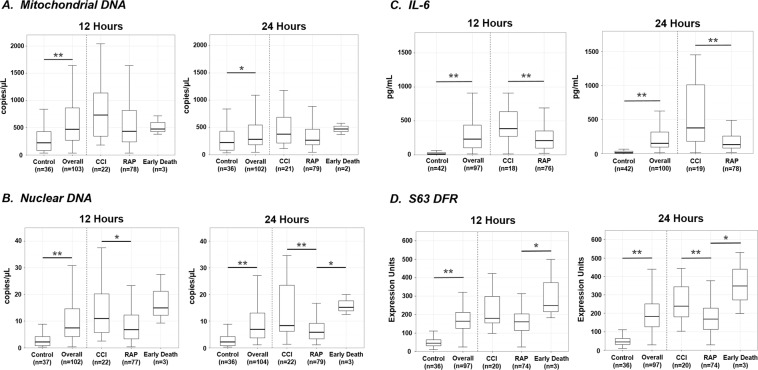
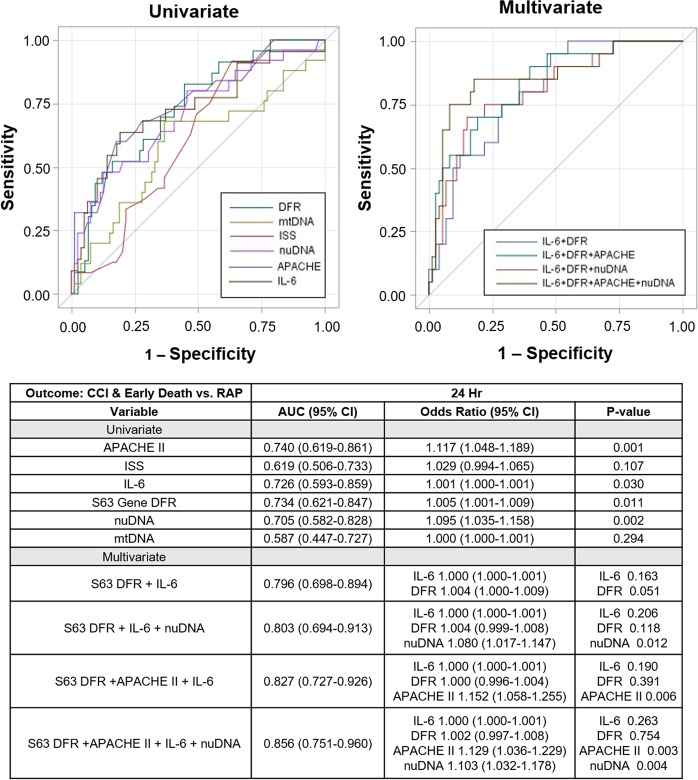
Severe blunt trauma is associated with an early 'genomic storm' which causes simultaneous up- and down-regulation of host protective immunity. Excessive inflammation can lead to organ injury. In the absence of infection, the inflammatory response is presumably driven by release of endogenous alarmins called danger-associated molecular patterns (DAMPs), which initiate immune responses through pattern-recognition receptors (PRR). Here we examined the relationship between concentrations of cell-free (cf) nuclear DNA (ncDNA) and mitochondrial DNA (mtDNA) within 24 hours post trauma with circulating leukocyte transcriptomics and plasma IL-6 concentrations, as well as the patients' clinical trajectories. In 104 patients enrolled from two level-1 trauma centers, ncDNA and mtDNA concentrations were increased within 24 hours of severe trauma, but only ncDNA concentrations correlated with leukocyte gene expression and outcomes. Surprisingly, ncDNA, not mtDNA concentrations, were significantly elevated in trauma patients who developed chronic critical illness versus rapid clinical recovery. Plasma IL-6 and leukocyte transcriptomics were better predictors of outcomes than cfDNA levels. Although mtDNA and ncDNA are significantly increased in the immediate post-trauma period, the dramatic inflammatory and gene expression changes seen after severe trauma are only weakly correlated with ncDNA concentrations, and more importantly, mtDNA concentrations are not associated with adverse clinical trajectories.
Conflict of interest statement
The authors declare no competing interests.
Figures
References
-
- Aikawa N. Cytokine storm in the pathogenesis of multiple organ dysfunction syndrome associated with surgical insults. Nihon Geka Gakkai Zasshi. 1996;97:771–777. - PubMed
Publication types
MeSH terms
Substances
Grants and funding
LinkOut - more resources
Full Text Sources
Other Literature Sources
