


The p factor: genetic analyses support a general dimension of psychopathology in childhood and adolescence
- PMID: 31541466
- PMCID: PMC6906245
- DOI: 10.1111/jcpp.13113
The p factor: genetic analyses support a general dimension of psychopathology in childhood and adolescence
Abstract
Background: Diverse behaviour problems in childhood correlate phenotypically, suggesting a general dimension of psychopathology that has been called the p factor. The shared genetic architecture between childhood psychopathology traits also supports a genetic p. This study systematically investigates the manifestation of this common dimension across self-, parent- and teacher-rated measures in childhood and adolescence.
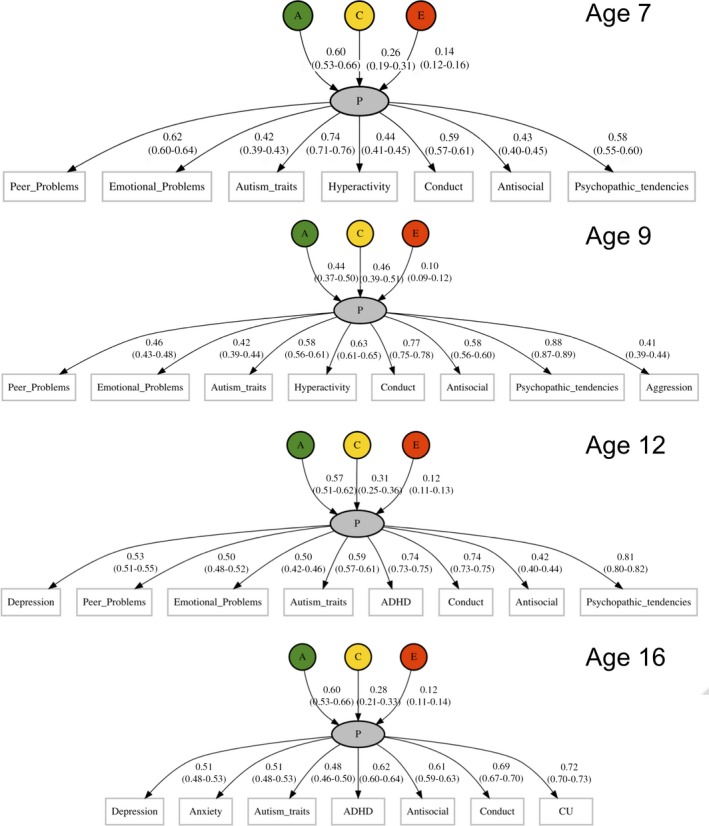
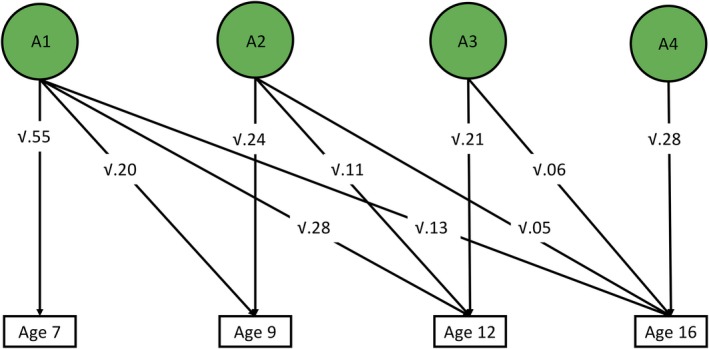
Methods: The sample included 7,026 twin pairs from the Twins Early Development Study (TEDS). First, we employed multivariate twin models to estimate common genetic and environmental influences on p based on diverse measures of behaviour problems rated by children, parents and teachers at ages 7, 9, 12 and 16 (depressive traits, emotional problems, peer problems, autism traits, hyperactivity, antisocial behaviour, conduct problems and psychopathic tendencies). Second, to assess the stability of genetic and environmental influences on p across time, we conducted longitudinal twin modelling of the first phenotypic principal components of childhood psychopathological measures across each of the four ages. Third, we created a genetic p factor in 7,026 unrelated genotyped individuals based on eight polygenic scores for psychiatric disorders to estimate how a general polygenic predisposition to mostly adult psychiatric disorders relates to childhood p.
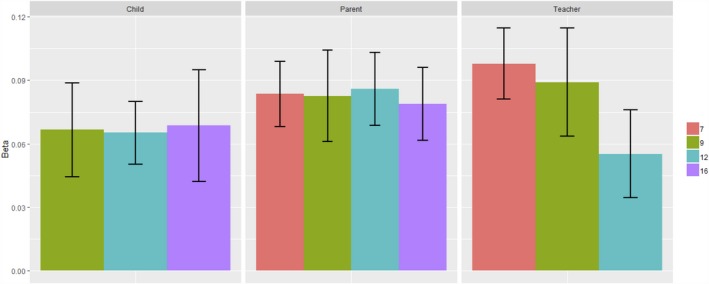
Results: Behaviour problems were consistently correlated phenotypically and genetically across ages and raters. The p factor is substantially heritable (50%-60%) and manifests consistently across diverse ages and raters. However, residual variation in the common factor models indicates unique contributions as well. Genetic correlations of p components across childhood and adolescence suggest stability over time (49%-78%). A polygenic general psychopathology factor derived from studies of psychiatric disorders consistently predicted a general phenotypic p factor across development (0.3%-0.9%).
Conclusions: Diverse forms of psychopathology generally load on a common p factor, which is highly heritable. There are substantial genetic influences on the stability of p across childhood. Our analyses indicate genetic overlap between general risk for psychiatric disorders in adulthood and p in childhood, even as young as age 7. The p factor has far-reaching implications for genomic research and, eventually, for diagnosis and treatment of behaviour problems.
Keywords: Childhood psychopathology; behavioural genetics; genomics.
© 2019 The Authors. Journal of Child Psychology and Psychiatry published by John Wiley & Sons Ltd on behalf of Association for Child and Adolescent Mental Health.
Figures
References
-
- Angold, A. , Costello, E.J. , Messer, S.C. , & Pickles, A. (1995). The development of a Questionnaire for use in epidemiological studies of depression in children and adolescents. International Journal of Methods in Psychiatric Research, 5, 237–249.
-
- Baron-Cohen, S. , Wheelwright, S. , Skinner, R. , Martin, J. , & Clubley, E. (2001). The autism-spectrum quotient (AQ): Evidence from Asperger syndrome/high-functioning autism, males and females, scientists and mathematicians. Journal of Autism and Developmental Disorders, 31, 5–17. 10.1023/A:1005653411471. - DOI - PubMed
-
- Bartels, M. , Boomsma, D.I. , Hudziak, J.J. , Rietveld, M.J.H. , van Beijsterveldt, T.C.E.M. , & van den Oord, E.J.C.G. (2004). Disentangling genetic, environmental, and rater effects on internalizing and externalizing problem behavior in 10‐year‐old twins. Twin Research, 7, 162–175. - PubMed
Publication types
MeSH terms
Grants and funding
LinkOut - more resources
Full Text Sources
Medical
