


Efficacy of Lactobacillus rhamnosus GG in treatment of acute pediatric diarrhea: A systematic review with meta-analysis
- PMID: 31543689
- PMCID: PMC6737314
- DOI: 10.3748/wjg.v25.i33.4999
Efficacy of Lactobacillus rhamnosus GG in treatment of acute pediatric diarrhea: A systematic review with meta-analysis
Abstract
Background: Diarrhea is a major infectious cause of childhood morbidity and mortality worldwide. In clinical trials, Lactobacillus rhamnosus GG ATCC 53013 (LGG) has been used to treat diarrhea. However, recent randomized controlled trials (RCTs) found no evidence of a beneficial effect of LGG treatment.
Aim: To evaluate the efficacy of LGG in treating acute diarrhea in children.
Methods: The EMBASE, MEDLINE, PubMed, Web of Science databases, and the Cochrane Central Register of Controlled Trials were searched up to April 2019 for meta-analyses and RCTs. The Cochrane Review Manager was used to analyze the relevant data.
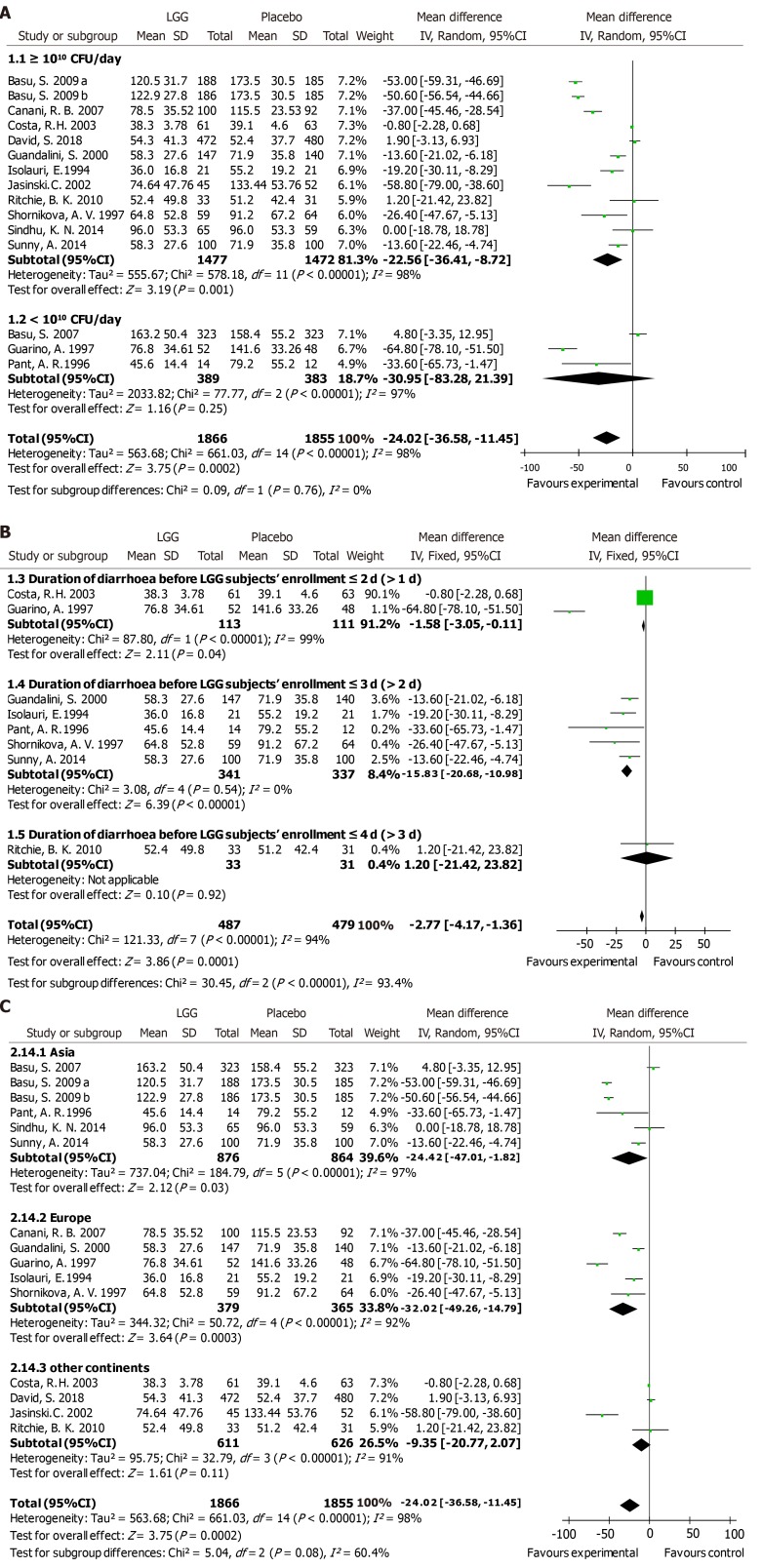
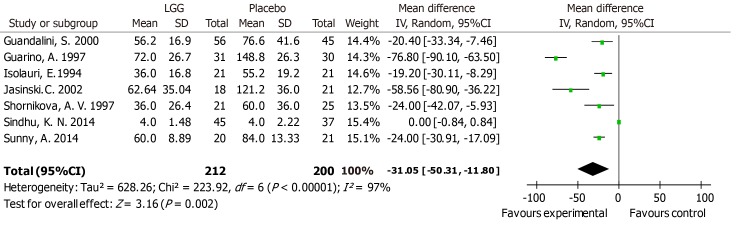
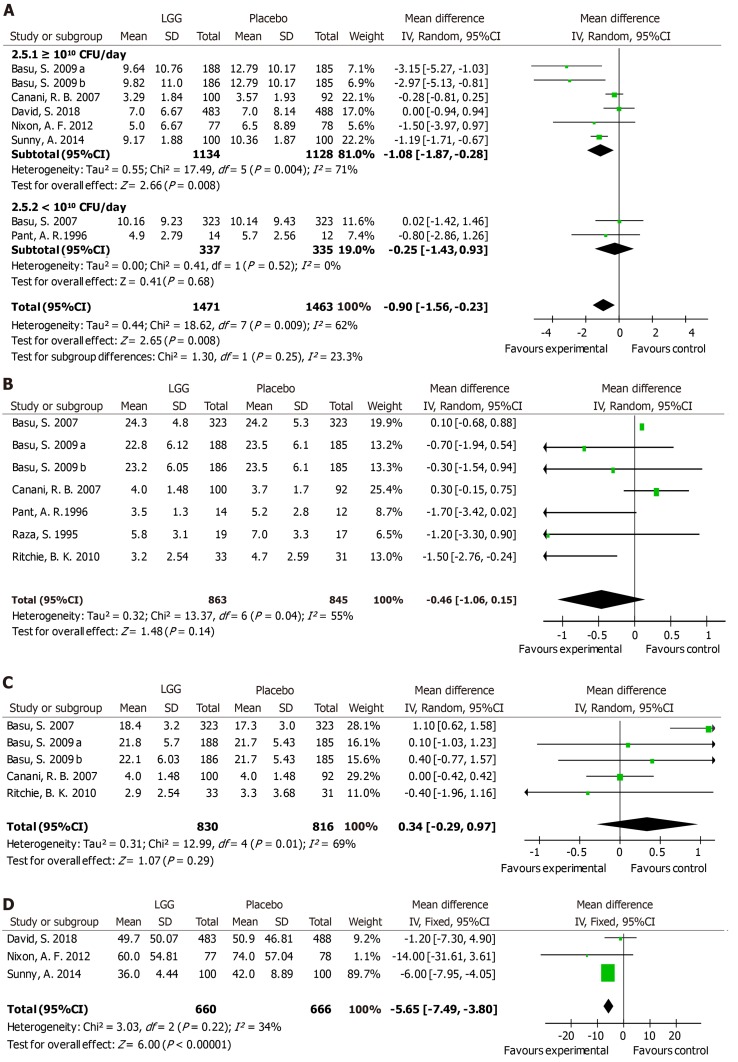
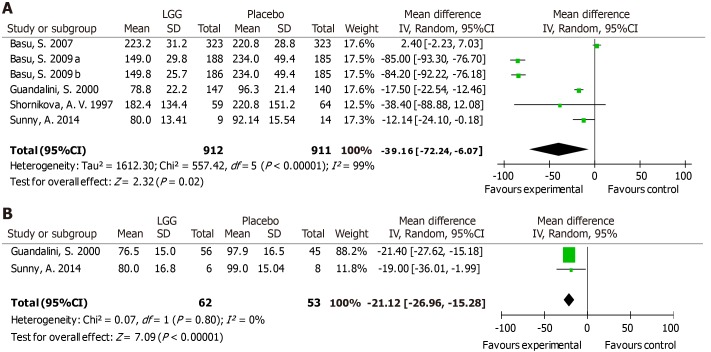
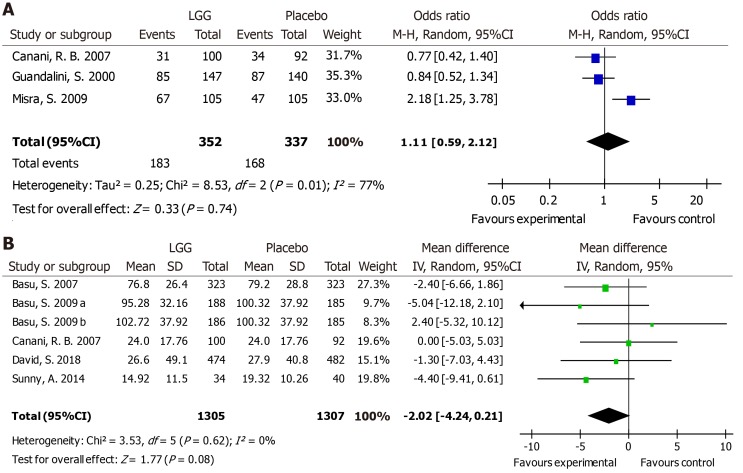
Results: Nineteen RCTs met the inclusion criteria and showed that compared with the control group, LGG administration notably reduced the diarrhea duration [mean difference (MD) -24.02 h, 95% confidence interval (CI) (-36.58, -11.45)]. More effective results were detected at a high dose ≥ 1010 CFU per day [MD -22.56 h, 95%CI (-36.41, -8.72)] vs a lower dose. A similar reduction was found in Asian and European patients [MD -24.42 h, 95%CI (-47.01, -1.82); MD -32.02 h, 95%CI (-49.26, -14.79), respectively]. A reduced duration of diarrhea was confirmed in LGG participants with diarrhea for less than 3 d at enrollment [MD -15.83 h, 95%CI (-20.68, -10.98)]. High-dose LGG effectively reduced the duration of rotavirus-induced diarrhea [MD -31.05 h, 95%CI (-50.31, -11.80)] and the stool number per day [MD -1.08, 95%CI (-1.87, -0.28)].
Conclusion: High-dose LGG therapy reduces the duration of diarrhea and the stool number per day. Intervention at the early stage is recommended. Future trials are expected to verify the effectiveness of LGG treatment.
Keywords: Acute diarrhea; Children; Lactobacillus rhamnosus GG; Meta-analysis; Probiotics; Rotavirus; Systematic review.
Conflict of interest statement
Conflict-of-interest statement: None.
Figures
References
-
- do Carmo MS, Santos CID, Araújo MC, Girón JA, Fernandes ES, Monteiro-Neto V. Probiotics, mechanisms of action, and clinical perspectives for diarrhea management in children. Food Funct. 2018;9:5074–5095. - PubMed
-
- Savarino SJ, Bourgeois AL. Diarrhoeal disease: Current concepts and future challenges. Epidemiology of diarrhoeal diseases in developed countries. Trans R Soc Trop Med Hyg. 1993;87 Suppl 3:7–11. - PubMed
Publication types
MeSH terms
LinkOut - more resources
Full Text Sources
Medical
Miscellaneous
