


A Novel Seed-Dressing Formulation Based on an Improved Mutant Strain of Trichoderma virens, and Its Field Evaluation
- PMID: 31543866
- PMCID: PMC6730527
- DOI: 10.3389/fmicb.2019.01910
A Novel Seed-Dressing Formulation Based on an Improved Mutant Strain of Trichoderma virens, and Its Field Evaluation
Abstract
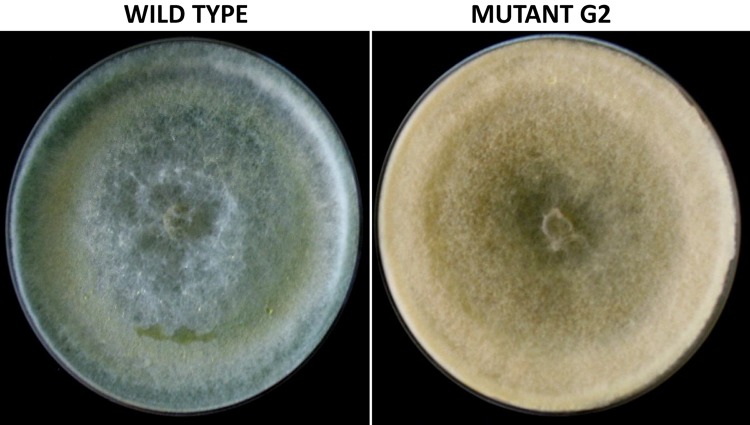
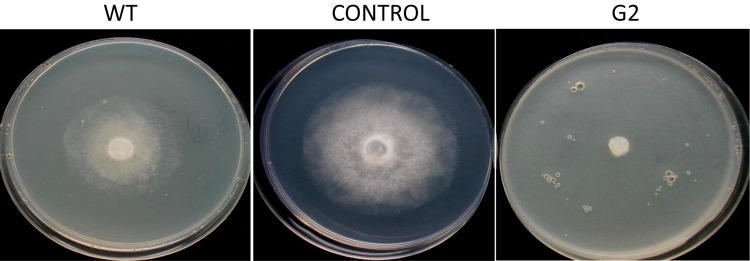
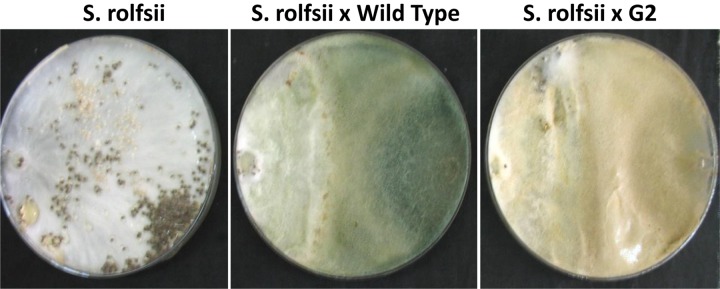
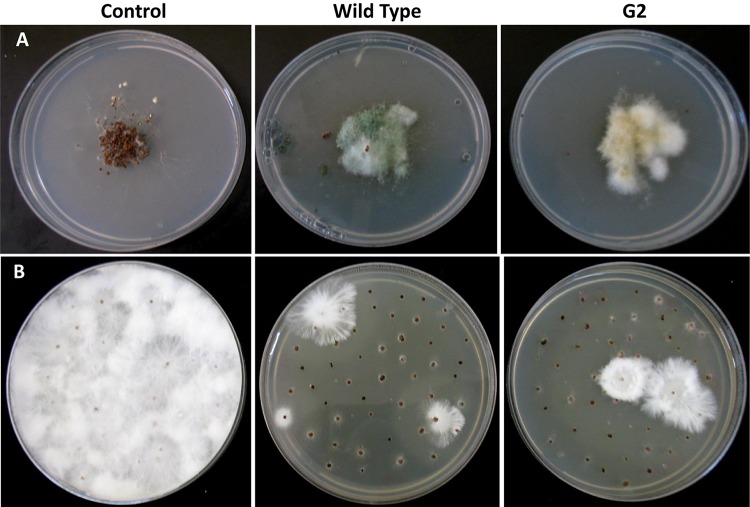
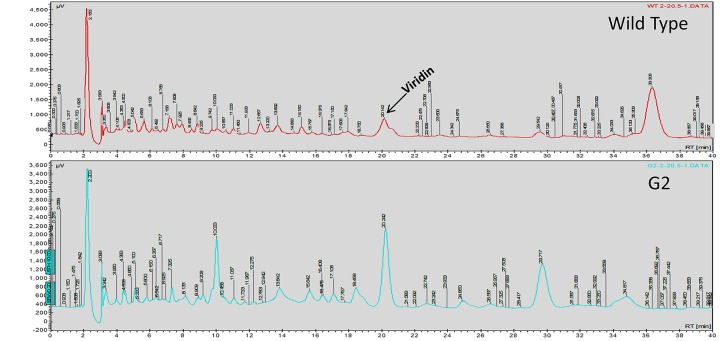
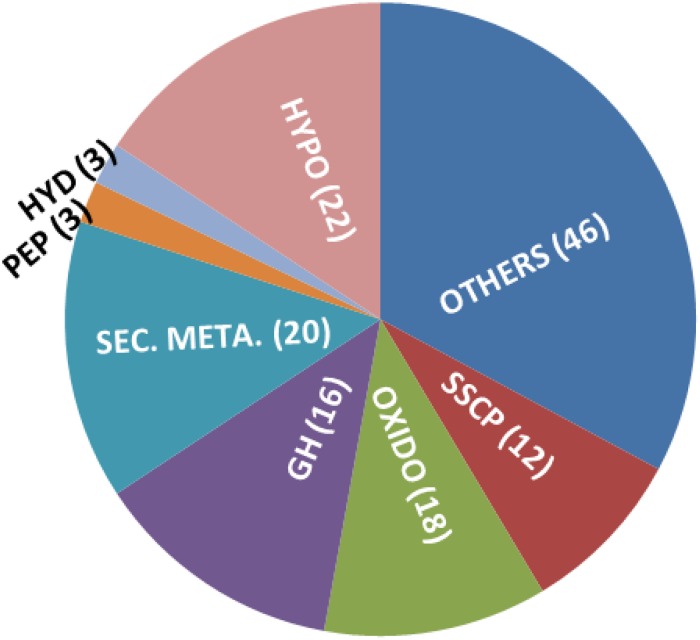
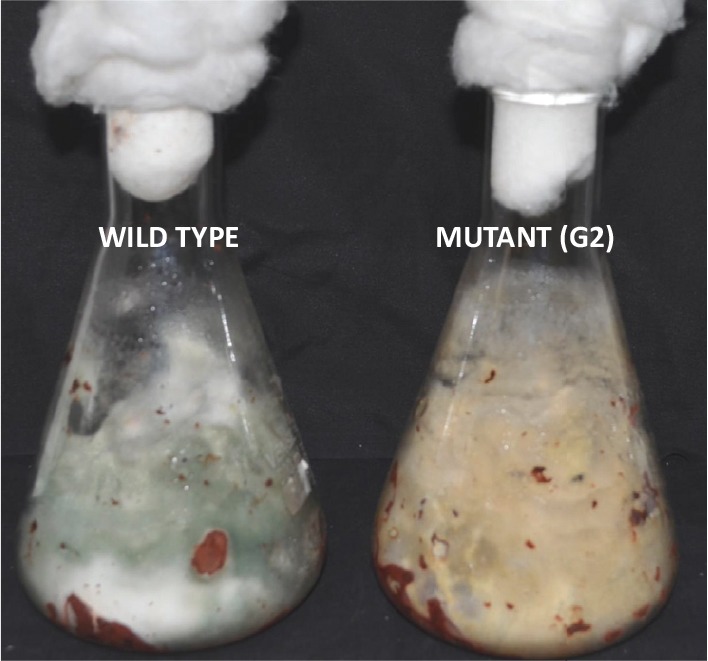
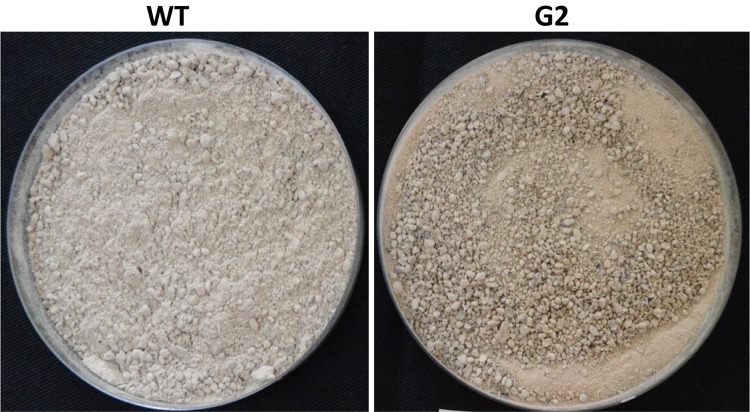
Using gamma-ray-induced mutagenesis, we have developed a mutant (named G2) of Trichoderma virens that produced two- to three-fold excesses of secondary metabolites, including viridin, viridiol, and some yet-to-be identified compounds. Consequently, this mutant had improved antibiosis against the oomycete test pathogen Pythium aphanidermatum. A transcriptome analysis of the mutant vis-à-vis the wild-type strain showed upregulation of several secondary-metabolism-related genes. In addition, many genes predicted to be involved in mycoparasitism and plant interactions were also upregulated. We used tamarind seeds as a mass multiplication medium in solid-state fermentation and, using talcum powder as a carrier, developed a novel seed dressing formulation. A comparative evaluation of the wild type and the mutant in greenhouse under high disease pressure (using the test pathogen Sclerotium rolfsii) revealed superiority of the mutant over wild type in protecting chickpea (Cicer arietinum) seeds and seedlings from infection. We then undertook extensive field evaluation (replicated micro-plot trials, on-farm demonstration trials, and large-scale trials in farmers' fields) of our mutant-based formulation (named TrichoBARC) for management of collar rot (S. rolfsii) in chickpea and lentil (Lens culinaris) over multiple locations in India. In certain experiments, other available formulations were included for comparison. This formulation consistently, over multiple locations and years, improved seed germination, reduced seedling mortality, and improved plant growth and yield. We also noticed growth promotion, improved pod bearing, and early flowering (7-10 days) in TrichoBARC-treated chickpea and lentil plants under field conditions. In toxicological studies in animal models, this formulation exhibited no toxicity to mammals, birds, or fish.
Keywords: Trichoderma; chickpea; farmers’ fields; formulation; lentil; mutant; tamarind seeds.
Figures
References
-
- Ahmad J. S., Baker R. (1988). Rhizosphere competence of benomyl-tolerant mutants of Trichoderma spp. Can. J. Microbiol. 34 694–696. 10.1139/m88-116 - DOI
-
- Atanasova L., Druzhinina I. S., Jaklitsch W. M. (2013). “Two hundred Trichoderma species recognized based on molecular phylogeny,” in Trichoderma: Biology and Application, eds Mukherjee P. K., Horwitz B. A., Singh U. S., Mukherjee M., Schmoll M. (Wallingford: CABI; ).
-
- Bansal R., Sherkhane P. D., Oulkar D., Khan Z., Banerjee K., Mukherjee P. K. (2018). The viridin biosynthesis gene cluster of Trichoderma virens and its conservancy in the bat white-nose fungus Pseudogymnoascus destructans. ChemistrySelect 3 1289–1293. 10.1002/slct.201703035 - DOI
LinkOut - more resources
Full Text Sources
