


An autoregulatory cell cycle timer integrates growth and specification in chick wing digit development
- PMID: 31545166
- PMCID: PMC6777937
- DOI: 10.7554/eLife.47625
An autoregulatory cell cycle timer integrates growth and specification in chick wing digit development
Abstract
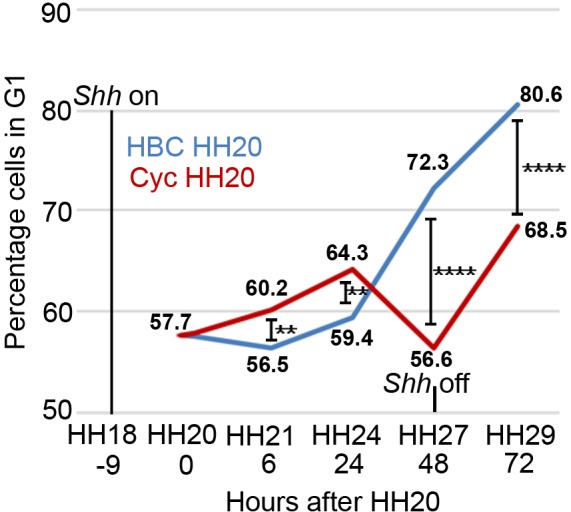
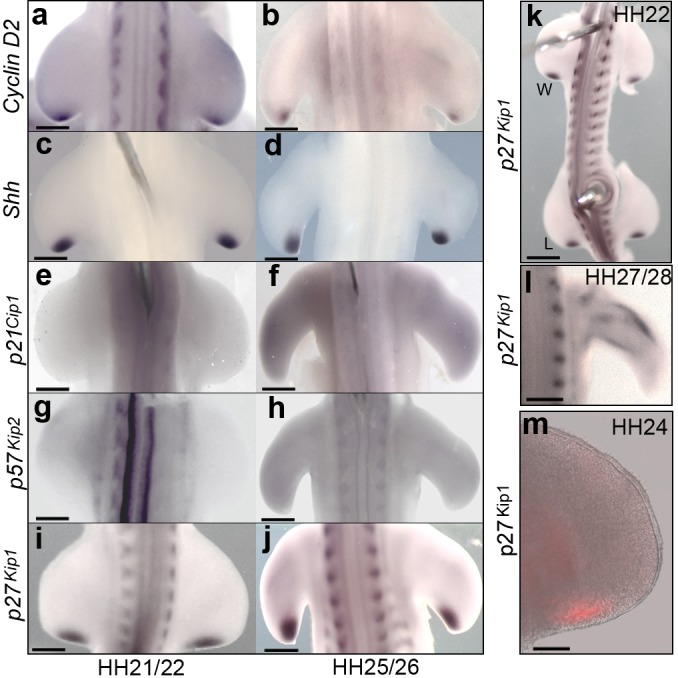
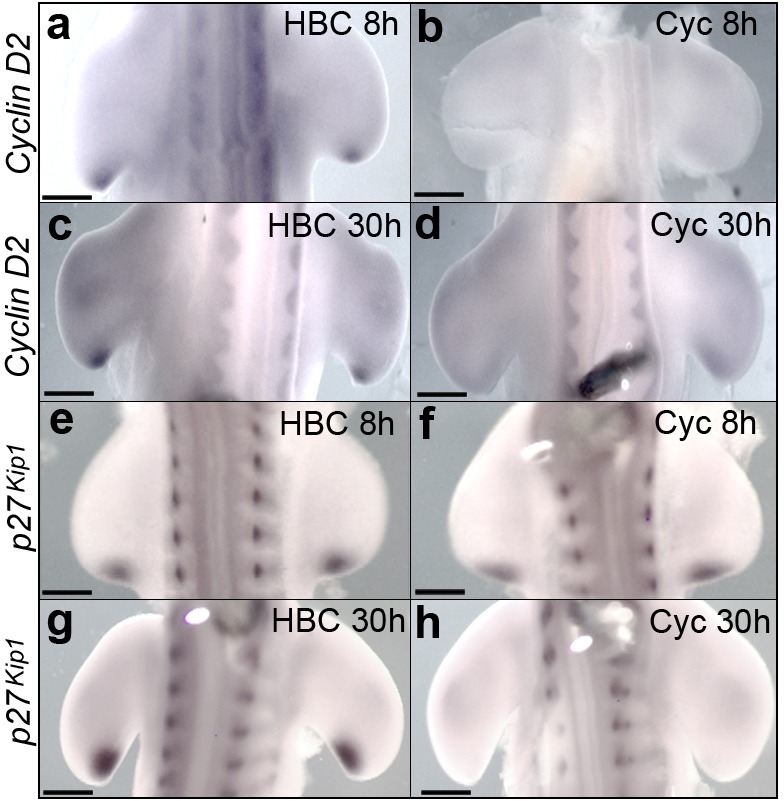
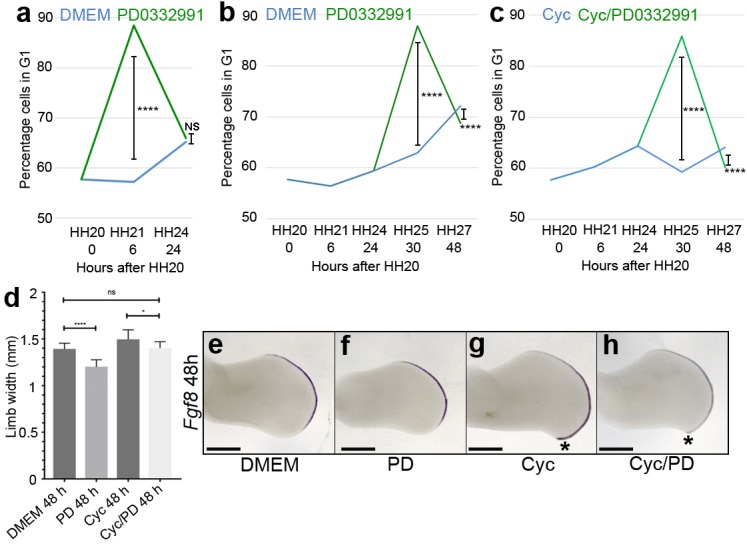
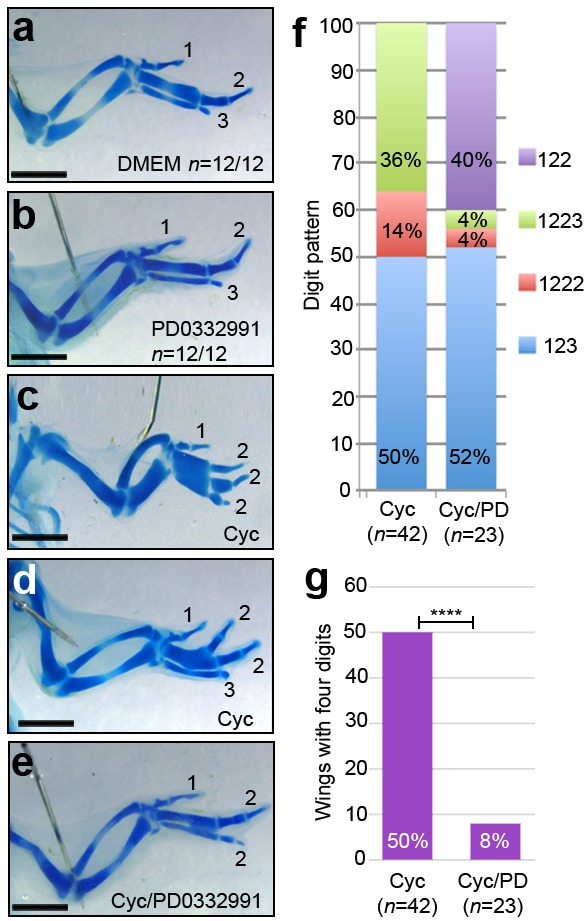
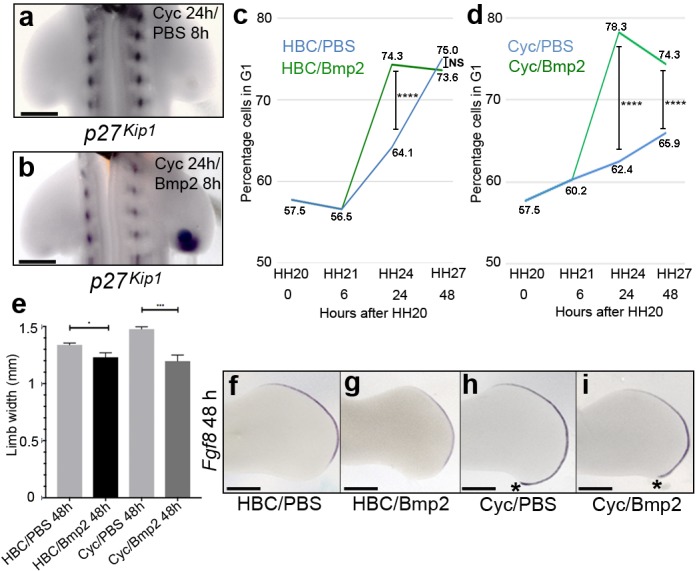
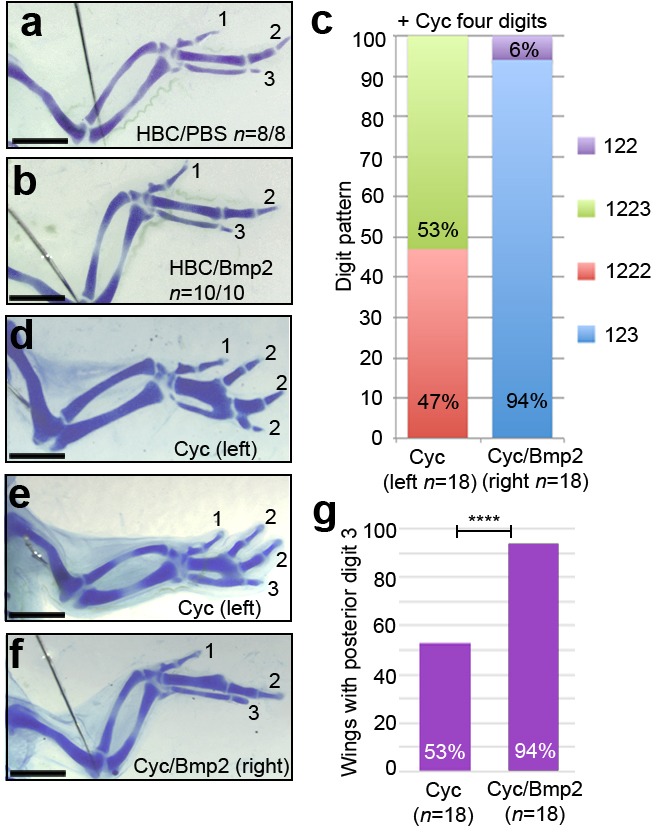
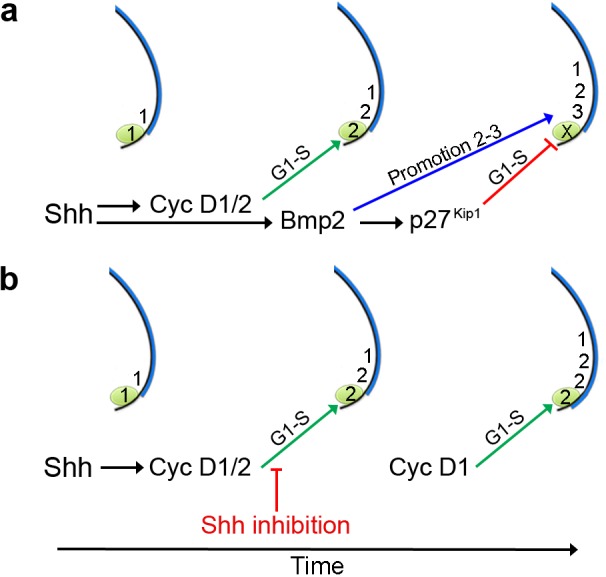
A fundamental question is how proliferation and growth are timed during embryogenesis. Although it has been suggested that the cell cycle could be a timer, the underlying mechanisms remain elusive. Here we describe a cell cycle timer that operates in Sonic hedgehog (Shh)-expressing polarising region cells of the chick wing bud. Our data are consistent with Shh signalling stimulating polarising region cell proliferation via Cyclin D2, and then inhibiting proliferation via a Bmp2-p27kip1 pathway. When Shh signalling is blocked, polarising region cells over-proliferate and form an additional digit, which can be prevented by applying Bmp2 or by inhibiting D cyclin activity. In addition, Bmp2 also restores posterior digit identity in the absence of Shh signalling, thus indicating that it specifies antero-posterior (thumb to little finger) positional values. Our results reveal how an autoregulatory cell cycle timer integrates growth and specification and are widely applicable to many tissues.
Keywords: Shh; chicken; developmental biology; digits; growth; limb; patterning; timing.
© 2019, Pickering et al.
Conflict of interest statement
JP, KC, MT No competing interests declared
Figures
References
-
- Barres BA, Lazar MA, Raff MC. A novel role for Thyroid-Hormone, glucocorticoids and retinoic acid in timing oligodendrocyte development. Development. 1994;120:1097–1108. - PubMed
Publication types
MeSH terms
Substances
Grants and funding
LinkOut - more resources
Full Text Sources
Miscellaneous
