


Lactic Acid Fermentation as a Pre-Treatment Process for Faba Bean Flour and Its Effect on Textural, Structural and Nutritional Properties of Protein-Enriched Gluten-Free Faba Bean Breads
- PMID: 31546650
- PMCID: PMC6836149
- DOI: 10.3390/foods8100431
Lactic Acid Fermentation as a Pre-Treatment Process for Faba Bean Flour and Its Effect on Textural, Structural and Nutritional Properties of Protein-Enriched Gluten-Free Faba Bean Breads
Abstract
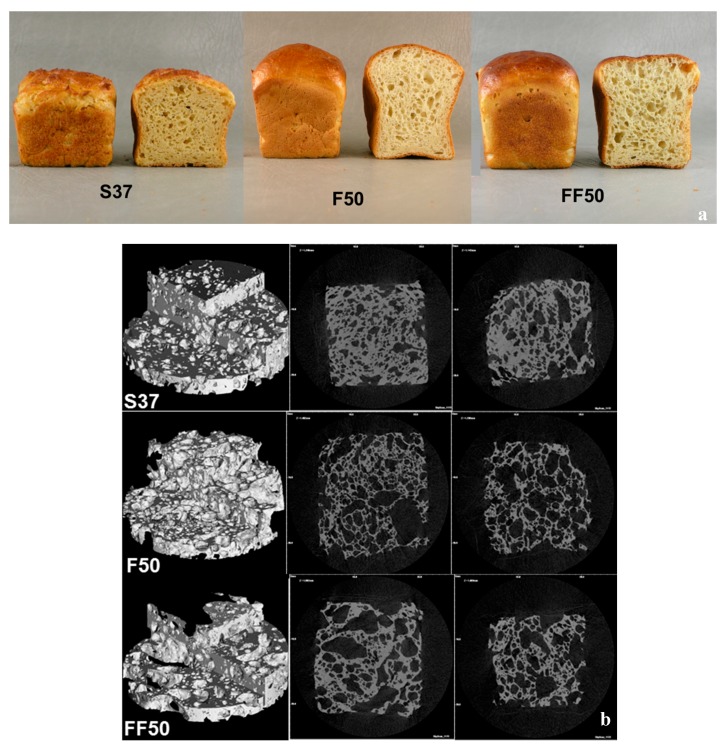
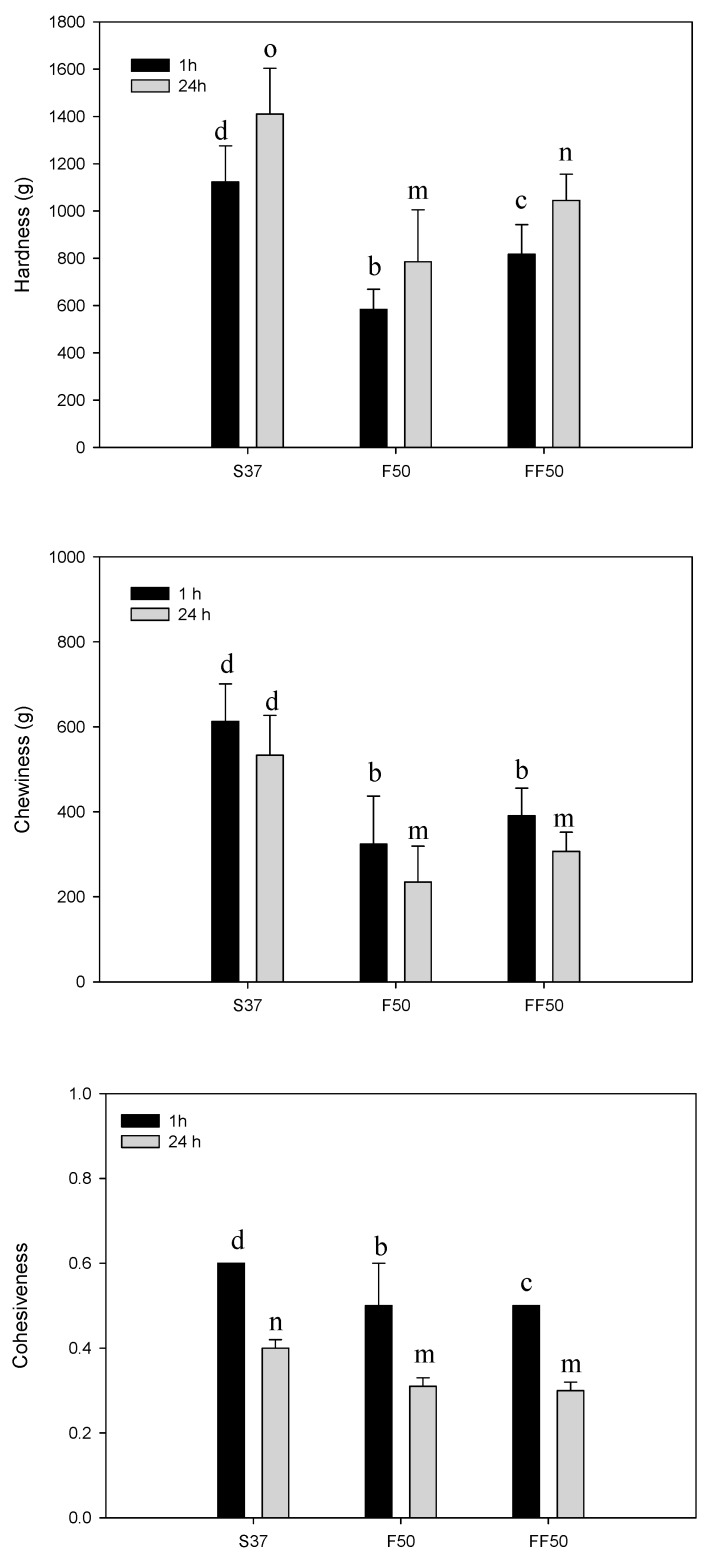
Lactic acid fermentation could be used as a potential modification tool for faba bean flour to enable its incorporation in boosting the nutritional profile of gluten-free breads. Gluten-free breads made with fermented or unfermented faba bean flours were compared with commercial soy flour. The amounts of faba- and soy-bean flours were adjusted to obtain the same protein content in bread (16%). Both fermented and unfermented faba bean flour resulted in larger bread volume (2.1 mL/g and 2.4 mL/g, respectively) compared to bread made with soybean flour (1.5 mL/g). Breads made with unfermented and fermented faba flour had higher porosity (82% and 72%, respectively) than bread with soy flour (61%). The faba breads also were softer than the soy bread. Fermentation of faba flour prior to bread making significantly increased crumb hardness (584 vs. 817 g). Fermentation increased in vitro protein digestibility (72.3% vs. 64.8%). Essential Amino Acid and Biological Value indexes were significantly higher for breads containing fermented faba flour compared to breads made with unfermented faba and soy flour. The Protein Efficiency Ratio and Nutritional Index increased by fermentation from 33 to 36 and 1.6 to 2.7, respectively. Pre-fermentation of faba bean flour improved the nutritional properties of high-protein, gluten-free faba bread. A sensory panel indicated that fermentation did not affect the crumbliness, evenness of pore size and springiness of breadcrumb.
Keywords: faba beans; fermentation; gluten-free; legumes; nutritional properties; textural properties.
Conflict of interest statement
The authors declare no conflict of interest.
Figures
References
-
- Khalil A.H., Mansour E.H. The effect of cooking, autoclaving and germination on the nutritional quality of faba beans. Food Chem. 1995;54:177–182. doi: 10.1016/0308-8146(95)00024-D. - DOI
-
- Derbyshire E. The nutritional value of whole pulses and pulse fractions. In: Tiwari B.K., Gowen A., McKenna B., editors. Pulse Foods-Processing, Quality and Nutraceutical Applications. Elsevier; London, UK: 2011. pp. 363–383.
LinkOut - more resources
Full Text Sources
