


Variation in Chemical Composition and Biological Activities of Flos Chrysanthemi indici Essential Oil under Different Extraction Methods
- PMID: 31546663
- PMCID: PMC6843213
- DOI: 10.3390/biom9100518
Variation in Chemical Composition and Biological Activities of Flos Chrysanthemi indici Essential Oil under Different Extraction Methods
Abstract
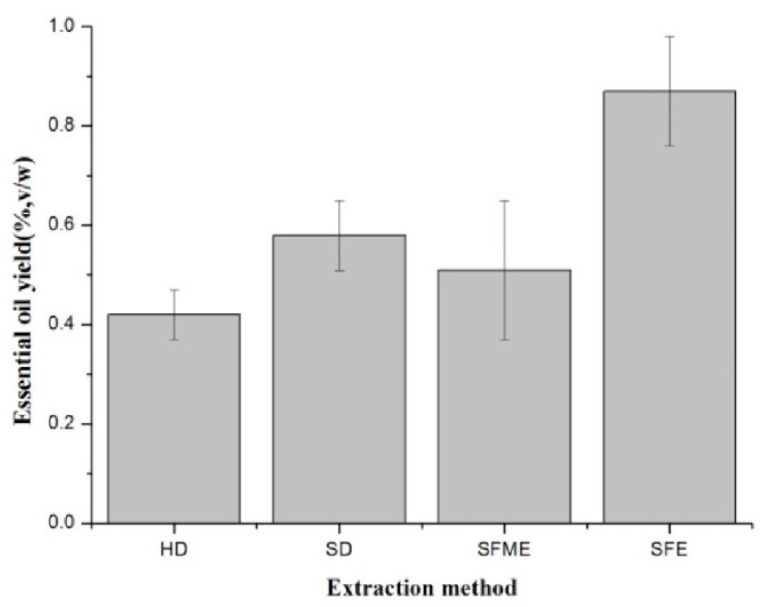
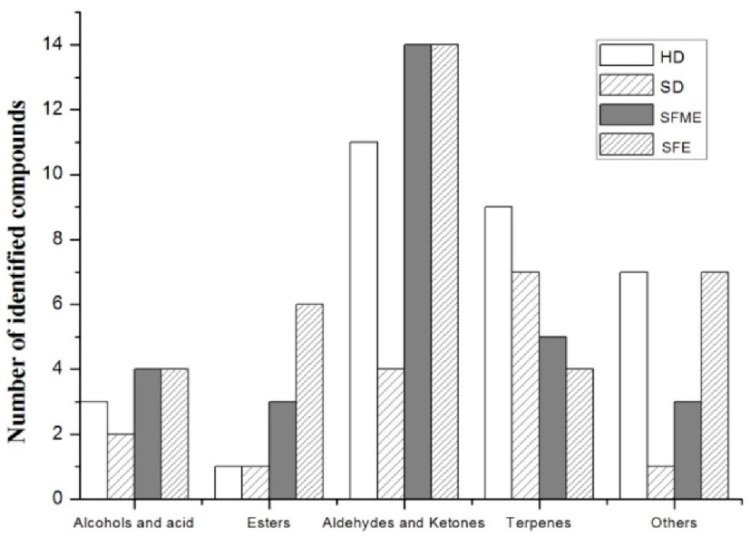
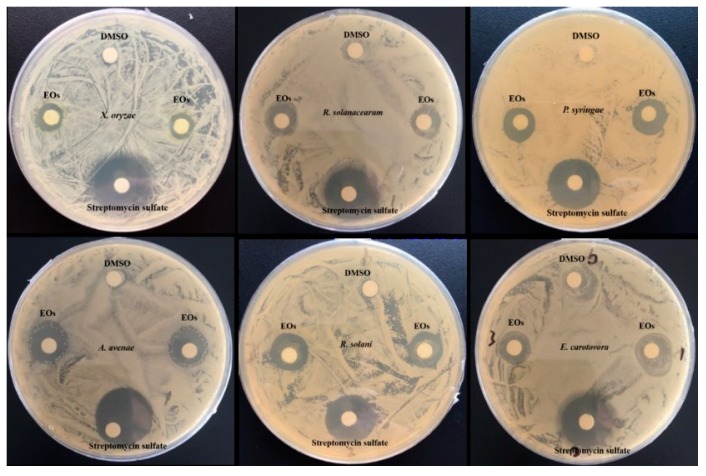
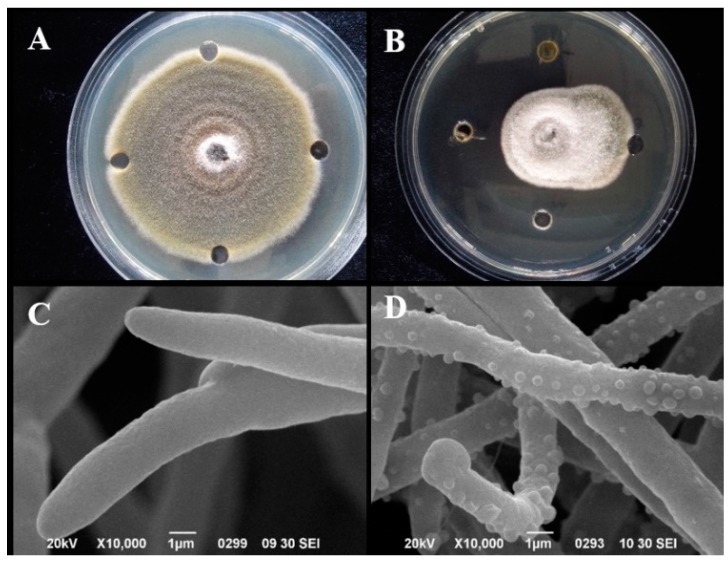
Flos Chrysanthemi indici, an important medicinal and aromatic plant in China, is considered to have many different preservative and pharmacological properties. Considering the capability of essential oils (EOs), the present study is conducted to compare different extraction methods in order to improve yield and biological activities. Hydro-distillation (HD), steam-distillation (SD), solvent-free microwave extraction (SFME), and supercritical fluid extraction (SFE) are employed to prepare EOs from Flos Chrysanthemi indici. A total of 71 compounds are assigned by gas chromatography/mass spectrometry (GC-MS) in comparison with retention indices. These include 32 (HD), 16 (SD), 31 (SFME) and 38 (SFE) compounds. Major constituents of EOs differ according to the extraction methods were heptenol, tricosane, camphor, borneol, and eucalyptol. EOs extracted by SFME exhibit higher antioxidant activity. All EOs show varying degrees of antimicrobial activity, with minimum inhibitory concentration (MIC) ranging from 0.0625 to 0.125 mg/mL and SFME and SFE prove to be efficient extraction methods. EOs alter the hyphal morphology of Alternaria alternata, with visible bumps forming on the mycelium. Overall, these results indicate that the extraction method can significantly influence the composition and biological activity of EOs and SFME and SFE are outstanding methods to extract EOs with high yield and antimicrobial activity.
Keywords: Flos Chrysanthemi indici; biological activity; chemical composition; essential oil; extraction method.
Conflict of interest statement
We declare that there are no conflicts of interest. We will store the samples for first three years after publication.
Figures
References
-
- Doyeon L., Goya C., Taesook Y., Myeongsook C., Byungkil C., Hokyoung K. Anti-inflammatory activity of Chrysanthemum indicum extract in acute and chronic cutaneous inflammation. J. Ethnopharmacol. 2009;123:149–154. - PubMed
-
- Wu Q., Deng C.H., Shen S., Song G.X., Hu Y.M., Fu D., Chen J.K., Zhang X.M. Solid-phase microextraction followed by gas chromatography-mass spectrometry analysis of the volatile components of Flos Chrysanthemi indici in different growing areas. Chromatographia. 2004;59:763–767. doi: 10.1365/s10337-004-0269-x. - DOI
-
- Hashemi-Moghaddam H., Mohammadhosseini M., Basiri M. Optimization of microwave assisted hydrodistillationon chemical compositions of the essential oils from the aerial parts of thymus pubescens and comparison with conventional hydrodistllation. J. Essent. Oil Bear Plants. 2015;18:884–893. doi: 10.1080/0972060X.2014.985735. - DOI
-
- Shrigod N.M., Swami Hulle N.R., Prasad R.V. Supercritical fluid extraction of essential oil from mint leaves (Mentha spicata): Process optimization and its quality evaluation. J. Food Process Eng. 2017;40:1–9. doi: 10.1111/jfpe.12488. - DOI
Publication types
MeSH terms
Substances
LinkOut - more resources
Full Text Sources
Miscellaneous
