. 2019 Sep 12;7(9):345.
doi: 10.3390/microorganisms7090345.

Anti-Biofilm Effect of Selected Essential Oils and Main Components on Mono- and Polymicrobic Bacterial Cultures

Affiliations

Anti-Biofilm Effect of Selected Essential Oils and Main Components on Mono- and Polymicrobic Bacterial Cultures

Erika Beáta Kerekes et al. Microorganisms. .

Abstract

Biofilms are surface-associated microbial communities resistant to sanitizers and antimicrobials. Various interactions that can contribute to increased resistance occur between the populations in biofilms. These relationships are the focus of a range of studies dealing with biofilm-associated infections and food spoilage. The present study investigated the effects of cinnamon (Cinnamomum zeylanicum), marjoram (Origanum majorana), and thyme (Thymus vulgaris) essential oils (EOs) and their main components, i.e., trans-cinnamaldehyde, terpinen-4-ol, and thymol, respectively, on single- and dual-species biofilms of Escherichia coli, Listeria monocytogenes, Pseudomonas putida, and Staphylococcus aureus. In dual-species biofilms, L. monocytogenes was paired with each of the other three bacteria. Minimum inhibitory concentration (MIC) values for the individual bacteria ranged between 0.25 and 20 mg/mL, and trans-cinnamaldehyde and cinnamon showed the highest growth inhibitory effect. Single-species biofilms of L. monocytogenes, P. putida, and S. aureus were inhibited by the tested EOs and their components at sub-lethal concentrations. Scanning electron microscopy images showed that the three-dimensional structure of mature biofilms embedded in the exopolysaccharide matrix disappeared or was limited to micro-colonies with a simplified structure. In most dual-species biofilms, to eliminate living cells from the matrix, concentrations exceeding the MIC determined for individual bacteria were required.

Keywords: antibacterial activity; biofilm; essential oil; food spoilage; polymicrobial biofilm.


Conflict of interest statement

The authors declare no conflict of interest. The funders had no role in the design of the study; in the collection, analyses, or interpretation of data; in the writing of the manuscript, or in the decision to publish the results.

Figures
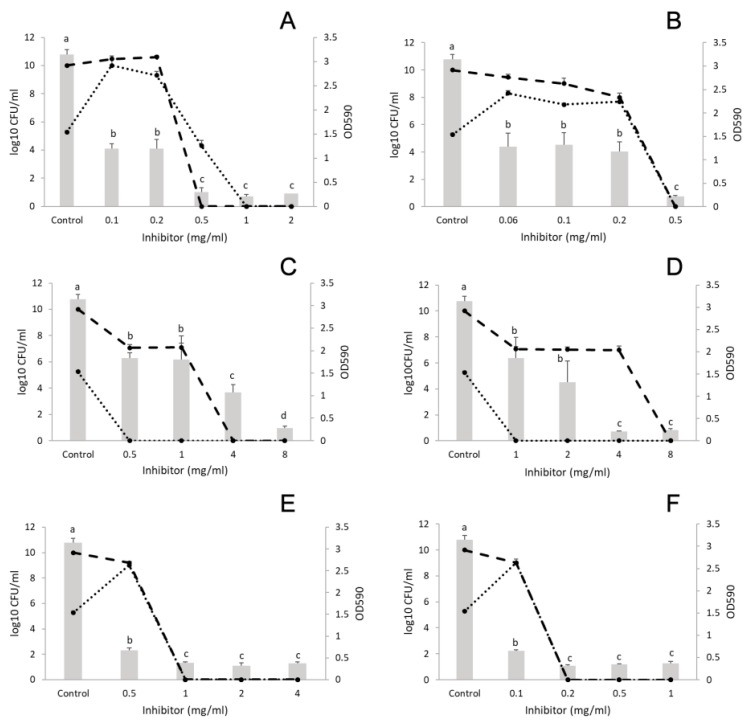
Figure 1
Figure 1
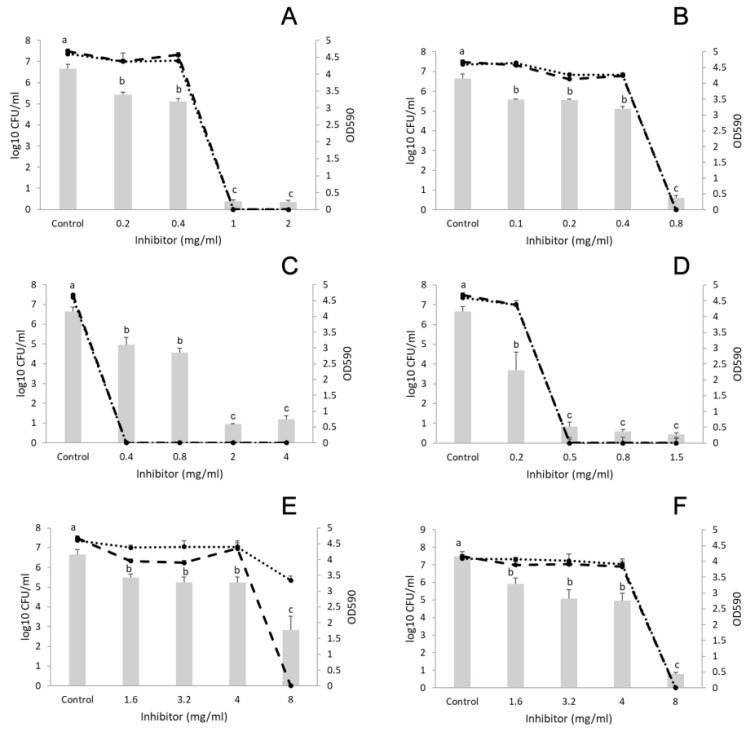
Effect of essential oils (EOs) on the biofilm formation of Listeria monocytogenes and Escherichia coli polymicrobial cultures. (A) cinnamon EO, (B) cinnamaldehyde, (C) marjoram EO, (D) terpinen-4-ol, (E) thyme EO, and (F) thymol. Columns represent the OD590 values, dashed lines represent cell numbers of L. monocytogenes, and dotted lines cell numbers of E. coli. Results are presented as mean ± standard deviation of six replicates. Different letters indicate statistically significant differences between columns (p < 0.05).
Figure 2
Figure 2
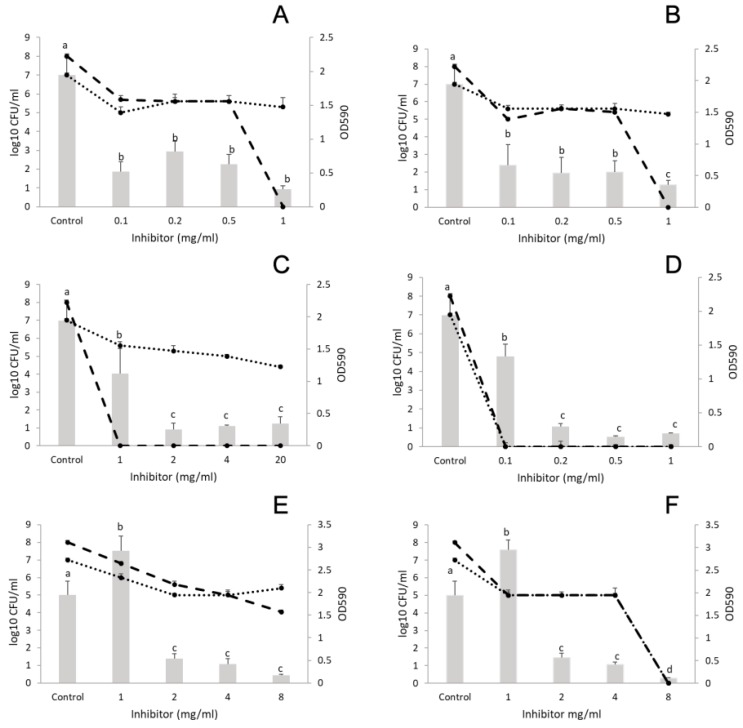
Effect of EOs on the biofilm formation of Listeria monocytogenes and Staphylococcus aureus polymicrobial cultures. (A) cinnamon EO, (B) trans-cinnamaldehyde, (C) thyme EO, (D) thymol, (E) marjoram EO, and (F) terpinen-4-ol. Columns represent the OD590 values, dashed lines represent cell numbers of L. monocytogenes, and dotted lines cell numbers of S. aureus. Results are presented as mean ± standard deviation of six replicates. Different letters indicate statistically significant differences between columns (p < 0.05).
Figure 3
Figure 3
Effect of EOs and EO main components on the biofilm formation of Listeria monocytogenes and Pseudomonas putida polymicrobial cultures. (A) cinnamon EO, (B) trans-cinnamaldehyde, (C) thyme EO, (D) thymol, (E) marjoram EO, and (F) terpinen-4-ol. Columns represent the OD590 values, dashed lines represent cell numbers of L. monocytogenes, and dotted lines cell numbers of P. putida. Results are presented as mean ± standard deviation of six replicates. Different letters indicate statistically significant differences between columns (p < 0.05).
Figure 4
Figure 4
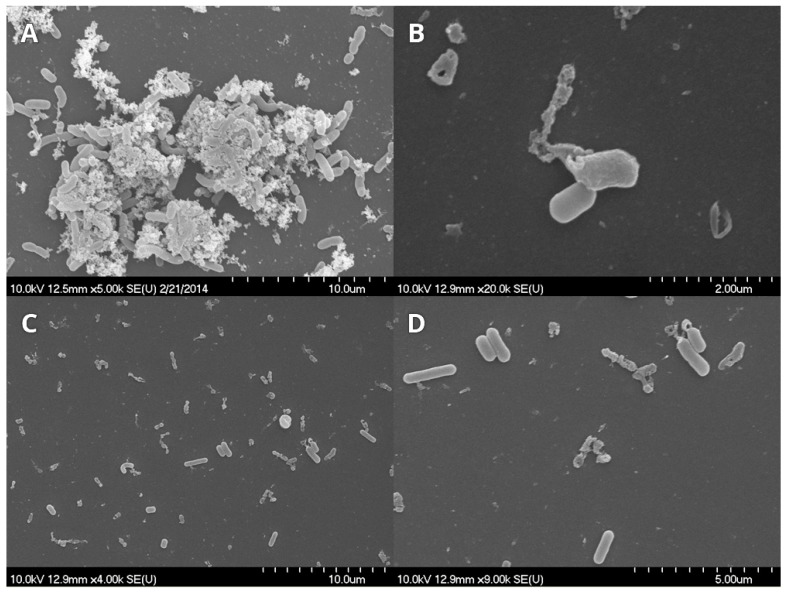
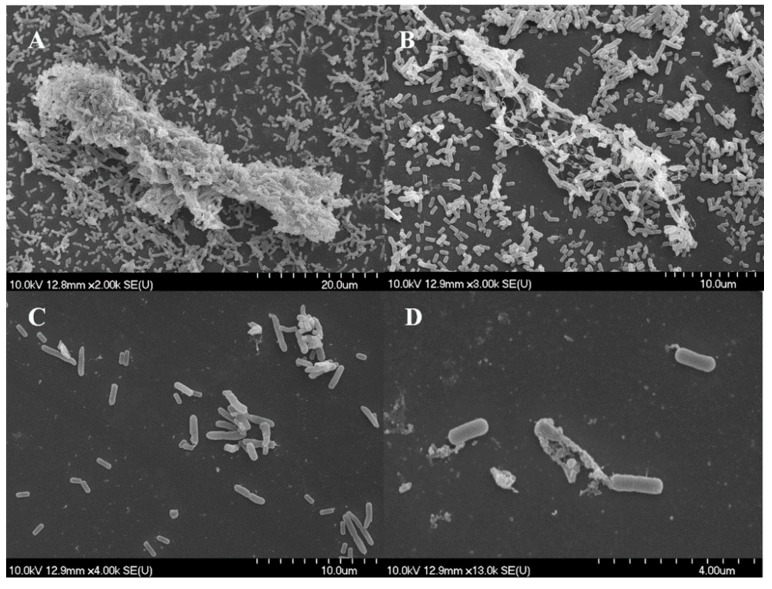
Listeria monocytogenes and Escherichia coli biofilms observed using scanning electron microscope. (A) control, (B) thyme EOs (0.5 mg/mL), and (C,D) thymol (0.1 mg/mL).
Figure 5
Figure 5
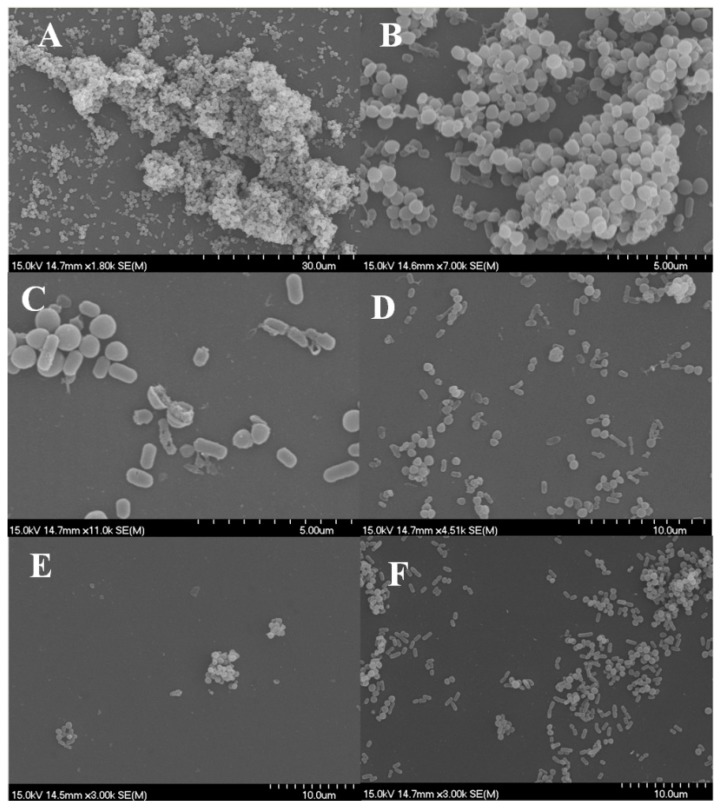
Listeria monocytogenes and Staphylococcus aureus biofilms observed using scanning electron microscope. (A,B) control, (C) marjoram essential oil (EO) (1.6 mg/mL), (D) terpinen-4-ol (8 mg/mL), (E) thyme EO (0.4 mg/mL), and (F) thymol (0.8 mg/mL).
Figure 6
Figure 6
Listeria monocytogenes and Pseudomonas putida biofilms observed using scanning electron microscope. (A,B) control, (C) marjoram EO (1 mg/mL), and (D) terpinen-4-ol (1 mg/mL).

References

    1. Shi X., Zhu X. Biofilm formation and food safety in food industries. Trends Food Sci. Technol. 2009;20:407–413. doi: 10.1016/j.tifs.2009.01.054. - DOI
    1. Midelet G., Carpentier B. Transfer of microorganisms, including Listeria monocytogenes, from various materials to beef. Appl. Environ. Microbiol. 2002;68:4015–4024. doi: 10.1128/AEM.68.8.4015-4024.2002. - DOI - PMC - PubMed
    1. Johnson L.R. Microcolony and biofilm formation as a survival strategy for bacteria. J. Theor. Biol. 2008;251:24–34. doi: 10.1016/j.jtbi.2007.10.039. - DOI - PubMed
    1. Wong H.S., Townsend K.M., Fenwick S.G., Trengove R.D., O’Handley R.M. Comparative susceptibility of planktonic and 3-day-old Salmonella Typhimurium biofilms to disinfectants. J. Appl. Microbiol. 2010;108:2222–2228. doi: 10.1111/j.1365-2672.2009.04630.x. - DOI - PubMed
    1. Bridier A., Briandet R., Thomas V., Dubois-Brissonnet F. Resistance of bacterial biofilms to disinfectants: A review. Biofouling. 2011;27:1017–1032. doi: 10.1080/08927014.2011.626899. - DOI - PubMed

LinkOut - more resources