


Polyphenol Composition and (Bio)Activity of Berberis Species and Wild Strawberry from the Argentinean Patagonia
- PMID: 31547424
- PMCID: PMC6766907
- DOI: 10.3390/molecules24183331
Polyphenol Composition and (Bio)Activity of Berberis Species and Wild Strawberry from the Argentinean Patagonia
Abstract
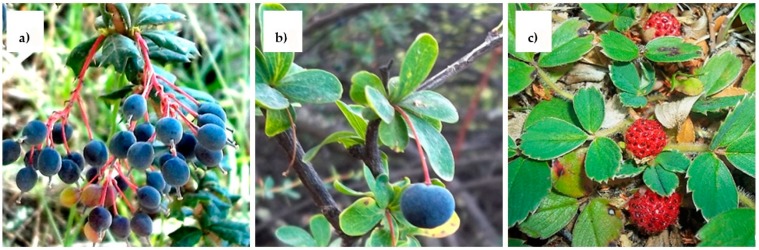
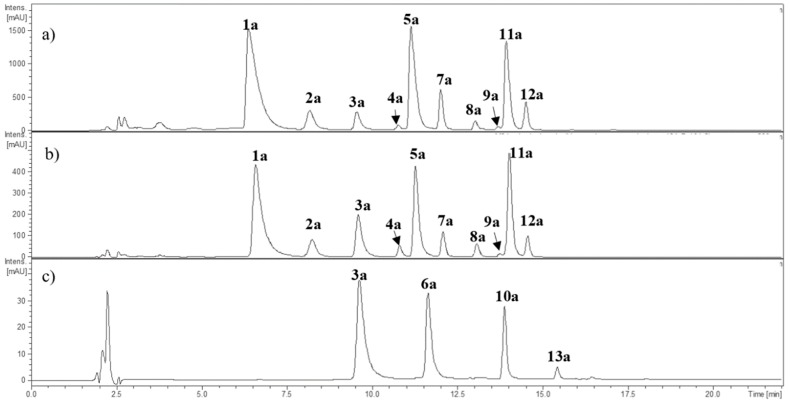
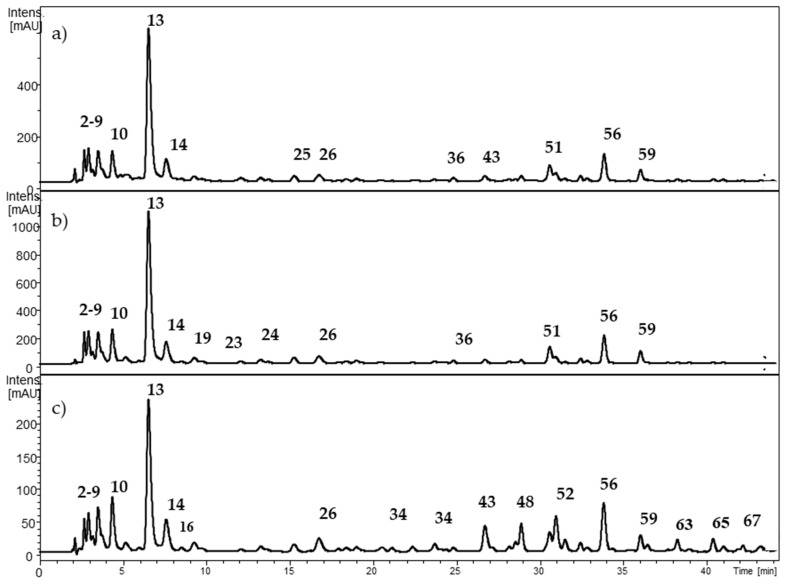
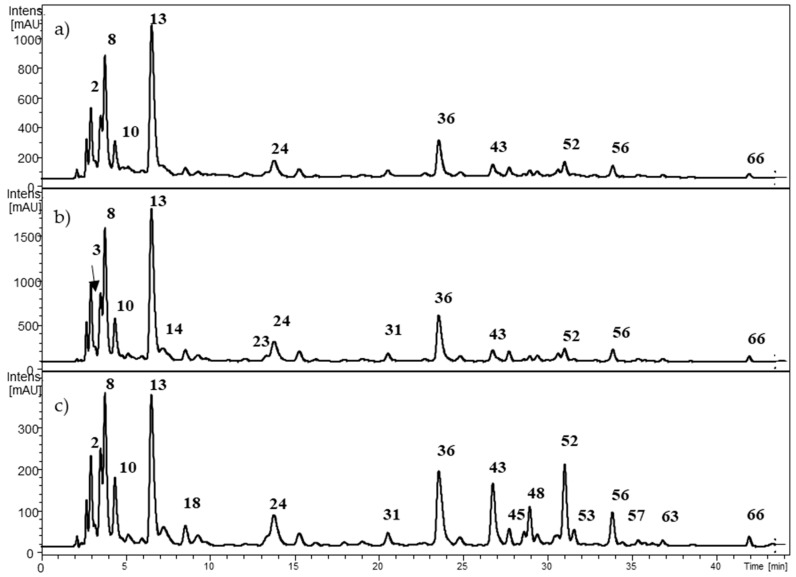
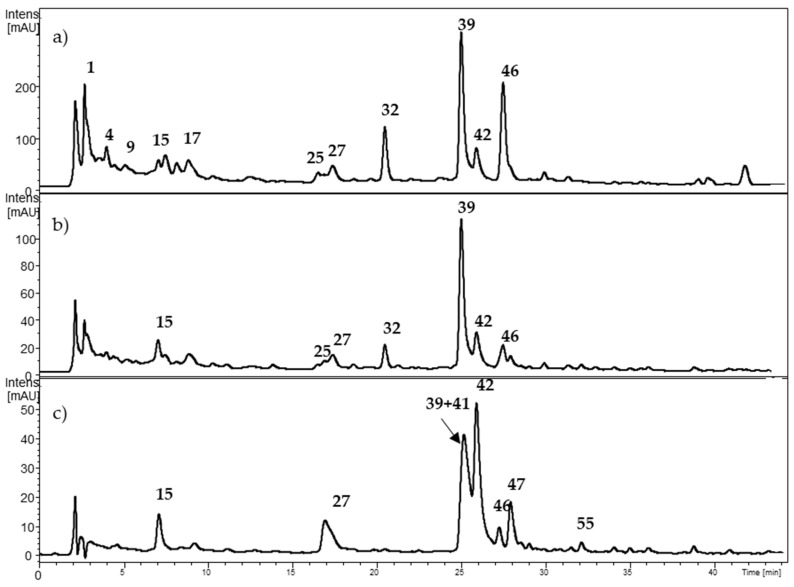
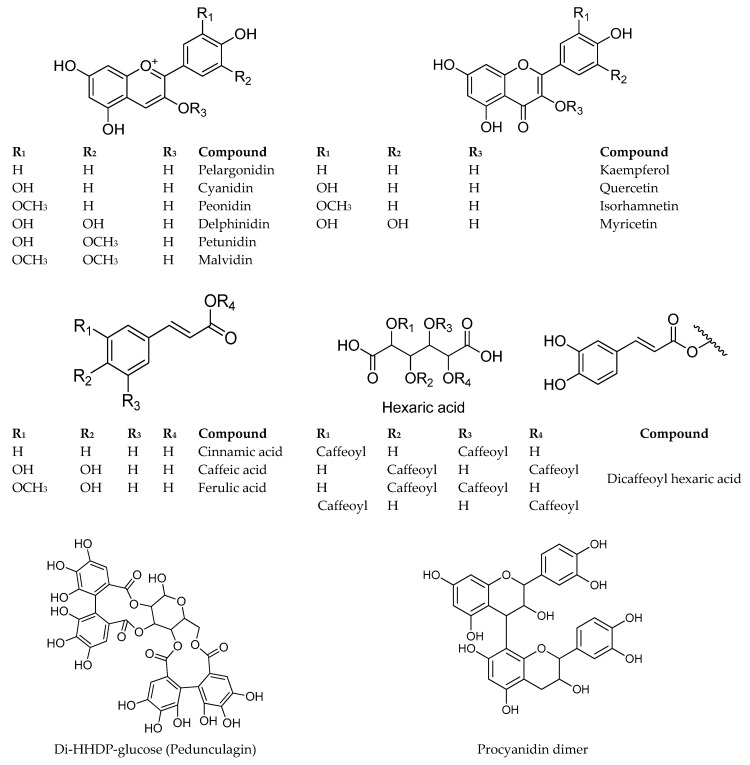
The Argentinean Patagonia berries Berberis microphylla, Berberis darwinii, and Fragaria chiloensis ssp. chiloensis f. patagonica were investigated for their polyphenol content and composition by means of liquid chromatography coupled to diode array detection and electrospray ionization tandem mass spectrometry. The in vitro antioxidant activity and inhibition of metabolic syndrome-associated enzymes (α-glucosidase, α-amylase, and lipase) of the fruit extracts was assessed. The most complex polyphenol profile was found in the Berberis samples, with 10 anthocyanins, 27 hydroxycinnamic acids, 3 proanthocyanidins, 2 flavan-3-ol, and 22 flavonols. Fragaria presented four anthocyanins, nine ellagitannins, two proanthocyanidin dimers, one flavan-3-ol, and five flavonols. The Berberis samples showed the best antioxidant capacity, while Fragaria displayed better activity against α-glucosidase and lipase. The phenolic content and composition of the Argentinean Patagonia berries was similar to that reported for Chilean samples but with some chemical differences between Eastern (Argentina) and Western (Chile) Patagonia. The data obtained supports the consumption of these berries as sources of beneficial polyphenols.
Keywords: Berberis darwinii; Berberis microphylla; Fragaria chiloensis ssp. chiloensis f. patagonica; HPLC-DAD-ESI-MSn; Patagonia; anthocyanins; antioxidant capacity; phenolic compounds.
Conflict of interest statement
The authors declare no conflict of interest.
Figures
References
-
- Jiménez-Garcia S.N., Guevara-Gonzalez R.G., Miranda-López R., Feregrino-Perez A.A., Torres-Pacheco I., Vazquez-Cruz M.A. Functional properties and quality characteristics of bioactive compounds in berries: Biochemistry, biotechnology, and genomics. Food Res. Int. 2013;54:1195–1207. doi: 10.1016/j.foodres.2012.11.004. - DOI
-
- Chamorro M.F., Ladio A.H., Molares S. Patagonian Berries: An ethnobotanical approach to exploration of their nutraceutical potential. In: Martínez J., Muñoz-Acevedo A., Rai M., editors. Ethnobotany: Local Knowledge and Traditions. 1st ed. CRC Press; Boca Raton, FL, USA: 2018. pp. 50–69.
MeSH terms
Substances
Grants and funding
LinkOut - more resources
Full Text Sources
Medical
Research Materials
Miscellaneous
