


Adherence to the Mediterranean Diet, Dietary Patterns and Body Composition in Women with Polycystic Ovary Syndrome (PCOS)
- PMID: 31547562
- PMCID: PMC6836220
- DOI: 10.3390/nu11102278
Adherence to the Mediterranean Diet, Dietary Patterns and Body Composition in Women with Polycystic Ovary Syndrome (PCOS)
Abstract
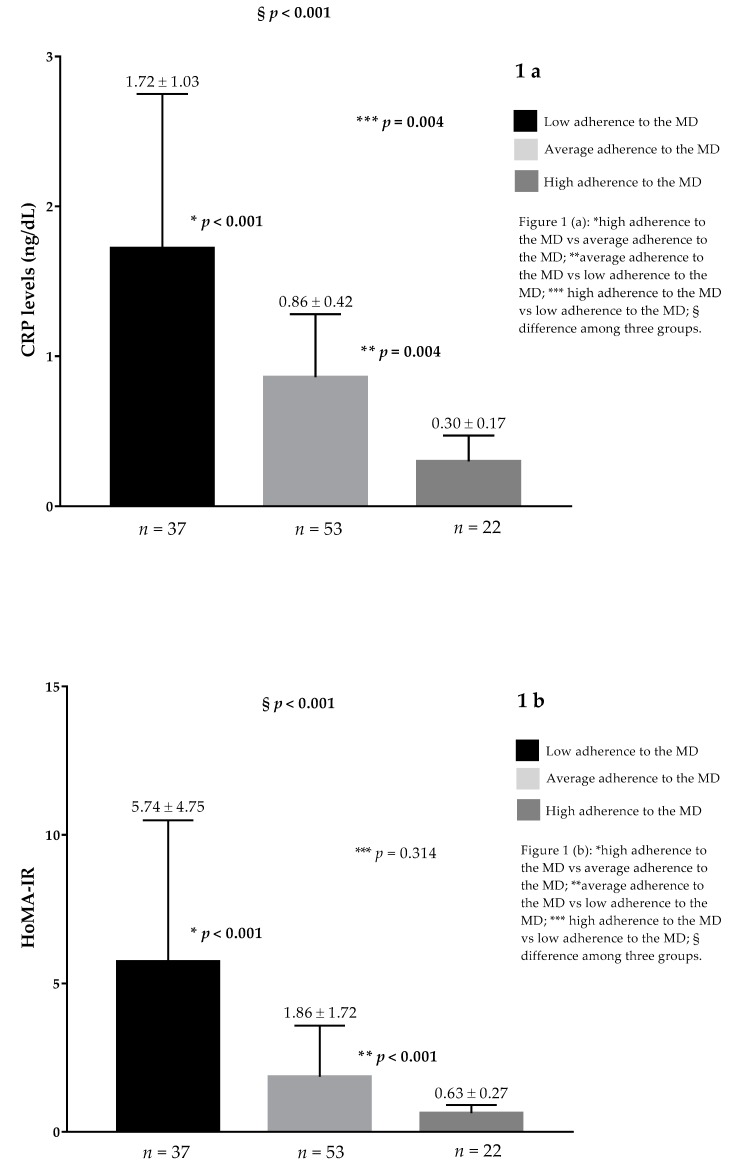
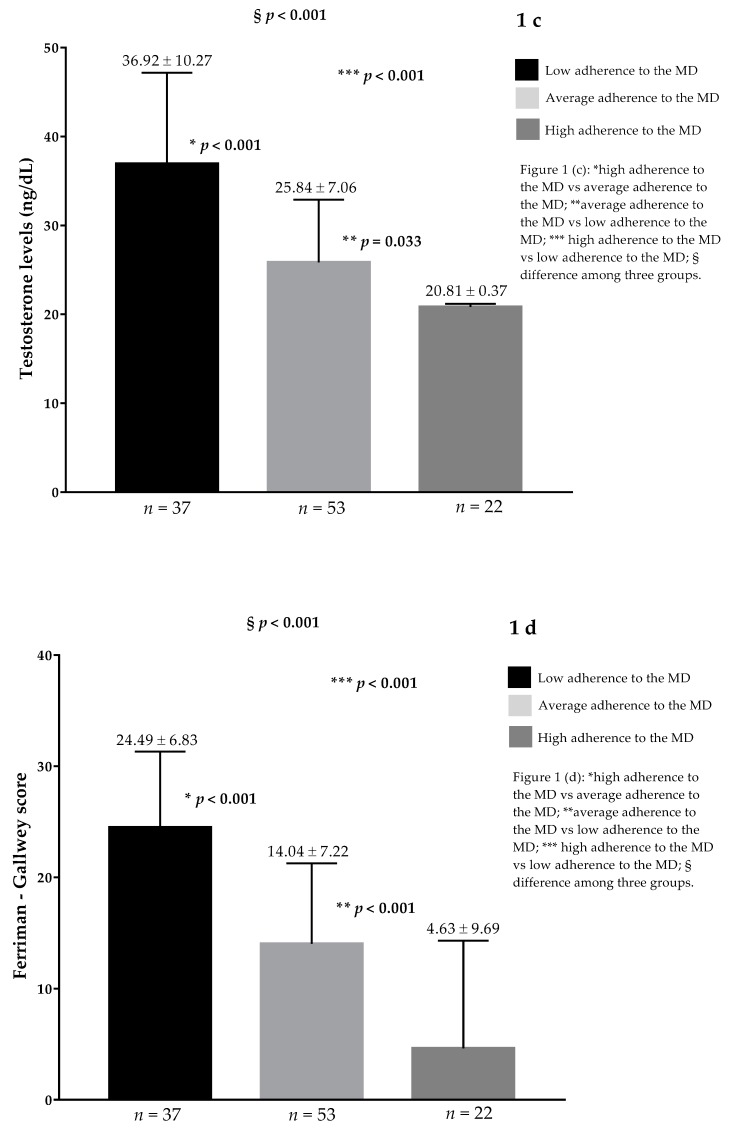
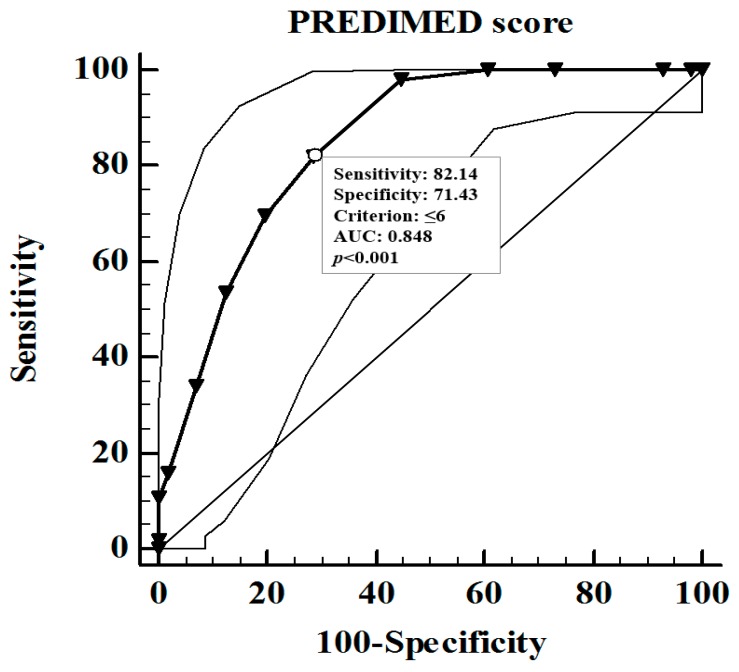
Polycystic ovary syndrome (PCOS) is the most common female endocrine disorder and is characterized by chronic anovulation, hyperandrogenism, and polycystic ovaries. Obesity, low-grade chronic inflammatory status, and insulin-resistance (IR) often coexist in PCOS. The Mediterranean diet (MD) is an anti-inflammatory dietary pattern, which is rich in complex carbohydrates and fiber, and high in monounsaturated fat. There is a close association among obesity, low-grade chronic inflammation, IR, and hormonal derangements in PCOS. The main aim of the present study was to evaluate the adherence to MD, the dietary intake, and the body composition and their association with PCOS clinical severity in a cohort of treatment-naïve women with PCOS when compared with a control group of healthy women matched for age and body mass index (BMI). In this case-controlled, cross-sectional study, we enrolled 112 patients with PCOS and 112 controls. PREvención con DIetaMEDiterránea (PREDIMED) and seven-day food records were used to evaluate the degree of adherence to the MD and dietary pattern, respectively. Body composition was evaluated by bioelectrical impedance analysis (BIA) phase-sensitive system. Testosterone levels and Ferriman-Gallwey score assessed the clinical severity of PCOS. C-reactive protein (CRP) levels were determined with a nephelometric assay with CardioPhase high sensitivity. PCOS women showed higher testosterone levels, Ferriman-Gallwey score, fasting insulin and glucose levels, and Homeostatic Model Assessment (HoMA)-IR when compared with the control group (p < 0.001). In addition, we found that the PCOS women consumed less extra-virgin olive oil, legumes, fish/seafood, and nuts compared with control group. Despite no differences in energy intake between the two groups, the PCOS women consumed a lower quantity of complex carbohydrate, fiber, monounsaturated fatty acids (MUFA), and n-3 polyunsaturated fatty acid (PUFA), and higher quantity of simple carbohydrate, total fat, saturated fatty acid (SFA), PUFA and n-6 PUFA than the control group. The PCOS women have an adverse body composition when compared with controls, with the lowest values of phase angle (PhA) and fat-free mass (p < 0.001). Additionally, after adjusting for BMI and total energy intake, testosterone levels showed significant negative correlations with PREDIMED score (p < 0.001) and consumption of protein (p = 0.005), complex carbohydrate (p < 0.001), fiber (p < 0.001), MUFA (p < 0.001), n-3 PUFA (p = 0.001), and positive associations with CRP levels, simple carbohydrate, SFA, n-6 PUFA (p < 0.001, respectively), and PUFA (p = 0.002). The cut-off for PREDIMED score ≤ 6 (p < 0.001, area under the curve (AUC) 0.848, standard error 0.036, 95% confidence interval (CI) 0.768 to 0.909) could serve as a threshold for significantly increased risk of high value of testosterone levels. In conclusion, a novel direct association between the adherence to MD and the clinical severity of the disease was reported in women with PCOS. This association could support a therapeutic role of foods and nutrients of the Mediterranean dietary pattern in the PCOS pathogenesis likely involving their inflammatory status, IR, and hyperandrogenemia. In addition, we reported a different body composition that is characterized by lower PhA and fat-free mass than controls. These data suggested a role of PhA as a useful marker of the clinical severity of this syndrome and provided strong evidence regarding the strategic relevance of the nutritional assessment in the management of women with PCOS.
Keywords: Body Composition; Dietary pattern; Mediterranean Diet; Phase Angle; Polycystic Ovary Syndrome (PCOS), Nutritionist.
Conflict of interest statement
The authors declare no conflict of interest.
Figures
References
-
- Rotterdam E.A., ASRM-Sponsored PCOS Consensus Workshop Group Revised 2003 consensus on diagnostic criteria and long-term health risks related to polycystic ovary syndrome (PCOS) Hum. Reprod. 2004;19:41–47. - PubMed
-
- Amiri M., Ramezani Tehrani F., Nahidi F., Bidhendi Yarandi R., Behboudi-Gandevani S., Azizi F. Association between biochemical hyperandrogenism parameters and Ferriman-Gallwey score in patients with polycystic ovary syndrome: A systematic review and meta-regression analysis. Clin. Endocrinol. (Oxf.) 2017;87:217–230. doi: 10.1111/cen.13389. - DOI - PubMed
Publication types
MeSH terms
Substances
LinkOut - more resources
Full Text Sources
Medical
Research Materials
Miscellaneous
