


Assemblies of d-Peptides for Targeting Cell Nucleolus
- PMID: 31550136
- PMCID: PMC6800822
- DOI: 10.1021/acs.bioconjchem.9b00524
Assemblies of d-Peptides for Targeting Cell Nucleolus
Abstract
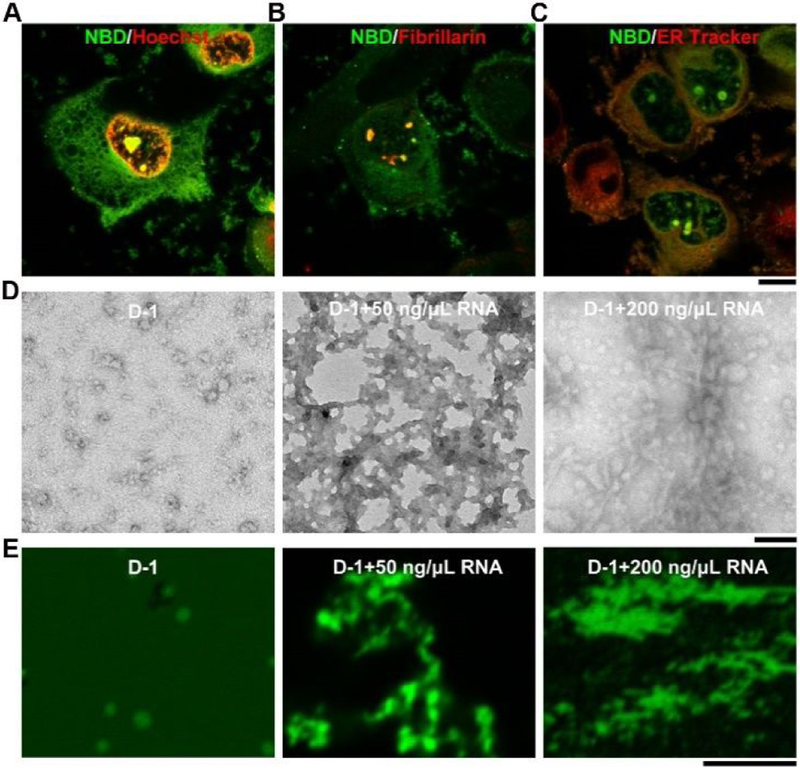
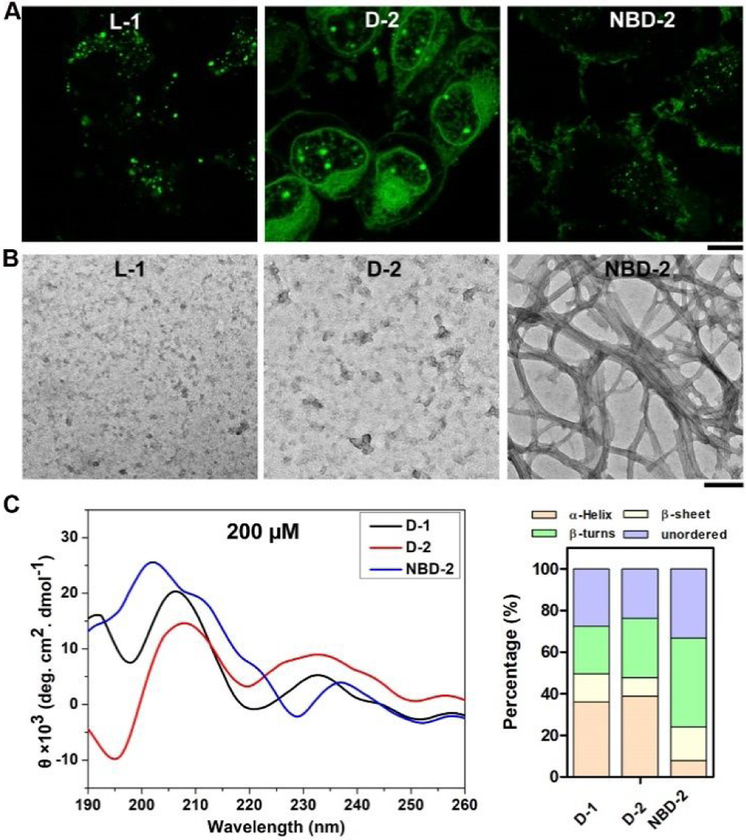
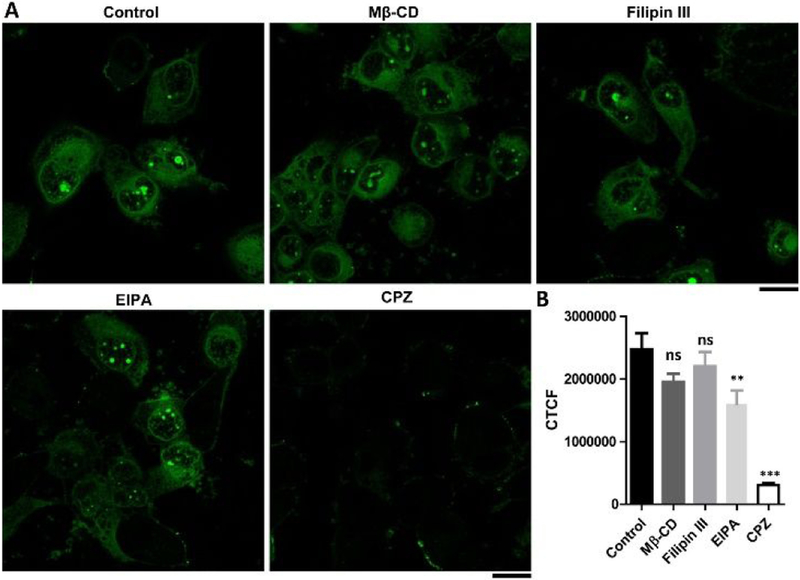
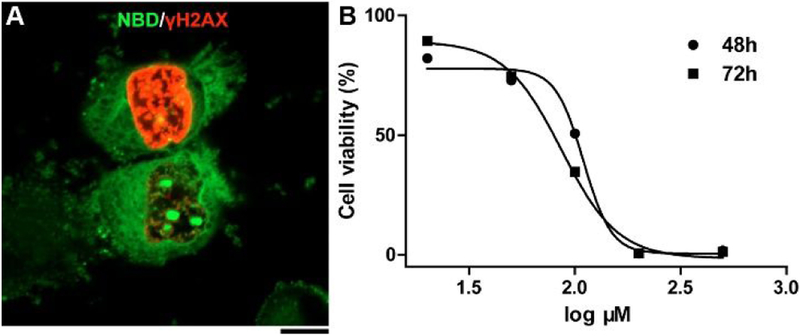
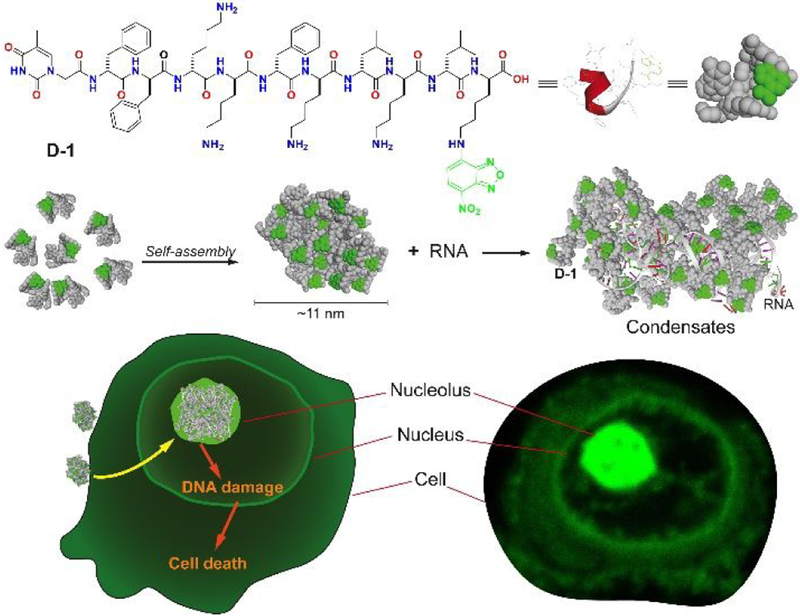
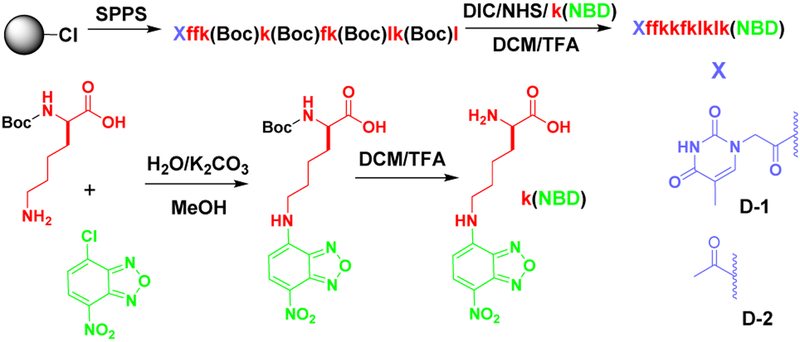
Selectively targeting the cell nucleolus remains a challenge. Here, we report the first case in which d-peptides form membraneless molecular condensates with RNA for targeting cell nucleolus. A d-peptide derivative, enriched with lysine and hydrophobic residues, self-assembles to form nanoparticles, which enter cells through clathrin-dependent endocytosis and mainly accumulate at the cell nucleolus. A structural analogue of the d-peptide reveals that the particle morphology of the assemblies, which depends on the side chain modification, favors the cellular uptake. In contrast to those of the d-peptide, the assemblies of the corresponding l-enantiomer largely localize in cell lysosomes. Preliminary mechanism study suggests that the d-peptide nanoparticles interact with RNA to form membraneless condensates in the nucleolus, which further induces DNA damage and results in cell death. This work illustrates a new strategy for rationally designing supramolecular assemblies of d-peptides for targeting subcellular organelles.
Conflict of interest statement
The authors declare no competing financial interest.
Figures
References
-
- Shaw P; Jordan E The nucleolus Annu. Rev. Cell Dev. Biol 1995, 11, 93. - PubMed
-
- Raška I; Shaw PJ; Cmarko D Structure and function of the nucleolus in the spotlight Curr. Opin. Cell Biol 2006, 18, 325. - PubMed
-
- Quin JE; Devlin JR; Cameron D; Hannan KM; Pearson RB; Hannan RD Targeting the nucleolus for cancer intervention Biochim. Biophys. Acta, Mol. Basis Dis 2014, 1842, 802. - PubMed
-
- Hein N; Hannan KM; George AJ; Sanij E; Hannan RD The nucleolus: an emerging target for cancer therapy Trends Mol. Med 2013, 19, 643. - PubMed
Publication types
MeSH terms
Substances
Grants and funding
LinkOut - more resources
Full Text Sources
Other Literature Sources
