


Time trends in opioid prescribing among Ontario long-term care residents: a repeated cross-sectional study
- PMID: 31551235
- PMCID: PMC6759016
- DOI: 10.9778/cmajo.20190052
Time trends in opioid prescribing among Ontario long-term care residents: a repeated cross-sectional study
Abstract
Background: Opioids are an important pain therapy, but their use may be associated with adverse events in frail and cognitively impaired long-term care residents. The objective of this study was to investigate trends in opioid prescribing among Ontario long-term care residents over time, given the paucity of data for this setting.
Methods: We used linked clinical and health administrative databases to conduct a population-based, repeated cross-sectional study of opioid use among Ontario long-term care residents between Apr. 1, 2009, and Mar. 31, 2017. We identified prevalent opioid use by drug type, dosage and coprescription with benzodiazepines, and within certain vulnerable subgroups. We used log-binomial regression to quantify the percent change between 2009/10 and 2016/17.
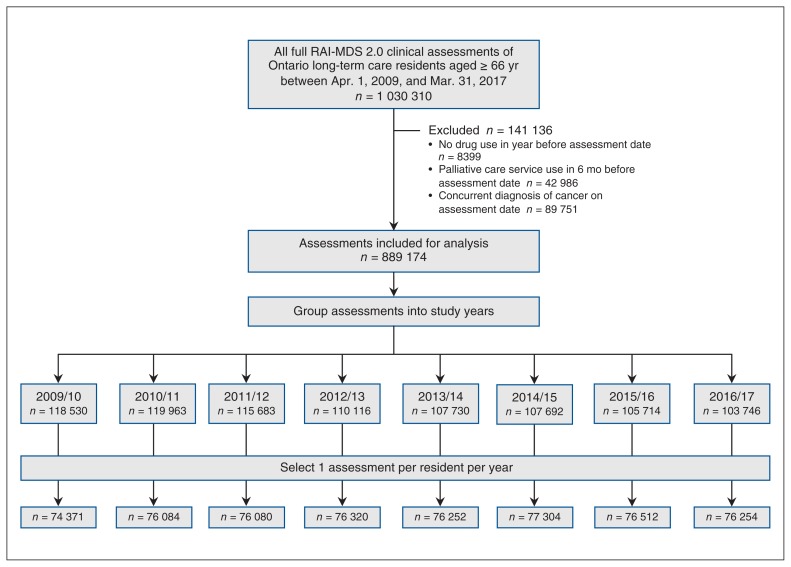
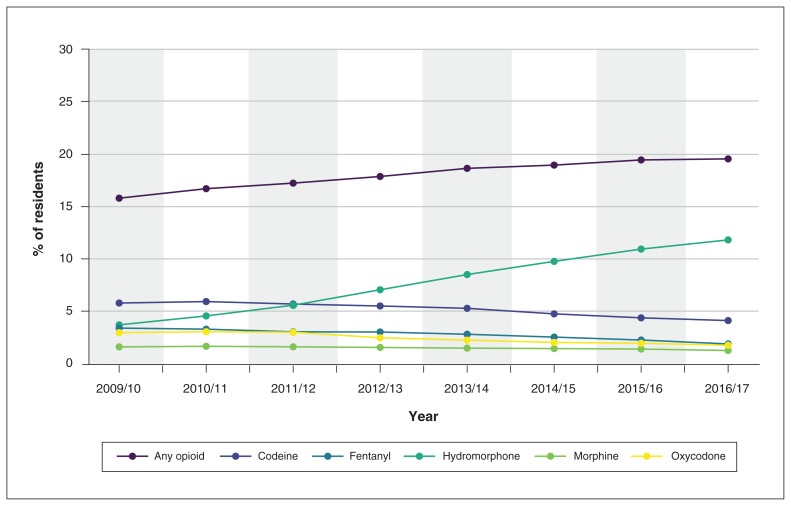
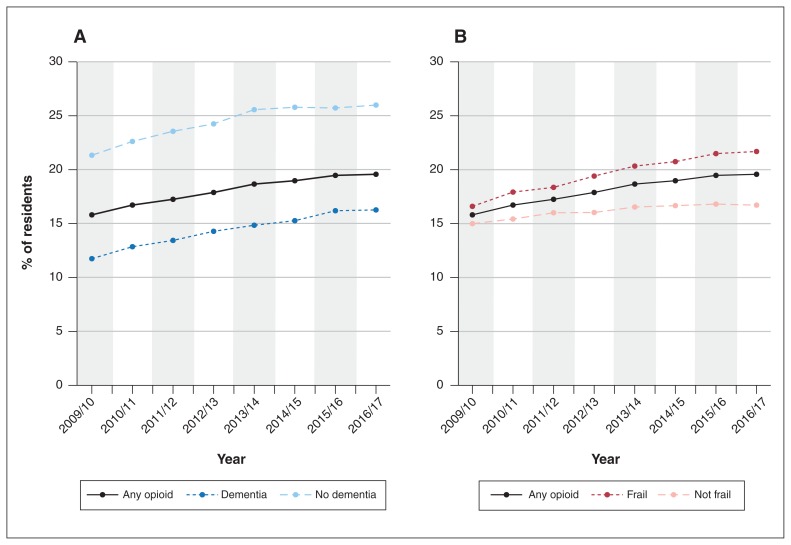
Results: Among an average of 76 147 long-term care residents per year, the prevalence of opioid use increased from 15.8% in 2009/10 to 19.6% in 2016/17 (p < 0.001). Over the study period, the use of hydromorphone increased by 233.2%, whereas the use of all other opioid agents decreased. The use of high-dose opioids (> 90 mg of morphine equivalents) and the coprescription of opioids with benzodiazepines decreased significantly, by 17.7% (p < 0.001) and 23.8% (p < 0.001), respectively. Increases in opioid prevalence were more notable among frail residents (37.6% v. 18.8% among nonfrail residents, p < 0.001) and those with dementia (38.6% v. 21.6% among those without dementia, p < 0.001).
Interpretation: Within Ontario long-term care, trends suggest a shift toward increased use of hydromorphone but reduced prevalence of use of other opioid agents and potentially inappropriate opioid prescribing. Further investigation is needed on the impact of these trends on resident outcomes.
Copyright 2019, Joule Inc. or its licensors.
Conflict of interest statement
Competing interests: None declared.
Figures
References
-
- Won AB, Lapane KL, Vallow S, et al. Persistent nonmalignant pain and analgesic prescribing patterns in elderly nursing home residents. J Am Geriatr Soc. 2004;52:867–74. - PubMed
-
- Lapane KL, Quilliam BJ, Chow W, et al. The association between pain and measures of well-being among nursing home residents. J Am Med Dir Assoc. 2012;13:344–9. - PubMed
-
- Barry HE, Parsons C, Passmore AP, et al. Pain in care home residents with dementia: an exploration of frequency, prescribing and relatives’ perspectives. Int J Geriatr Psychiatry. 2015;30:55–63. - PubMed
-
- Griffioen C, Husebo BS, Flo E, et al. Opioid prescription use in nursing home residents with advanced dementia. Pain Med. 2019;20:50–7. - PubMed
LinkOut - more resources
Full Text Sources
Miscellaneous
