


Evaluating the population impact of hepatitis C direct acting antiviral treatment as prevention for people who inject drugs (EPIToPe) - a natural experiment (protocol)
- PMID: 31551376
- PMCID: PMC6773339
- DOI: 10.1136/bmjopen-2019-029538
Evaluating the population impact of hepatitis C direct acting antiviral treatment as prevention for people who inject drugs (EPIToPe) - a natural experiment (protocol)
Abstract
Introduction: Hepatitis C virus (HCV) is the second largest contributor to liver disease in the UK, with injecting drug use as the main risk factor among the estimated 200 000 people currently infected. Despite effective prevention interventions, chronic HCV prevalence remains around 40% among people who inject drugs (PWID). New direct-acting antiviral (DAA) HCV therapies combine high cure rates (>90%) and short treatment duration (8 to 12 weeks). Theoretical mathematical modelling evidence suggests HCV treatment scale-up can prevent transmission and substantially reduce HCV prevalence/incidence among PWID. Our primary aim is to generate empirical evidence on the effectiveness of HCV 'Treatment as Prevention' (TasP) in PWID.
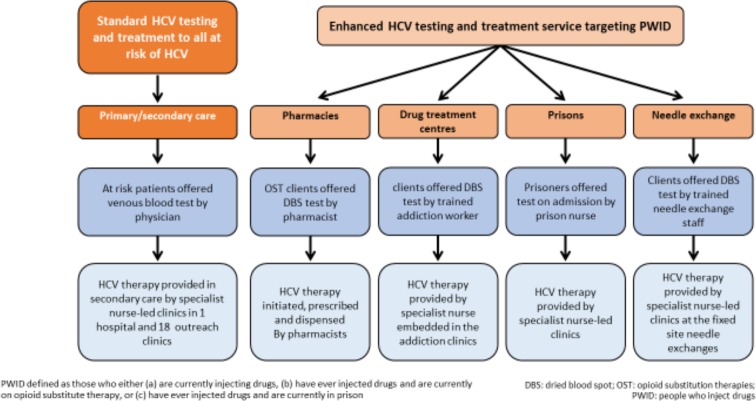
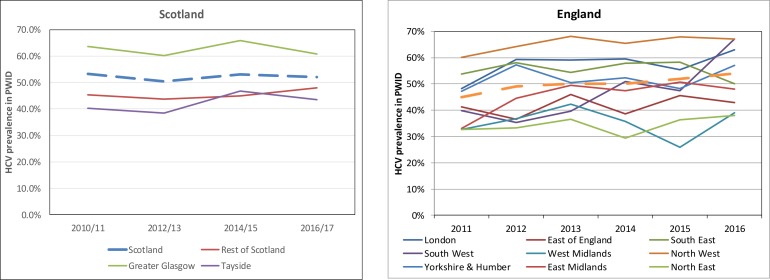
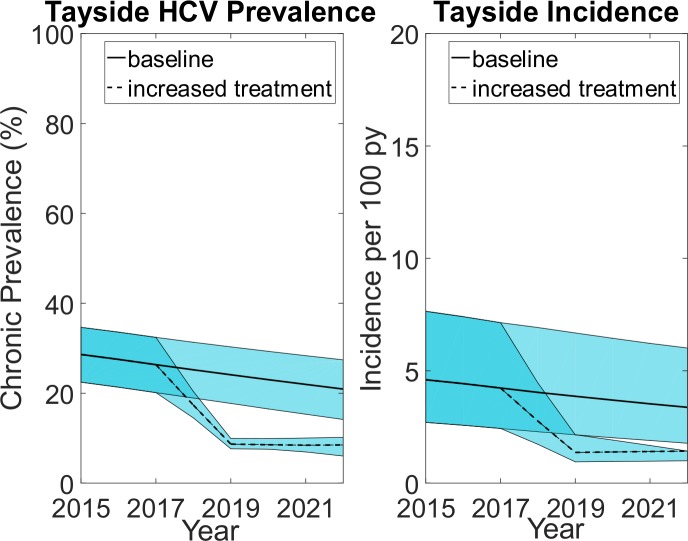
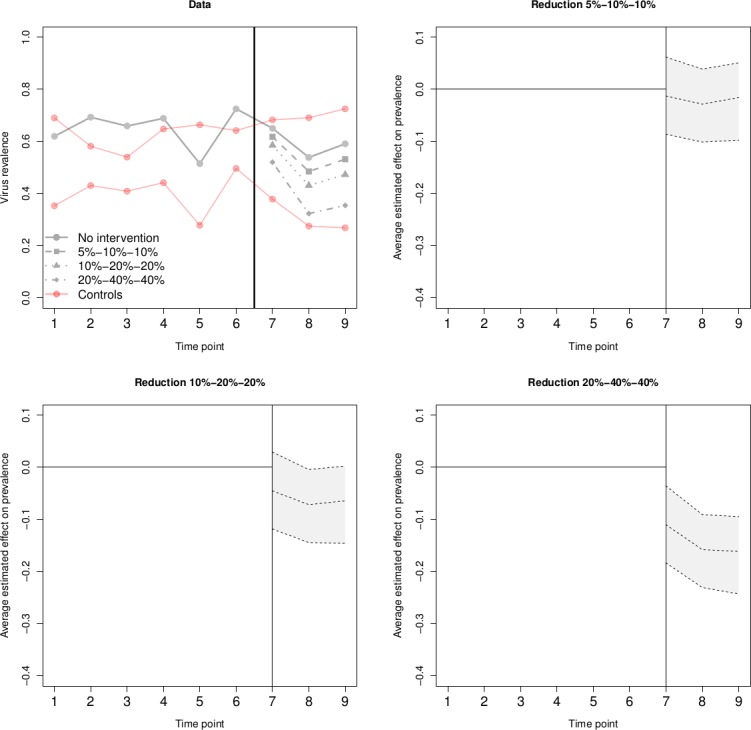
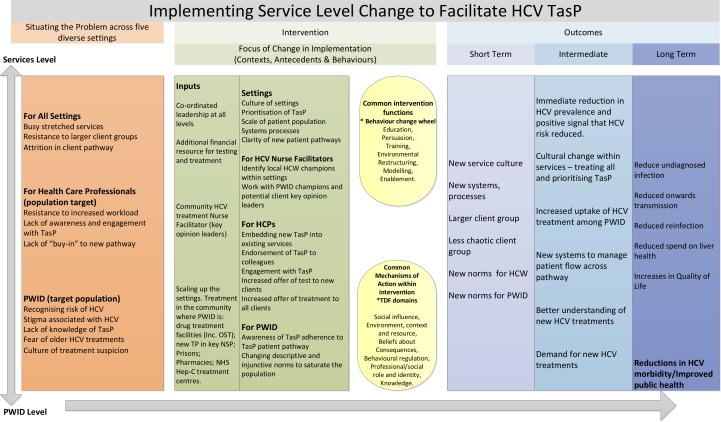
Methods and analysis: We plan to establish a natural experiment with Tayside, Scotland, as a single intervention site where HCV care pathways are being expanded (including specialist drug treatment clinics, needle and syringe programmes (NSPs), pharmacies and prison) and HCV treatment for PWID is being rapidly scaled-up. Other sites in Scotland and England will act as potential controls. Over 2 years from 2017/2018, at least 500 PWID will be treated in Tayside, which simulation studies project will reduce chronic HCV prevalence among PWID by 62% (from 26% to 10%) and HCV incidence will fall by approximately 2/3 (from 4.2 per 100 person-years (p100py) to 1.4 p100py). Treatment response and re-infection rates will be monitored. We will conduct focus groups and interviews with service providers and patients that accept and decline treatment to identify barriers and facilitators in implementing TasP. We will conduct longitudinal interviews with up to 40 PWID to assess whether successful HCV treatment alters their perspectives on and engagement with drug treatment and recovery. Trained peer researchers will be involved in data collection and dissemination. The primary outcome - chronic HCV prevalence in PWID - is measured using information from the Needle Exchange Surveillance Initiative survey in Scotland and the Unlinked Anonymous Monitoring Programme in England, conducted at least four times before and three times during and after the intervention. We will adapt Bayesian synthetic control methods (specifically the Causal Impact Method) to generate the cumulative impact of the intervention on chronic HCV prevalence and incidence. We will use a dynamic HCV transmission and economic model to evaluate the cost-effectiveness of the HCV TasP intervention, and to estimate the contribution of the scale-up in HCV treatment to observe changes in HCV prevalence. Through the qualitative data we will systematically explore key mechanisms of TasP real world implementation from provider and patient perspectives to develop a manual for scaling up HCV treatment in other settings. We will compare qualitative accounts of drug treatment and recovery with a 'virtual cohort' of PWID linking information on HCV treatment with Scottish Drug treatment databases to test whether DAA treatment improves drug treatment outcomes.
Ethics and dissemination: Extending HCV community care pathways is covered by ethics (ERADICATE C, ISRCTN27564683, Super DOT C Trial clinicaltrials.gov: NCT02706223). Ethical approval for extra data collection from patients including health utilities and qualitative interviews has been granted (REC ref: 18/ES/0128) and ISCRCTN registration has been completed (ISRCTN72038467). Our findings will have direct National Health Service and patient relevance; informing prioritisation given to early HCV treatment for PWID. We will present findings to practitioners and policymakers, and support design of an evaluation of HCV TasP in England.
Keywords: Epidemiology; Hepatology; INFECTIOUS DISEASES; Infection control; PUBLIC HEALTH; Public health.
© Author(s) (or their employer(s)) 2019. Re-use permitted under CC BY. Published by BMJ.
Figures
References
-
- Williams R, Aspinall R, Bellis M, et al. Addressing liver disease in the UK: a blueprint for attaining excellence in health care and reducing premature mortality from lifestyle issues of excess consumption of alcohol, obesity, and viral hepatitis. Lancet 2014;384:1953–97. 10.1016/S0140-6736(14)61838-9 - DOI - PubMed
Publication types
MeSH terms
Substances
Associated data
Grants and funding
LinkOut - more resources
Full Text Sources
Medical
Miscellaneous
