


Pleiotropic Roles of P2X7 in the Central Nervous System
- PMID: 31551714
- PMCID: PMC6738027
- DOI: 10.3389/fncel.2019.00401
Pleiotropic Roles of P2X7 in the Central Nervous System
Abstract
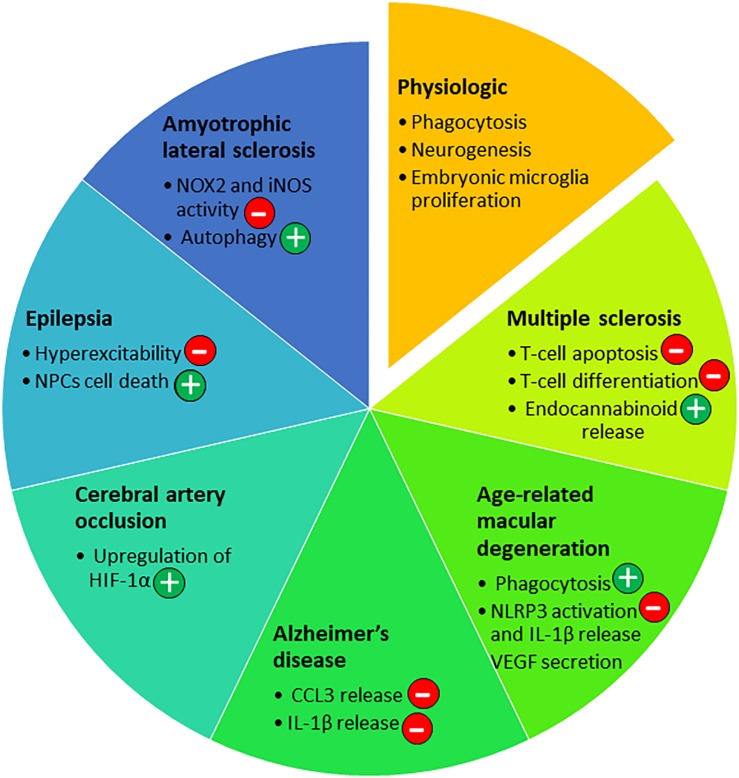
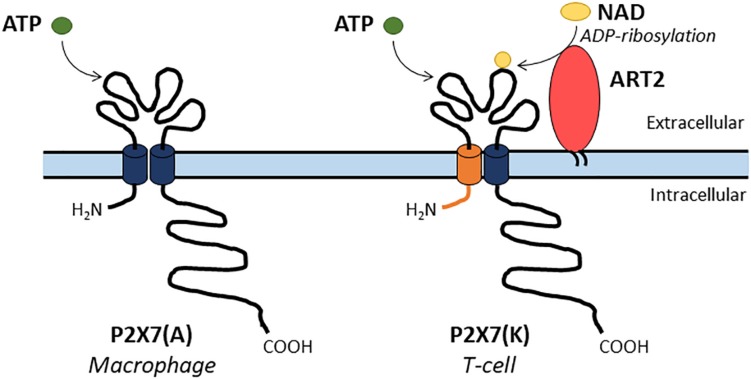
The purinergic receptor P2X7 is expressed in neural and immune cells known to be involved in neurological diseases. Its ligand, ATP, is a signaling molecule that can act as a neurotransmitter in physiological conditions or as a danger signal when released in high amount by damaged/dying cells or activated glial cells. Thus, ATP is a danger-associated molecular pattern. Binding of ATP by P2X7 leads to the activation of different biochemical pathways, depending on the physiological or pathological environment. The aim of this review is to discuss various functions of P2X7 in the immune and central nervous systems. We present evidence that P2X7 may have a detrimental or beneficial role in the nervous system, in the context of neurological pathologies: epilepsy, Alzheimer's disease, multiple sclerosis, amyotrophic lateral sclerosis, age-related macular degeneration and cerebral artery occlusion.
Keywords: ATP; P2X7; animal model; demyelinating disease; nervous system; neurodegenerative disease; neurologic disease; purinergic receptor.
Figures
References
-
- Adinolfi E., Callegari M. G., Cirillo M., Pinton P., Giorgi C., Cavagna D., et al. (2009). Expression of the P2X7 receptor increases the Ca2+ content of the endoplasmic reticulum, activates NFATc1, and protects from apoptosis. J. Biol. Chem. 284 10120–10128. 10.1074/jbc.M805805200 - DOI - PMC - PubMed
-
- Adinolfi E., Callegari M. G., Ferrari D., Bolognesi C., Minelli M., Wieckowski M. R., et al. (2005). Basal activation of the P2X7 ATP receptor elevates mitochondrial calcium and potential, increases cellular ATP levels, and promotes serum-independent growth. Mol. Biol. Cell 16 3260–3272. 10.1091/mbc.e04-11-1025 - DOI - PMC - PubMed
Publication types
LinkOut - more resources
Full Text Sources
