


Exercise and Arterial Stiffness in the Elderly: A Combined Cross-Sectional and Randomized Controlled Trial (EXAMIN AGE)
- PMID: 31551805
- PMCID: PMC6738015
- DOI: 10.3389/fphys.2019.01119
Exercise and Arterial Stiffness in the Elderly: A Combined Cross-Sectional and Randomized Controlled Trial (EXAMIN AGE)
Abstract
Introduction: Arterial stiffness (AST) is a main determinant of cardiovascular (CV) mortality. Long-term physical activity (PA) is considered to decrease age-related progression of AST but effects of short-term exercise interventions on AST remain unclear.
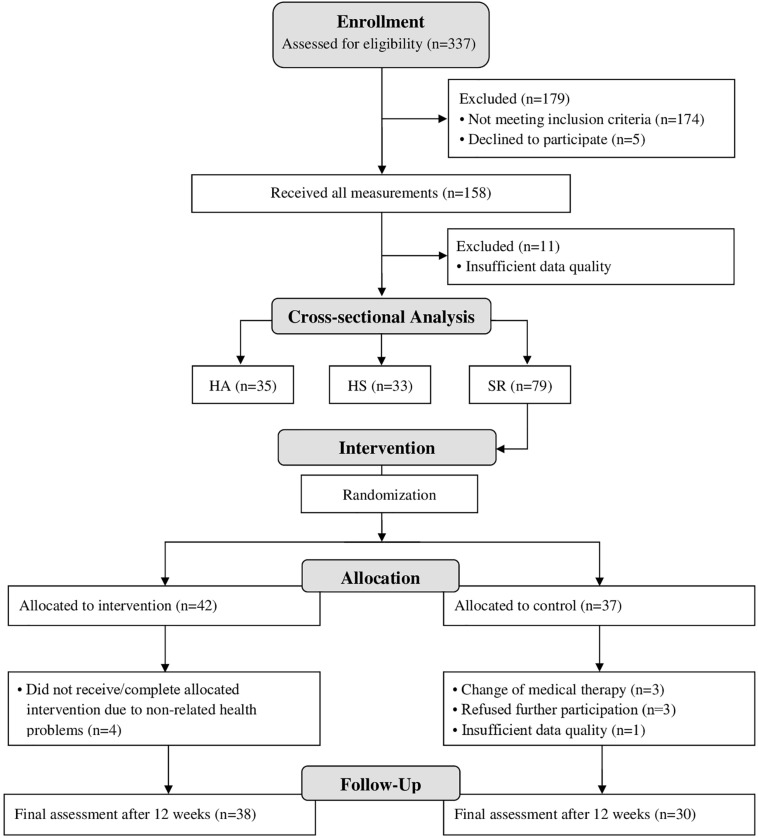
Methods: In a combined cross-sectional and interventional study approach, we investigated the effects of long-term PA and short-term high-intensity interval training (HIIT) on AST in an older population. 147 older individuals (mean age 59 ± 7 years) were assigned to three groups according to their PA and CV risk profile and compared: healthy active (HA, n = 35), healthy sedentary (HS, n = 33) and sedentary at risk (SR, n = 79). In addition, SR were randomized to either 12 weeks of HIIT or standard recommendations. Pulse wave velocity (PWV) was measured by applanation tonometry. Cardiorespiratory fitness (CRF) was performed by symptom-limited spiroergometry to determine maximal oxygen uptake (VO2max).
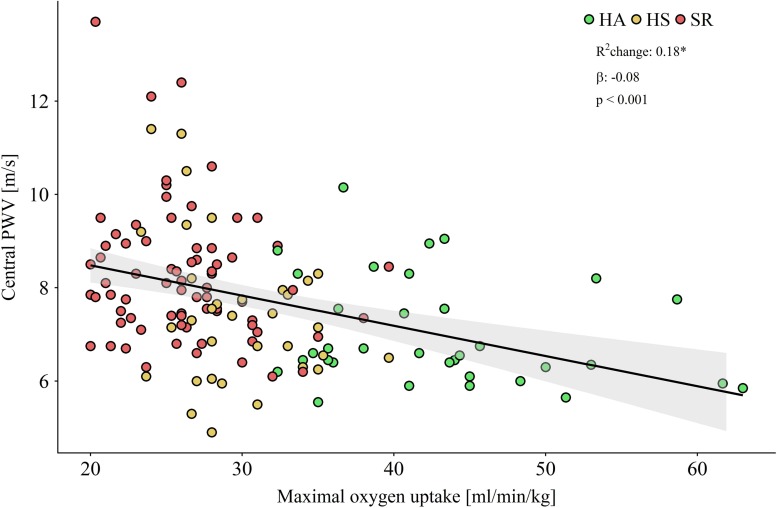
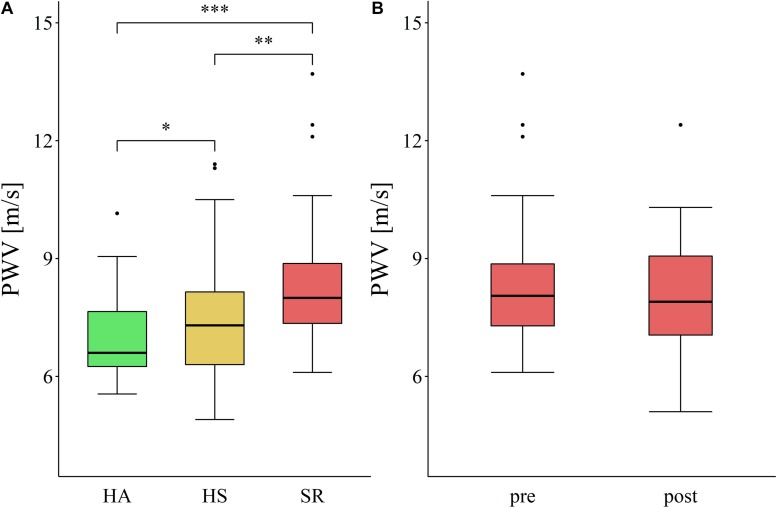
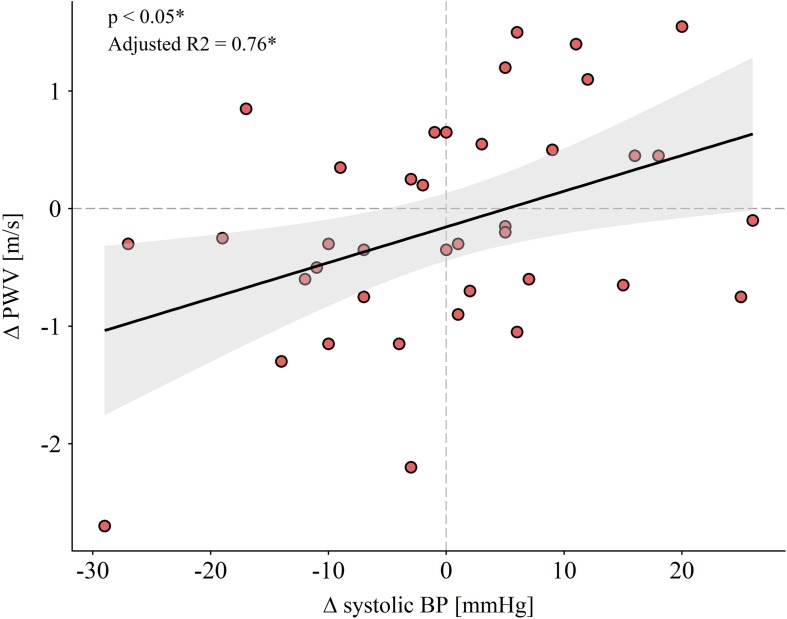
Results: Higher CRF was associated with lower PWV (p < 0.001) and VO2max explained 18% of PWV variance. PWV was higher in SR (8.2 ± 1.4 m/s) compared to HS (7.5 ± 1.6 m/s) and HA (7.0 ± 1.1 m/s; p < 0.001). 12 weeks of HIIT did not change PWV in SR. HIIT-induced reduction in systolic BP was associated with a reduction in PWV (p < 0.05).
Discussion: SR show higher PWV compared to HS and long-term PA is associated with lower PWV. Reduction of AST following short-term HIIT seems to depend on a concomitant decrease in blood pressure. Our study puts into perspective the effects of long- and short-term exercise on arterial wall integrity as treatment options for CV prevention in an older population.
Clinical trial registration: ClinicalTrials.gov: NCT02796976 (https://clinicaltrials.gov/ct2/show/NCT02796976).
Keywords: aging; cardiovascular risk; high-intensity interval training; physical activity; pulse wave velocity.
Figures
References
-
- Ben-Shlomo Y., Spears M., Boustred C., May M., Anderson S. G., Benjamin E. J., et al. (2014). Aortic pulse wave velocity improves cardiovascular event prediction: an individual participant meta-analysis of prospective observational data from 17,635 subjects. J. Am. Coll. Cardiol. 63 636–646. 10.1016/j.jacc.2013.09.063 - DOI - PMC - PubMed
-
- Ciolac E. G., Bocchi E. A., Bortolotto L. A., Carvalho V. O., Greve J. M., Guimaraes G. V. (2010). Effects of high-intensity aerobic interval training vs. moderate exercise on hemodynamic, metabolic and neuro-humoral abnormalities of young normotensive women at high familial risk for hypertension. Hypertens. Res. 33 836–843. 10.1038/hr.2010.72 - DOI - PubMed
Associated data
LinkOut - more resources
Full Text Sources
Medical
Research Materials
